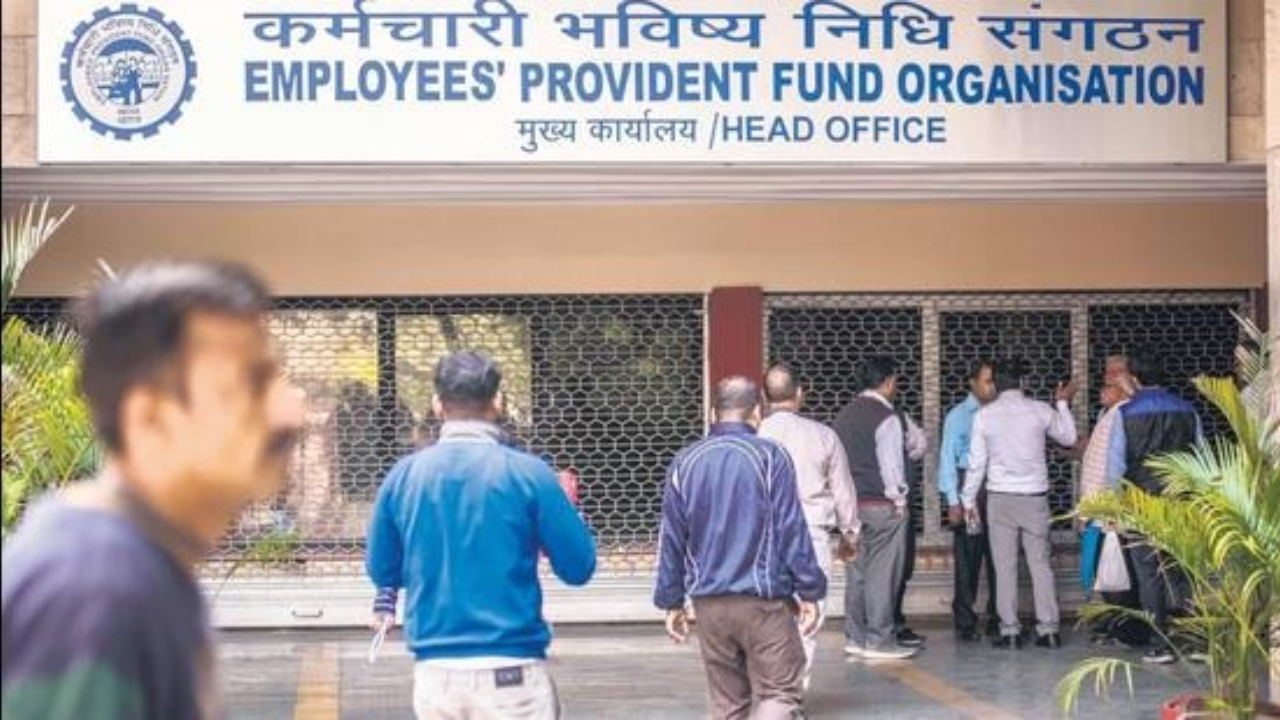
EPFO- Big news for EPFO members. If you are employed, then obviously you will also have a PF account. Every month the amount of contribution made by you and your company is deposited in the PF account. Even after changing the job, the PF account remains active and a part of the salary received from the other institution starts getting added to it. Many times such situations arise when the job is lost. Money remains deposited in the PF account. In such a situation, the question arises that if the account is active, then does one get interest on the deposited money.
Actually, EPFO has set some rules for this and there are some conditions in it. You should understand them beforehand. This will not cause you any trouble in the future. Interest is paid on the deposited money only under these rules and conditions. The PF account is operated by the EPFO institute which comes under the Ministry of Labor and Employment of the Government of India.
What are the rules for becoming a member of EPFO
Information regarding EPF membership has been provided on the official website of the Employees’ Provident Fund Organization. According to the information provided on the official website of EPFO, there is no restriction on EPF membership. A person can continue his membership after leaving the company. However, if your shares stop coming into the PF account, then after a certain time, interest on the account definitely stops.
When does interest get accrued?
According to the information given by the Employees Provident Fund Organization, if a member is not making any kind of contribution to the PF account, then exactly 3 years after this happens, the interest on this account stops.
How much money can you withdraw if you unemployed
Let us tell you that PF account is a good saving scheme for the future. Every month 12 percent of the employee’s salary is contributed. The same contribution is made by the company. A good amount of interest is also given by the government in PF accounts. With its help, you can deposit a good fund for the future.
If a person loses his job or becomes unemployed, then in such a situation he can withdraw his money. For this, if he is unemployed for one month, then he can withdraw up to 75 percent of his deposit amount. On the other hand, if he is unemployed for 2 months or more, then he can withdraw the entire amount.
Latest News
- Apple MacBook Neo Deal Alert: Get It For Under ₹58,000 on Amazon Right Now

- Pakistan Attack: आत्मघाती हमले से दहला पाकिस्तान, 23 लोगों की मौत, 50 से ज्यादा घायल, जानें

- Honor Magic 9 Series Leaks: Flagship Upgrades with Massive 8,000mAh Battery and 200MP Cameras

- Motorola Edge 60 Fusion Review: Mid-Range King or Outdated?

- FD Update– Breaking Your FD Early? Know the consequences
- Bank Holiday–RBI Announces Closure of SBI, HDFC and All Banks Next Week, Save the Dates

- Samsung Galaxy S26 Ultra Amazon Deal – Get ₹23,509+ Discount with Bank Offers and Exchange Benefits

- Best Scooters For College Girls 2026 – Perfect Mix Of Mileage, Style And Lightweight Design
- Kodak Matrix QLED Google TV 2026 Series Launched in India Just Under 10,999

- Senior Citizen FD Rates: सीनियर सिटीजन को यहां से मिल रहा बंपर ब्याज, जल्द करें निवेश