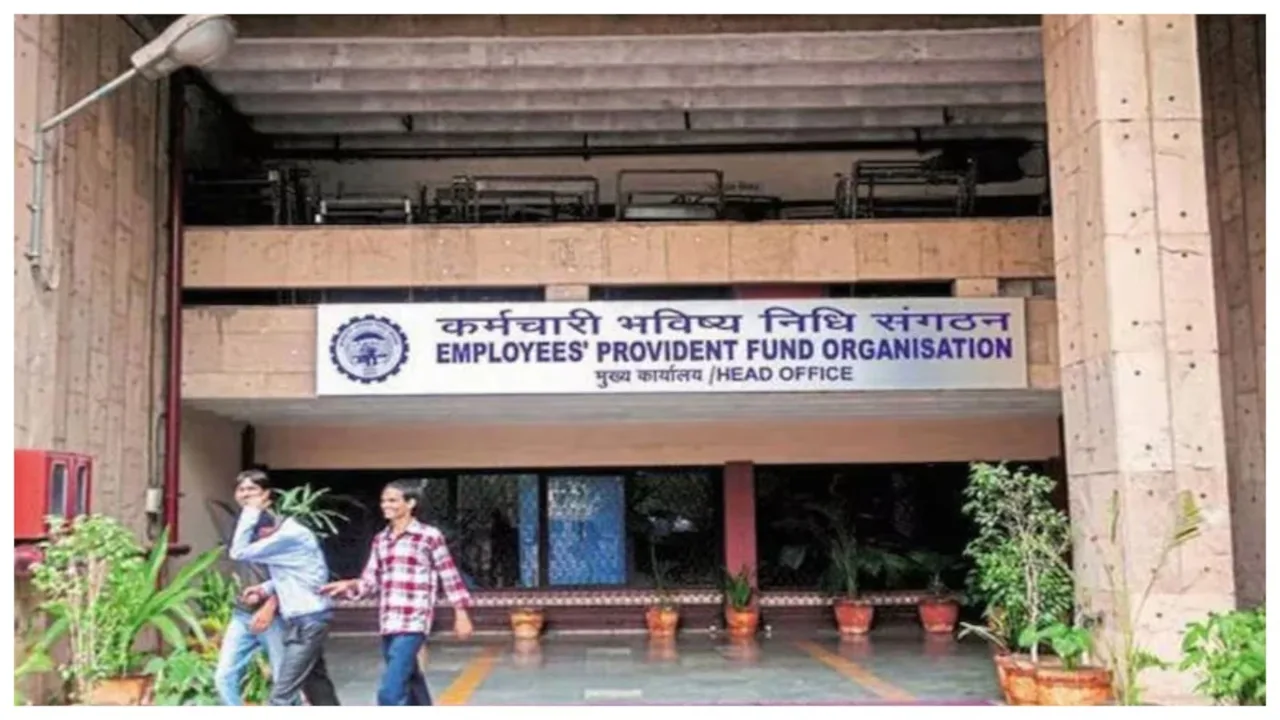
EPFO: The Employees’ Provident Fund Organisation (EPFO) plays a crucial role in providing retirement support for working individuals. However, contributions often cease when a person changes jobs or takes a break. This situation raises concerns about the safety of their funds and whether they will continue to earn interest. Experts indicate that halting contributions can significantly affect your future savings.
When does EPF contribution stop?
EPF contributions cease when you leave a job that previously deducted EPF or when you start a business that does not provide this option. Nevertheless, even after contributions stop, your account stays active for a certain period. During this time, interest continues to accumulate on the deposits, ensuring that your savings do not completely stagnate.
Interest Rules on Inoperative Accounts
If there are no contributions to the EPF account for 36 consecutive months, the account is deemed inoperative. Interest will still accrue during this time, but after that, new interest accruals will cease. It is essential to understand that while your money remains secure, its growth will halt. This implies that your retirement fund may not grow over time.
If you are unemployed for more than two months, you have the option to withdraw your EPF balance. However, if you have not completed five years of continuous service, the withdrawal may be subject to taxation. This includes both your contributions and those of your employer, along with the interest earned on these contributions. On the other hand, if the funds stay in the account and continue to earn interest, they will not be taxable.
What to do when changing jobs?
When transitioning to a new job, it is advisable to transfer your EPF account instead of leaving it behind. Utilizing a Universal Account Number (UAN) allows you to seamlessly link your old and new accounts. This not only maintains your service history but also offers tax advantages. Most importantly, your savings will keep growing without interruption.
Why it’s important to pay attention to EPF?
Neglecting EPF can be detrimental in the long run. If the account remains inactive for a long time, you lose the benefit of interest, and your retirement fund may be depleted. Furthermore, withdrawing old accounts later can be difficult, especially if KYC or bank details are not updated. Overall, EPF isn’t just a savings plan, it’s a security for your future. Therefore, it’s crucial to keep it active, update it periodically, and manage it properly so that you don’t face any problems at the time of retirement.
Latest News
- Train Ticket: How to book a confirmed train ticket without an agent? Learn the Easy Steps

- Indian Railways– 155 Trains Express Declared High-Speed, Thousands of Railway Staff to Benefit

- Monsoon Alert – Warning Heavy to Very Heavy Rain alert & thunderstorms in 22 States Over Next 4 Days

- America-Iran War: मिडिल ईस्ट में तनाव होगा खत्म! ईरान ने होर्मुज रास्ते पर कही बड़ी बात

- PM Surya Ghar Yojana 2026: Get Up to Rs 78,000 Subsidy within 6 Easy Steps, Know Here

- Cheapest Available 5G Smartphones in India Under 10000

- UPSC Prelims Answer Key 2026 – How to Download UPSC Prelims Answer Key at upsc.gov.in
- 8th Pay Commission: एनपीएस और पुरानी पेंशन में कौन सी बेहतर, जानिए बड़ा अपडेट

- Xiaomi 17T Launching With Leica 5x Zoom and Huge 6,500mAh Battery Under ₹60,000

- NEET UG 2026 – Haryana & Bihar Announce Free Bus Service for Candidates on June 20-21