
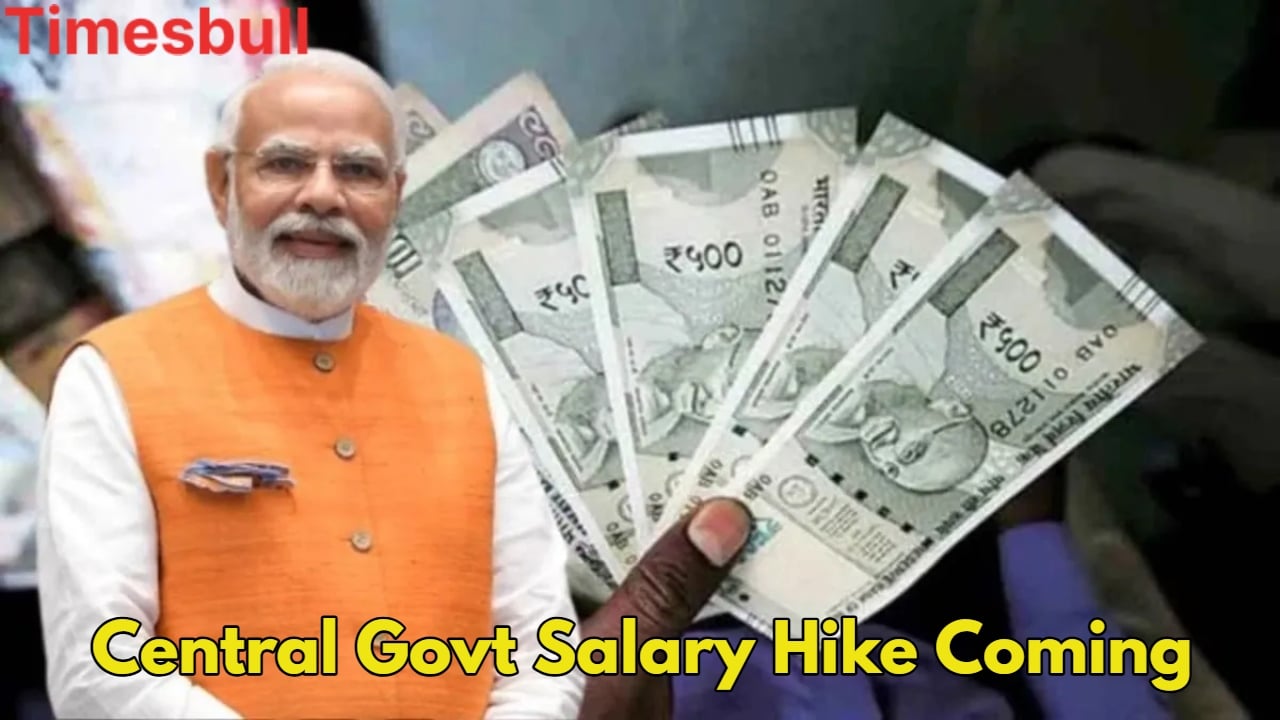
8th Pay Commission: There is great news for you. The central government has given in-principle approval to the 8th Pay Commission on 16 January 2025, and now its members are expected to be constituted soon. According to reports, the 8th Pay Commission may come into effect from January 1, 2026, which will directly benefit more than 50 lakh central employees and 65 lakh pensioners.
This pay commission will submit its recommendations to the government on the fitment factor and major changes in the salary-pension structure, which can see a tremendous jump in your monthly income.
Formation of 8th Pay Commission
Cabinet approval regarding the ‘Terms of Reference’ (TOR) of the 8th Pay Commission is expected soon. Shiv Gopal Mishra, Staff Side Secretary, National Council-Joint Consultative Machinery, said, “We hope that the government will approve the Terms of Reference soon.”
Terms of Reference (TOR) are the guidelines based on which the Pay Commission works and prepares its recommendations. These guidelines consider many factors such as inflation, economic conditions, and income inequality.

Millions of employees and pensioners will get benefits
The benefits of the 8th Pay Commission are expected to be available to about 50 lakh central employees and 65 lakh pensioners. This also includes employees associated with the defence services. The commission will recommend adjustments in the salary allowances, pension and dearness allowance (DA) of central employees. This will be a historic move that will help improve the standard of living and financial security of all these stakeholders.
How much increase is expected in salary
Under the 8th Pay Commission, the fitment factor is expected to range from 1.92 to a maximum of 2.86. According to this, the minimum basic salary of central employees can increase from ₹ 18,000 to ₹ 51,480.
This will be a tremendous increase that will significantly improve the purchasing power of employees. According to the report, this salary hike can be implemented from April 2026. Although, no official announcement has been made by the government in this regard yet, but this estimate raises a great hope for the employees.
What is the Fitment Factor
The fitment factor is a coefficient, which is multiplied by the existing minimum basic salary. On this basis, the new salary structure is determined. For example, the minimum salary in the 6th Pay Commission was ₹ 7,000 per month. It was increased to ₹ 18,000 per month in the 7th Pay Commission.
This means that the fitment factor in the 7th Pay Commission was 2.57. This increased the salary of central employees by 14.2 percent. The fitment factor ensures that the income of the employees is adjusted by inflation and increases in the cost of living.
Role of Pay Commission
The government constitutes a pay commission every ten years. Its job is to comprehensively review the salary structure of employees. It includes many factors like inflation, economic conditions, and income inequality.
The commission also gives recommendations on bonuses, allowances, and non-service sector benefits. The main objective of the Pay Commission is to maintain the salaries and allowances of government employees in line with market rates as well as the economic potential of the country so that they can get a fair and competitive remuneration.
Currently the government is paying salaries and pensions as per the recommendations of the 7th Pay Commission. It was constituted in 2014 by the then Manmohan Singh government. Its recommendations were to be implemented from January 1, 2016. Now the official notification of the Central Government regarding the formation of the 8th Pay Commission is eagerly awaited, which will shape the future of lakhs of central employees and pensioners.
Latest News
- PM Kisan Samman Nidhi Yojana: नहीं मिल रही 2000 रुपये की किस्त तो किसान तुरंत करवा लें यह काम

- Aadhaar Card Update Rules – How Many Times Can You Change Address, DOB & Number?

- Train Ticket: How to book a confirmed train ticket without an agent? Learn the Easy Steps

- Indian Railways– 155 Trains Express Declared High-Speed, Thousands of Railway Staff to Benefit

- Monsoon Alert – Warning Heavy to Very Heavy Rain alert & thunderstorms in 22 States Over Next 4 Days

- America-Iran War: मिडिल ईस्ट में तनाव होगा खत्म! ईरान ने होर्मुज रास्ते पर कही बड़ी बात

- PM Surya Ghar Yojana 2026: Get Up to Rs 78,000 Subsidy within 6 Easy Steps, Know Here

- Cheapest Available 5G Smartphones in India Under 10000

- UPSC Prelims Answer Key 2026 – How to Download UPSC Prelims Answer Key at upsc.gov.in
- 8th Pay Commission: एनपीएस और पुरानी पेंशन में कौन सी बेहतर, जानिए बड़ा अपडेट