


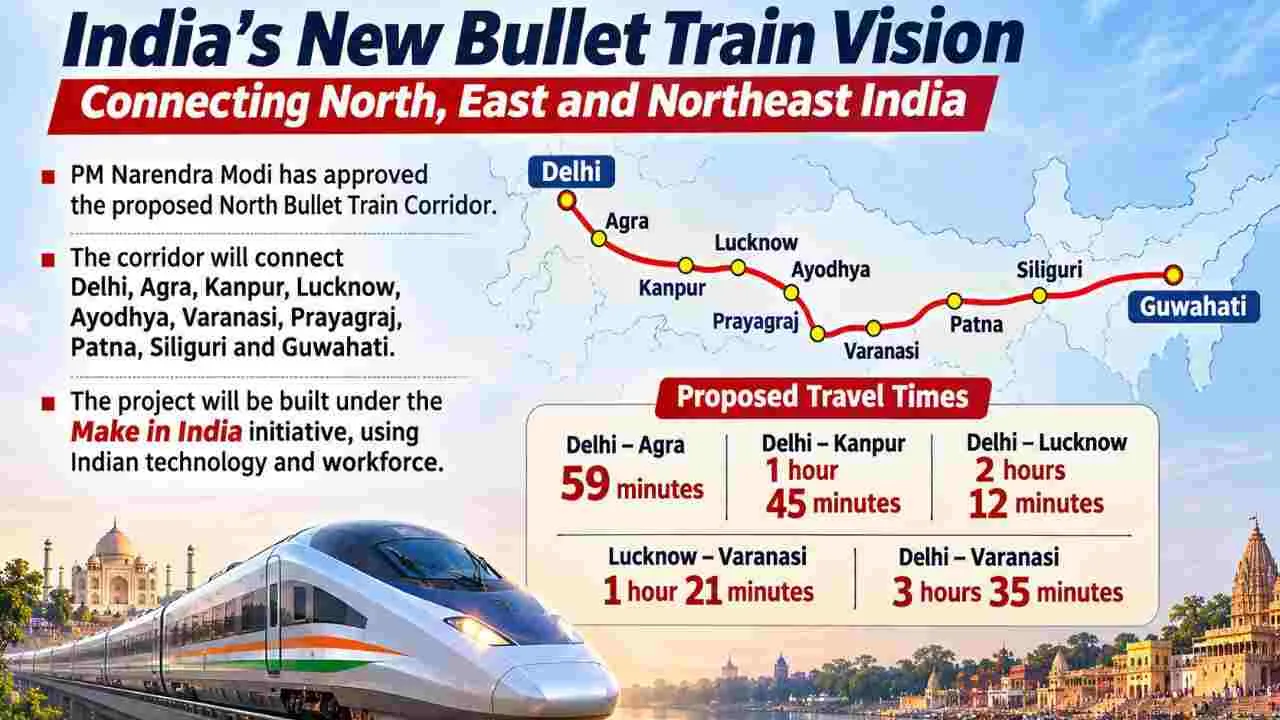
Bullet Train Corridor: India’s high-speed rail network could expand significantly if the proposed North Bullet Train Corridor moves forward. The reported plan aims to improve connectivity between North India, eastern India and the Northeast, linking major cities such as Delhi, Agra, Kanpur, Lucknow, Ayodhya, Varanasi, Prayagraj, Patna, Siliguri and Guwahati.
According to the proposal being circulated, the corridor could substantially reduce travel times between several important destinations. The estimated journey from Delhi to Agra would be around 59 minutes, while travel from Delhi to Kanpur could take approximately 1 hour and 45 minutes. The proposed Delhi–Lucknow journey time is around 2 hours and 12 minutes.
The plan also lists an estimated travel time of 1 hour and 21 minutes between Lucknow and Varanasi. Meanwhile, the Delhi–Varanasi journey could take approximately 3 hours and 35 minutes if the proposed corridor is developed as described.
Make in India Focus
The proposal is also being linked to India’s broader Make in India initiative, with an emphasis on domestic technology, engineering expertise and the Indian workforce. If implemented, the project could create opportunities in infrastructure development, manufacturing and related industries while improving rail connectivity across several regions.
What Could It Mean for Passengers?
A high-speed rail corridor connecting major cities across northern, eastern and northeastern India could make intercity travel faster and more convenient. It could also improve access to important religious, commercial and tourism destinations, including Ayodhya, Varanasi, Siliguri and Guwahati.
However, the project details and journey times should be treated as proposed estimates rather than confirmed operational services. Passengers should not interpret the reported timings as current train schedules. The corridor’s approval status, final route, construction timeline and expected launch date need to be confirmed through official government or Indian Railways announcements.
India’s New Bullet Train Vision: Connecting North, East and Northeast India🚅🇮🇳
PM Narendra Modi has reportedly approved the proposed North Bullet Train Corridor.
🛤️ The corridor will connect Delhi, Agra, Kanpur, Lucknow, Ayodhya, Varanasi, Prayagraj, Patna, Siliguri and… pic.twitter.com/Xpdbf3J3C4
“>November 1, 2026
If the proposal progresses, it could become an important development in India’s long-term high-speed rail plans, potentially bringing more cities within faster rail connections.