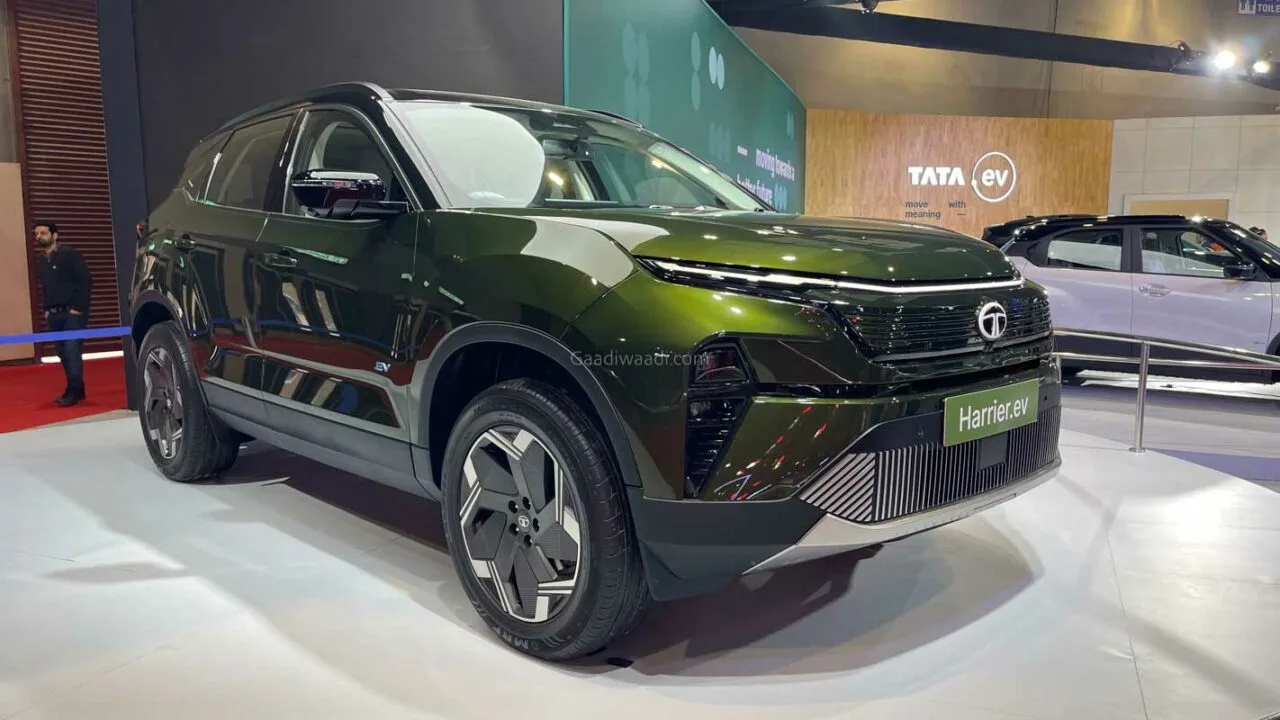
TATA Harrier EV: Tata Motors has taken a big share in India’s electric vehicle segment with the launch of the Tata Harrier EV. This new product is all set to disrupt the premium electric SUV market. With a new design, premium cabin features, and electric drive, the Harrier EV can be the first choice for those looking for futuristic mobility without compromise. Without any other stuff go onto their features, price and other details.
Tata Harrier EV Design, Dimensions
The Harrier EV is essentially the same as the ICE variant, save for being slightly revised to fit Tata’s electric design ethos. The face gets a new closed-off grille and reworked bumper, and the sides receive new 19-inch aero-optimised alloy wheels and EV badging. There’s only ‘Harrier.EV’ lettering at the rear to see.
Tata Harrier EV Interior
The interior of the Tata Harrier EV remains reminiscent of the ICE version but adds premium touches. A 14.53-inch Samsung Neo QLED infotainment display is the focal point of the dashboard, providing sharper visuals. Two-tone schemes and upgraded tech make the cabin feel more luxurious and connected.
Tata Harrier EV Features
These are some other important features-
- Touch-based HVAC control panel
- Rotary drive mode selector and electronic parking brake
- Panoramic sunroof and ambient lighting
- Powered and ventilated front seats
- 10-speaker JBL system with Dolby Atmos 5.1
- Vehicle-to-load (V2L) and vehicle-to-vehicle (V2V) features
Battery, Range and Charging
Tata sells the Harrier EV in two battery sizes – a 65kWh pack with a 238hp rear motor, and a 75kWh pack with dual-motor AWD and 313hp. The EV makes up to 504Nm of torque. The highest variant has an official 627km MIDC range, and actual range is around 480-505km. Charging is provided via a 7.2kW AC charger (10.7 hours full charge) and a 120kW DC fast charger (20-80% in 25 minutes).
Price and Competition
The Harrier EV starts at price of Rs 21.49 lakh for the RWD 65kWh ‘Adventure’ variant. It competes head-to-head with the Hyundai Creta Electric, Mahindra BE 6, Mahindra XEV 9e, and the upcoming Maruti Suzuki e Vitara. Although it is more expensive than the Creta Electric and BE 6, it is still cheaper than the XEV 9e.
Latest News
- Weather warning – Heavy Rain, thunderstorms, lightning Alerts for 13 States Over Next 3 Days

- UP TGT Exam City Slip 2026 Released – Download at upessc.up.gov.in, Exam June 3-4

- ATM Alert: एटीएम में फंस जाए डेबिट कार्ड तो घबराएं नहीं, फटाफट यह काम करने से होगा समाधान

- Post Office Scheme – 7.5% Interest Rate, ₹5 Lakh Becomes ₹7,24,974 in 5 Years, Start with Just ₹1,000

- Best AI Video Editing Laptops Under 60,000 INR: Top Picks Her

- Best CNG Cars: पेट्रोल के बढ़ते दाम के बीच ये सीएनजी गाड़ी खरीदकर खर्च करें कम, माइलेज भी जबरदस्त
- Samsung Stable One UI 8.5 Update to Galaxy Tab S10 FE and Tab S10 FE+

- बुढ़ापे की लाठी बनेंगी ये तीन स्कीम्स, निवेश से पहले जानिए कितना मिल रहा ब्याज

- OnePlus Nord CE 6 vs Samsung Galaxy A57: Which Mid-Range 5G Phone Wins?

- Lenovo LOQ 15 Gen 11 Review: Best Budget Gaming Laptop?