
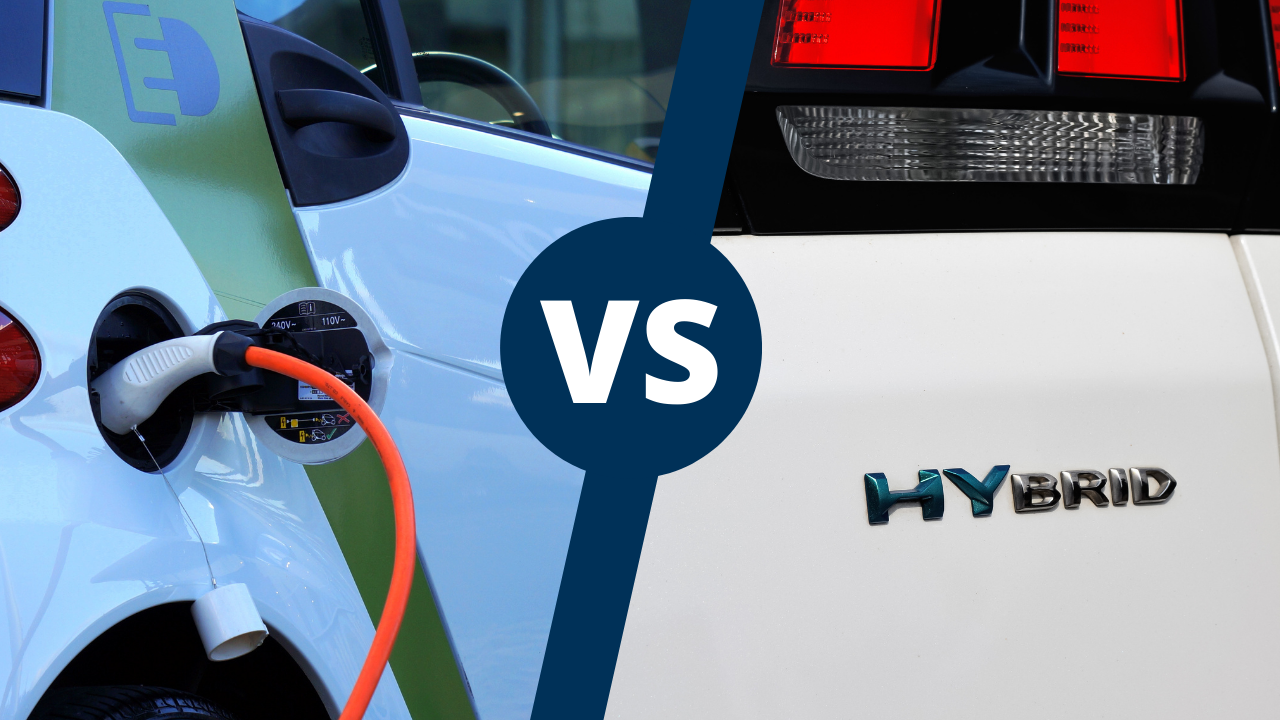
EV Cars vs Hybrid Cars : The Indian automobile market is a treat with all the smart options of the fuel-efficient segment in 2025. Electric Vehicles and Hybrid Cars head the list of ones for choice. They both serve to give you eco-friendly driving and less running cost. But the big question for many buyers is, do I take an EV or hybrid? The answer depends on your driving style, charging availability, and average daily distance. Thus, a brief comparison of these in layman’s terms would be helpful to ease your decision-making.
Electric Vehicle (EV): Full battery power
EVs are those that drive completely on battery power without the use of petrol or diesel. They give a virtually soundless and smooth drive with a good enough range, all without nearly any emissions. In the year 2025, cars like Tata Punch EV, Nexon EV, and soon-to-launch Maruti eVX will be providing a range of 300 to 500 km on a full charge. Running costs certainly are low-Charging EVs should cost at least one-half, if not way less than, filling it with petrol. Maintenance costs are low, owing to the simple construction of the engine.
But obviously, charging infrastructure must be there. Therefore, owning an EV, if you have a charger at home or at least live in a city where public chargers are available, really makes sense and is economical. A more tedious thing would be long travels away from the majority of chargers; that range anxiety is always going to be there.
Hybrid Cars: The Best of Both Worlds
Hybrid vehicles run on both gasoline engines and electric motors. They work with their batteries at low speed, while the gas engine takes over on highways or when power is needed. They do not need to be charged in their manner, since their batteries are charged while driving or braking. In 2025, vehicles like the Toyota Innova Hycross, Honda City e:HEV, and Maruti Grand Vitara Hybrid have an impressive fuel economy of 23-28 km/l under commercial conditions.
These may very well be the choice for consumers who are in search of fuel efficiency but are not concerned about charging status and issues. While driving in a city area, hybrids can be useful, because here the motor predominantly works on low speed with stop-and-go traffic.
If all your trips are really short, and you have access to charging without paying any fuel, then EVs are absolutely the future. If you want something that runs long distances without the hassle of charging and gives you even better fuel economy than a petrol variant, hybrids are the way to go.
Both EVs and hybrids are great options for 2025. If your driving is about clean and cost-effective drive in city traffic, go for an EV. If you want to work on fuel saving but keeping the flexibility to go long distances, pick a hybrid. Either way, a greener drive has made a smarter choice.