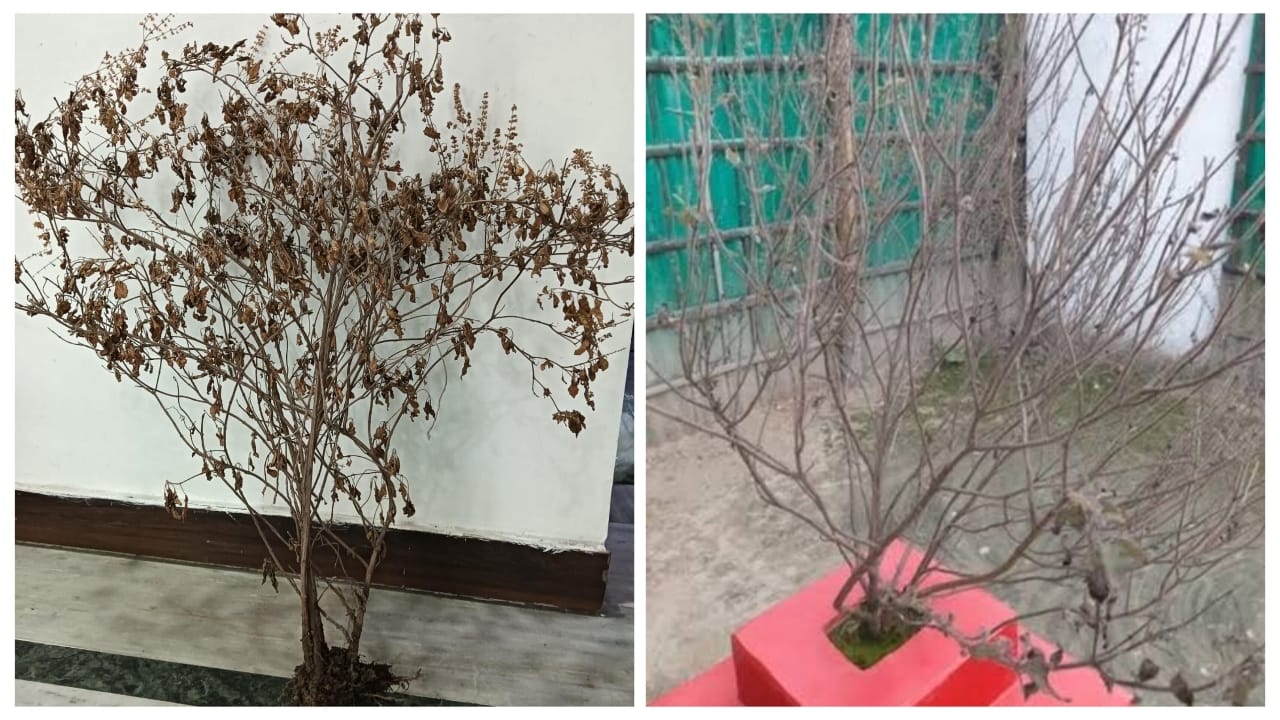
Winter Tulsi Care: The Tulsi plant is revered in Hinduism and is not only revered but also rich in medicinal properties. However, with the arrival of winter, the Tulsi plant begins to dry out, or its leaves fall, dulling the home’s charm. If your Tulsi plant has already started to dry up, you can save it with some remedies.
For your information, gardening experts say Tulsi plants often die due to inadequate care and nutrition. Therefore, they recommend using fertiliser to revive a dried Tulsi plant and make it as dense as a banyan tree.
Harvesting the buds
It is crucial to keep the Tulsi plant dense and healthy. Therefore, you need to harvest the buds promptly. Harvesting buds should be done year-round, not just before winter. When the plant flowers, all its energy is spent on producing seeds. This causes the plant to lose its growth and gradually dry up.
When removing the inflorescence, don’t just pluck the flower, but also pluck a leaf or two from the bottom. This encourages new branches to emerge from the spot. Furthermore, it takes time for the next inflorescence to develop, causing the plant to become denser and to focus its energy on growing leaves rather than flowers.
A Way to Make Tulsi Plants Thick
Buttermilk is considered a natural way to make Tulsi plants thicker. Buttermilk contains lactic acid and nutrients that are very beneficial for the soil. Diluting buttermilk with water and applying it to the soil once a month can significantly boost plant growth.
Try This in Winter
The most common reason for Tulsi plants to dry out in winter is overwatering. From December to February 15th, water Tulsi plants sparingly. When it’s cold and foggy outside, the leaves lose moisture rapidly. But if too much water is applied during this time, the moisture from the fog increases, and the excess water can rot the roots, leading the plant to dry out.
How to Grow a Dried Plant
If your basil plant has completely dried up, leaving only dried branches, a 2-remedy can be beneficial. First, remove the dried branches. After this, thoroughly till the soil. Grind about a teaspoon of borax, add it to the soil pellet, and water it. Borax replenishes soil micronutrients, such as boron.
Tilling the soil before applying borax is crucial. This loosens the soil, allowing air and nutrients to reach the roots more easily. Afterwards, place the plant in a place that receives direct, mild sunlight and prevents overnight fog from directly hitting the basil. You can cover the basil in the evenings to avoid this.