

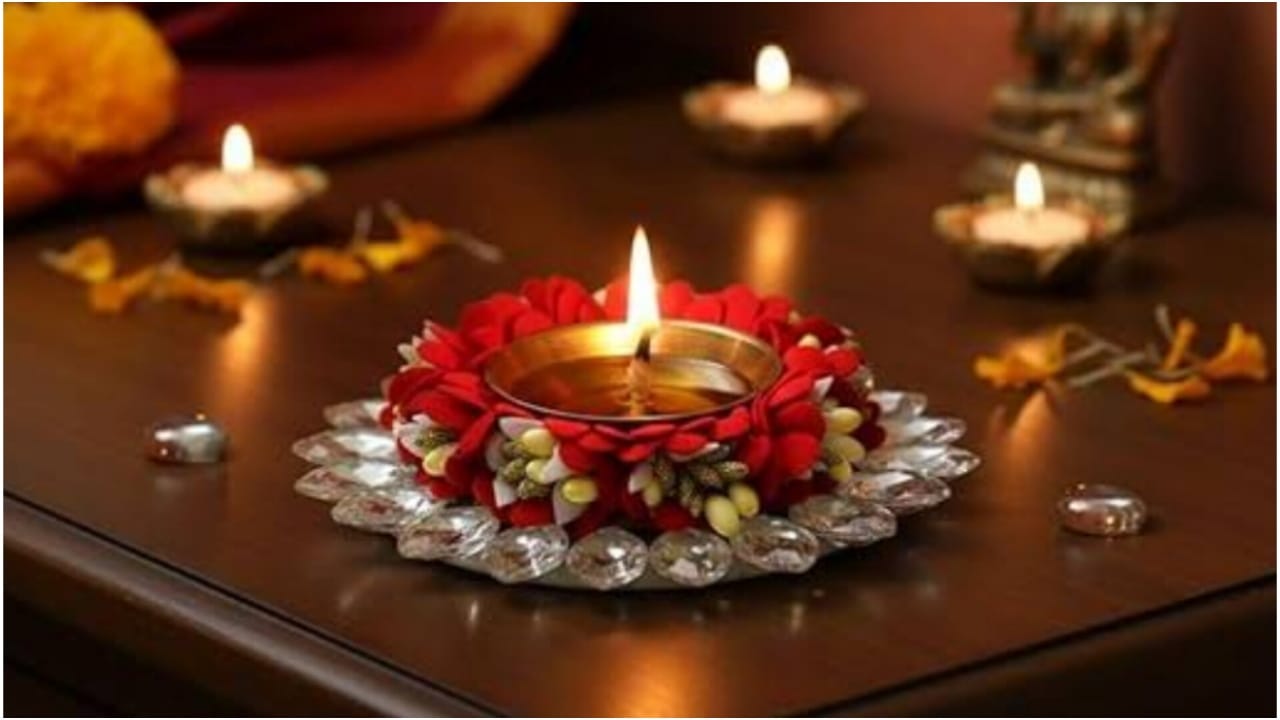
Evening Diya Ritual – In Hindu traditions, this ritual holds a very special place. It is believed that performing daily prayers keeps the home filled with peace, harmony and positive vibrations. When worship is done with a pure heart and proper discipline, life becomes more balanced, and obstacles gradually begin to move away. That is why scriptures strongly emphasise the correct method of performing evening worship, especially the rule of lighting a diya.
Daily rituals performed with devotion are said to purify the atmosphere of the house, invite divine blessings and create a calm, spiritual environment. Among all rituals, the lamp lit during evening prayers is considered extremely powerful and auspicious.
Where Should You Place the Evening Diya?
According to Hindu scriptures, the evening lamp must be placed at the main entrance of the house during the time of ghee or dusk. Lighting a diya at the main door is believed to keep negative energies away and invite peace and prosperity into the home.
Another highly auspicious place is near the Tulsi plant. Tulsi is considered the abode of Goddess Lakshmi, and lighting a diya in front of Tulsi every evening is believed to attract wealth, fortune and divine grace. It is essential, however, to keep the area around the plant clean and free of contaminants.
Which Oil Should Be Used in the Evening Diya?
Many people remain confused about the right oil to use for the evening lamp. As per ritual guidelines, pure mustard oil is considered the best choice. Lighting a mustard-oil diya is believed to remove negativity from the environment and strengthen positive vibrations in the home.
Some people also use sesame oil, which is equally auspicious and acceptable in many households. However, mustard oil is traditionally preferred for evening prayers due to its cleansing and protective qualities.
One should always keep prayer oil separately and avoid mixing it with regular cooking oil.
Why Evening Worship Holds Special Importance?
Evening time is considered a sacred spiritual transition phase. As day merges into night, lighting a diya symbolises inviting divine light into the home and removing darkness from one’s life. This ritual not only purifies the surroundings but also calms the mind, making it easier to pray with devotion.
Conclusion
The simple act of lighting a diya every evening can bring a sense of peace, positivity and divine protection. Placing the lamp at the main entrance and near the Tulsi plant, while using mustard oil, aligns the ritual with ancient scriptures and enhances its benefits. For those who believe in traditional practices, this small daily ritual can become a powerful source of spiritual strength and prosperity.

