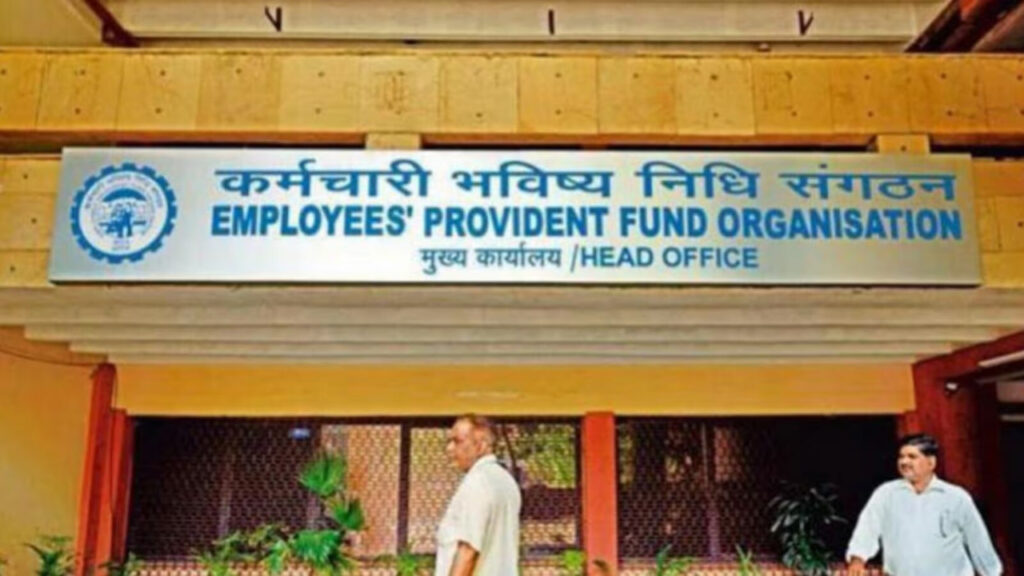
EPFO New Rules: Provident Fund (PF) withdrawals have been confusing and frustrating for many employees. Varying rules, varying eligibility periods, and minor technicalities have led to claims being rejected. But now the Employees’ Provident Fund Organization (EPFO) has significantly simplified the rules for PF withdrawals. This will allow employees to easily access their funds if needed. New rules announced at the end of October last year have brought all partial withdrawals under a single framework. This means clearer rules, faster processing, and greater withdrawal flexibility than before.
What was the problem in withdrawing PF earlier?
Previously, there were 13 different provisions for withdrawing PF funds. Each requirement had a different service period. Some had a two-year requirement, while others had a seven-year requirement. This left people confused about which rules allowed them to withdraw money.
Furthermore, in most cases, withdrawals were permitted only for the employee’s own contributions and the interest earned on them. Even that was often limited to 50% to 100%. This made it difficult to withdraw the entire amount, even in an emergency.
What has changed in the new EPFO rules?
Now, the EPFO has consolidated all partial withdrawal rules into a single system. The biggest relief is that the minimum service period for almost all withdrawals is now just 12 months.
Another major change is that withdrawals will now include both employee and employer contributions, as well as interest. This means that up to 75% of the total eligible PF balance can now be withdrawn. This represents a significant improvement compared to the previous period. Simply put, employees can now withdraw more money in a shorter period of time.
When can you withdraw 100% PF?
After completion of 12 months of service, the entire eligible PF balance can be withdrawn under certain circumstances.
Medical Treatment: A maximum of three withdrawals are allowed in a financial year for self or family treatment.
For education: A maximum of 10 withdrawals can be made for self or children’s education during the entire PF membership period.
For marriage: A maximum of five withdrawals can be made during the membership period for marriage of self or children.
Home-related needs: A maximum of five withdrawals are allowed during the membership period for purchasing, constructing a house, repaying a home loan or repairing it.
Special circumstances: Situations where no specific reason is required. A maximum of two withdrawals are allowed in a financial year.
Why has 25% of the amount been withheld?
The EPFO has focused on simplifying rules and ensuring retirement security. Data revealed that frequent PF withdrawals were undermining employees’ long-term savings.
In many cases, it was observed that at the time of final settlement, more than half of the PF accounts had a balance of less than Rs 20,000. Nearly 75% of the accounts had a balance of less than Rs 50,000. This deprived the employees of the 8.25% compounding benefit. For this reason, EPFO has made it mandatory to preserve 25% PF balance, so that some amount is saved at the time of retirement.
What are the rules for job loss?
If someone loses their job, the rules are flexible. An employee can immediately withdraw 75% of their PF balance. This will include both employee and employer contributions and interest. The remaining 25% can be withdrawn after one year.The entire PF balance can also be withdrawn under certain circumstances, such as retirement after 55 years, permanent disability, retirement, voluntary retirement or permanent relocation abroad.
Will pensions be affected?
These changes will not affect pensions. A minimum of 10 years of service is required to receive a monthly pension under the Employees’ Pension Scheme. Although pension funds can be withdrawn before the completion of 10 years, doing so forfeits the right to future pensions. If the pension funds are not withdrawn, the family can continue to receive pension benefits for three years in the event of death, even after contributions have ceased. This protection ends once the withdrawal is made.