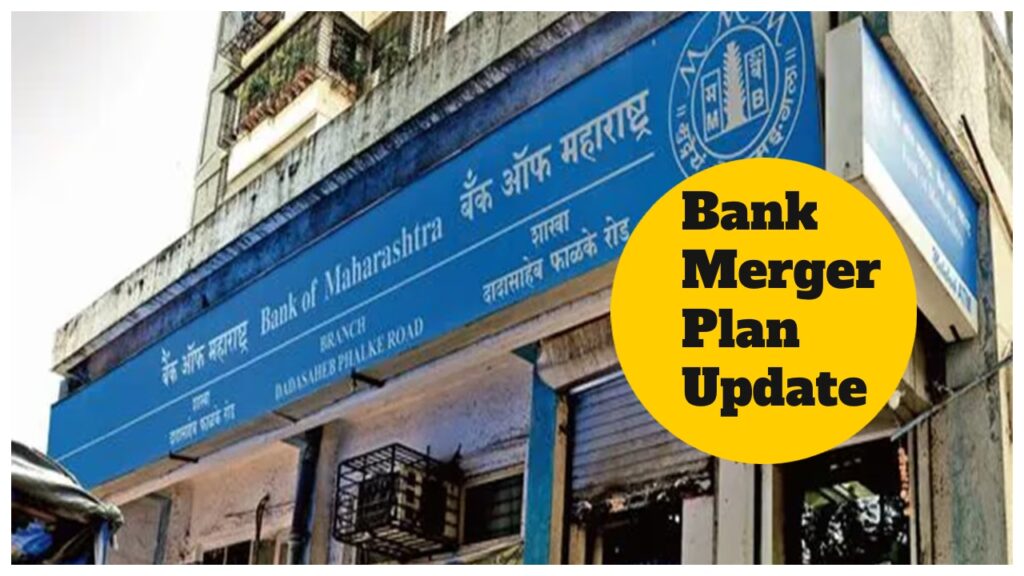
Bank Merger Plan:- The Indian government is soon set to witness another significant change in the banking sector. Several media reports suggest that the government is considering merging smaller public sector banks with larger ones to form a new megastructure. Following a recommendation from the NITI Aayog, work on this proposal has begun rapidly. It is expected that many of the country’s smaller banks will be absorbed by larger public sector banks in the future. Plans are to reduce the number of public sector banks from 12 to just 4 in the future.
Indeed, having a larger bank increases its capital and credit capacity. The country needs such banks as its economy rapidly moves towards a $5 trillion economy.
What will be the impact on account holders?
Bank mergers can directly affect customers. For example, bank names, IFSC codes, chequebooks, and passbooks may need to be changed after the merger. There is a possibility of temporary service delays during account migration and data transfer. Additionally, nearby branches of two banks may be merged, impacting account holders. However, digital services may be strengthened.
Which banks could be merged?
According to media reports, the government is considering merging the Indian Overseas Bank, the Central Bank of India, the Bank of India, and the Bank of Maharashtra into larger public sector banks. These could be merged with the following large banks: State Bank of India, Punjab National Bank, and Bank of Baroda. Preliminary documents for this proposal have been prepared and will be sent to the Cabinet and the Prime Minister’s Office (PMO) soon. If approved, this mega merger could be completed in the 2026-27 financial year. It is anticipated that the merger will increase the banks’ lending capacity, strengthen their balance sheets, and improve technology and management.