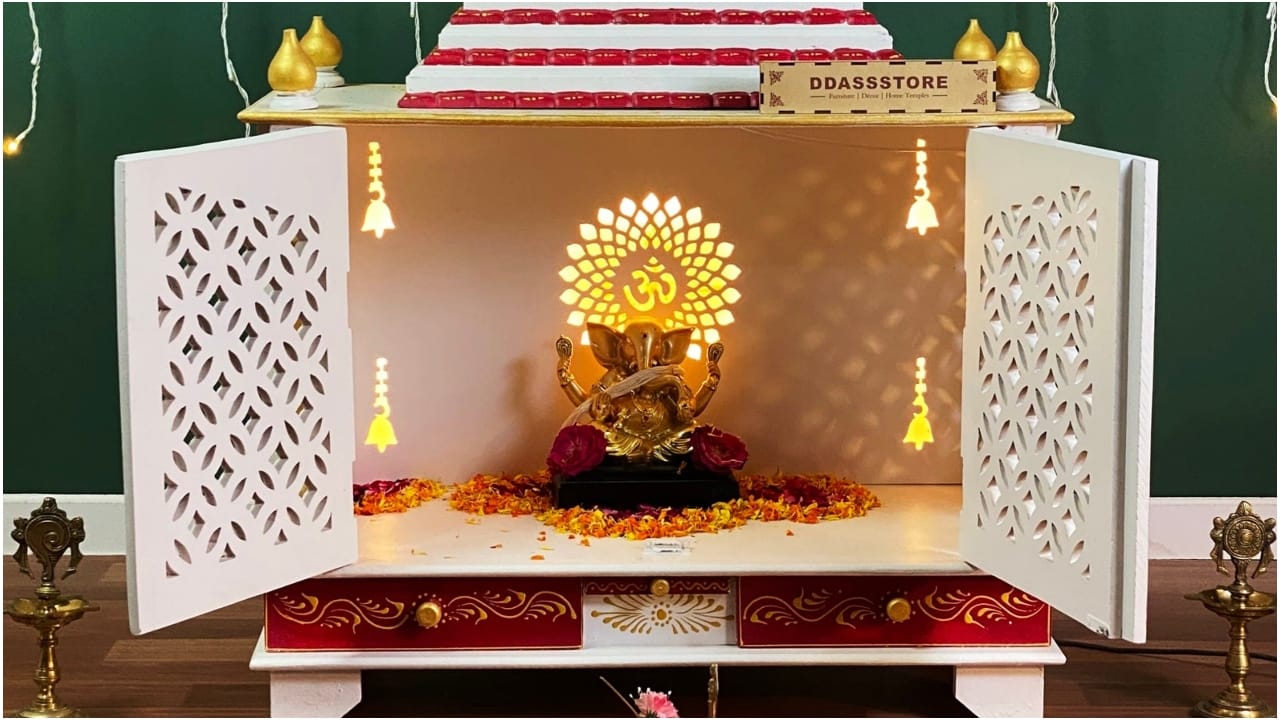
Vastu Tips for Home Temple — In Vastu Shastra, the placement of the home temple is considered extremely important. It is believed that when a temple is built in the correct direction and maintained with purity, the family receives complete spiritual benefits and the home remains filled with peace, positivity, and harmony. Today, we explain the most auspicious direction for the home temple and the essential rules you must follow.
Which Direction Is Best for a Home Temple?
According to Vastu Shastra, the East direction is considered the most favourable for a home temple. A temple placed in the East attracts positive energy and enhances the home’s spiritual vibration. The Northeast (Ishaan Kona) direction is also highly auspicious, as it helps make prayers more effective and brings divine blessings into the household.
How Should a Home Temple Be Designed?
The temple should be placed in a clean, quiet, and pure area of the house. It is advised to avoid putting the temple near bathrooms or in unclean areas. The temple should preferably be made of wood or stone, as these materials naturally hold spiritual energy better and keep the environment serene and sacred.
Where Should You Never Build a Temple?
Vastu strongly warns against building a temple under a staircase. Doing so may create instability and struggles in life. Similarly, a temple should never be placed in a bedroom, as the room’s energy is considered unsuitable for worship. Such placements can lead to Vastu imbalance and disturb the home’s spiritual sanctity.
Essential Rules to Follow for a Home Temple
During worship, fresh flowers are offered to the deities, but once these flowers dry, they must be removed immediately. Keeping dried flowers in the temple may create Vastu dosha and disrupt the energy flow. These flowers should be immersed in a clean, flowing river or added to a plant in your home.
Before placing idols or images of deities, always spread a red or yellow cloth under them. This enhances purity and ensures the correct placement of divine energies in the temple.