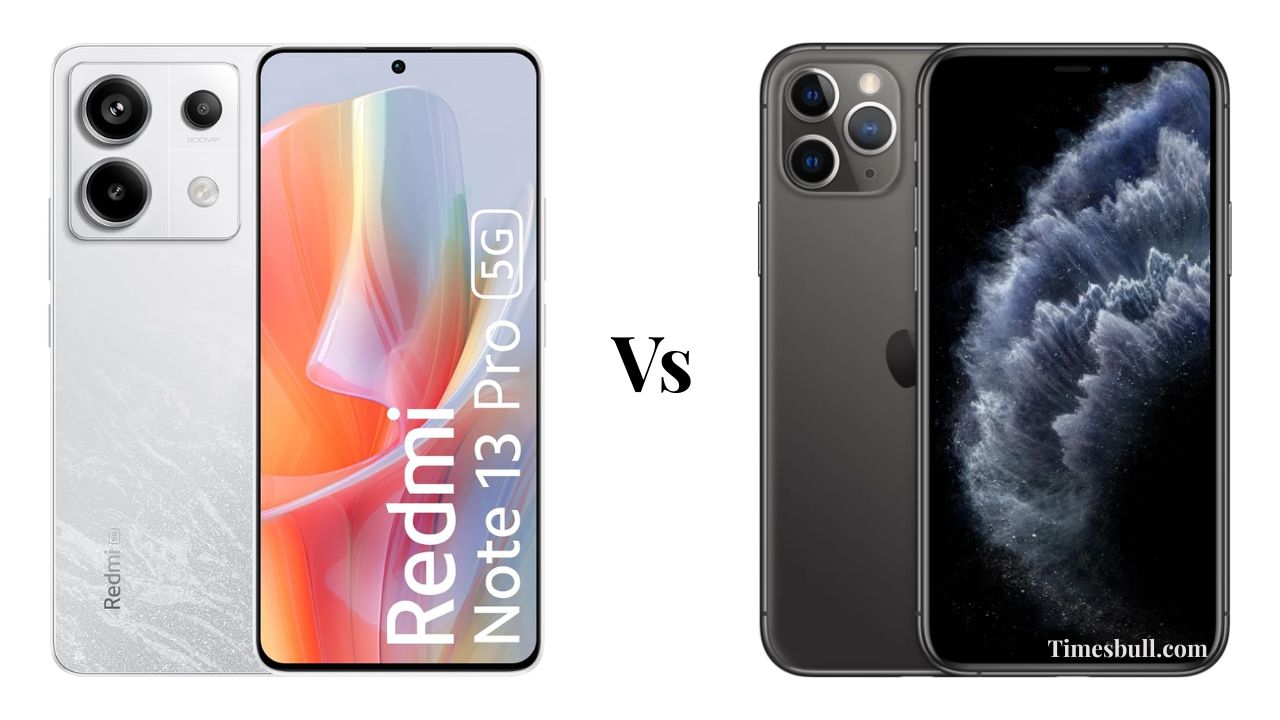
Redmi Note 13 Pro vs iPhone 11 Pro Max: The Redmi Note 13 Pro is a fresh contender in the mid-range segment, while the Apple iPhone 11 Pro Max remains a popular premium pick even years after its release. Both devices target very different audiences one focuses on value and performance, while the other targets experience and reliability. Let’s see how these compare in terms of processor, display, camera, and overall value.
Processor of Redmi Note 13 Pro vs iPhone 11 Pro Max
The Redmi Note 13 Pro runs on the Snapdragon 7s Gen 2 chipset with an octa-core processor clocked at 2.4GHz. Further, it includes 8GB RAM and another 8GB of virtual RAM, which makes multitasking seamless. For its part, the iPhone 11 Pro Max comes powered by Apple’s A13 Bionic chip, which was top-of-the-line upon its launch but now feels a little behind the pace of newer Android CPUs. Still, though, iOS optimization hands Apple a smooth and consistent advantage when it comes to real-world usage.
Display and Battery Comparison
The Redmi Note 13 Pro boasts a 6.67-inch OLED display with a sharp resolution of 1220×2712 pixels and a 120Hz refresh rate. The screen is so bright that it reaches as high as 1800 nits of peak brightness and covers Dolby Vision for a great and vivid visual experience. The iPhone 11 Pro Max, on its part, features a marginally smaller 6.5-inch OLED display with 1242×2688 resolution and 458ppi density. Lack of high refresh rate notwithstanding, True Tone and Wide Colour technology at Apple still make colors appear accurate and as natural as possible.
Where it certainly outshines is its battery life. The Note 13 Pro packs in a 5100mAh battery with 67W fast charging for quick top-ups. The iPhone 11 Pro Max uses a much smaller 3500mAh battery, although with its power efficiency, coupled with 18W fast charging and wireless charging support, it can never match up to Redmi’s speed and endurance.
Redmi Note 13 Pro vs iPhone 11 Pro Max Camera
The highlight of the Redmi Note 13 Pro is a 200MP main camera, accompanied by 8MP and 2MP secondary lenses. It features an ISOCELL HP3 sensor, which does a pretty good job with details, including 4K at 30fps. The selfie camera is 16MP. The iPhone 11 Pro Max retains the classic triple 12MP configuration with a reliable sensor and 4K video recording at 24fps. Though the numbers are smaller, Apple’s image processing still provides well-balanced and natural results.
Price Comparison
The Redmi Note 13 Pro 5G is available at ₹21,999, thus being a fantastic value deal for consumers who need modern features without having to spend a lot of money. As for the iPhone 11 Pro Max, it even costs around ₹99,900 in 2025 for its 512GB version. That is over four times more expensive than the Redmi model, which specifies how both have targeted completely different audiences.
Bank Offers and Discounts
As for the Redmi Note 13 Pro, consumers can get discounts and cashback offers across Flipkart, Amazon, and Croma, with some selling it as low as ₹19,999. iPhone 11 Pro Max is offered with an instant 10% discount on Kotak, ICICI, and HDFC cards, but the supply is limited because it’s no longer in production.
Conclusion
The Redmi Note 13 Pro is clearly a modern mid-ranger that delivers on performance, battery life, and display quality at a fraction of Apple’s price. Still, the iPhone 11 Pro Max stands tall for those who value the iOS ecosystem and premium build quality. If you are after raw value, Redmi wins this battle easily. However, brand prestige and software experience are what truly matter; Apple still has its charm.