


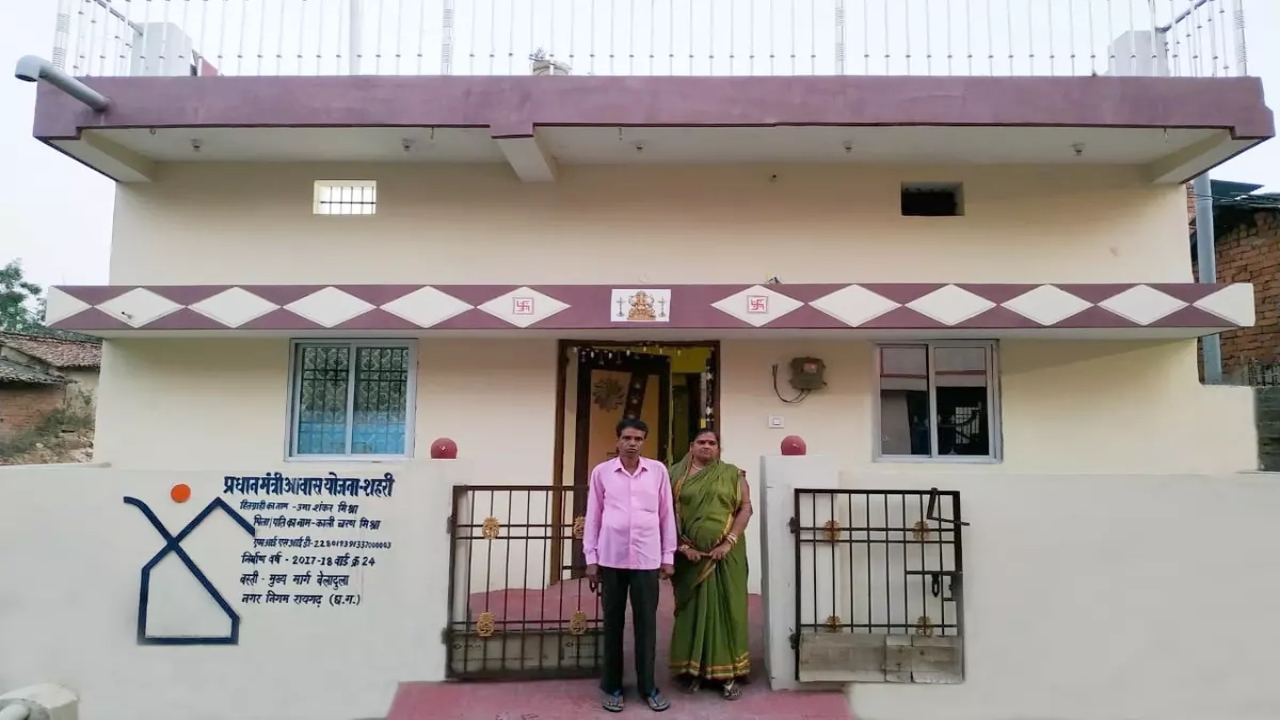
PMAY: The central and state governments are implementing numerous government schemes to benefit the people, empowering them financially. Currently, the government is working to provide dream homes to those living in rural areas. These dream homes are being distributed under the PM Awas Yojana.
The government has initiated the online registration process for the PM Awas Yojana. Under this scheme, financial assistance of up to ₹1.20 lakh is transferred to bank accounts. Subsidies and materials for home construction are also provided.
Read Here: Noise Master Buds Max Review: Premium Design Meets Balanced Sound
Who is benefiting?
The government is providing benefits under the PM Awas Yojana to the primary beneficiaries. It is being extended to economically weaker sections, low-income groups, and middle-income families, enabling them to build a permanent home without any financial burden. This government initiative is being implemented for both rural and urban areas to ensure that economically weaker sections of society can access homes.
How to Apply Online
If you wish to apply online, you must visit the official PMAY portal, pmaymis.gov.in. Then, upload the required documents, such as your Aadhaar card, income certificate, and land documents. The application process is very simple and can be completed easily using a computer or mobile phone.
What are the required documents?
After applying, officials verify eligibility and select beneficiaries based on all the documents. Under the scheme, the government provides subsidized housing loans at low interest rates, making home construction easier.
Read Here: Tulsi Vivah 2025: Include These Item In Puja to Receive Maa Lakshmi’s Blessings
What are the benefits of the scheme?
The central government has also launched a campaign called “Angikaar 2025” to further enhance the effectiveness of the PMAY program for rural residents. Consequently, door-to-door surveys and fast-track verification are speeding up the application process. This has significantly increased the number of homes under the scheme compared to previous schemes.