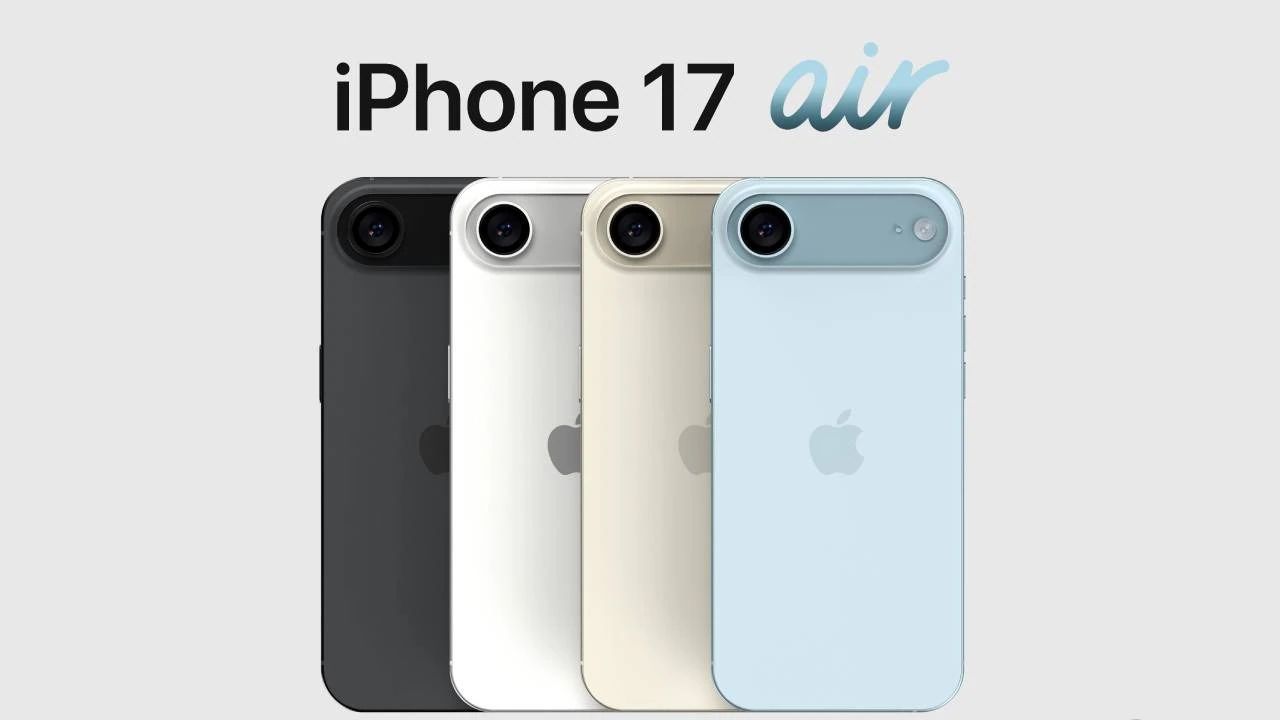
iPhone 17 series specifications: Apple has formally launched the iPhone 17 lineup at its ‘Awe Dropping’ event, and the limelight shines upon a new model, the iPhone Air. Slightly slimmer, lighter, and dramatically different, the Air takes the place of the Plus model while the basic iPhone 17 carries on with expected design enhancements. Cumulatively, these handsets represent Apple’s effort to reconcile innovation and conservatism.
Read More: Google Pixel 9 Pro vs Asus Zenfone 12: Which One to Buy?
iPhone Air: Apple’s Slimmest Device Yet
iPhone Air enters the market as the thinnest iPhone to date, at 5.6mm thick, thinner even than the iPhone 6’s 6.9mm build. At 165 grams, it is also the lightest iPhone available. Apple has constructed the phone with a Ceramic Shield rear and a titanium body, which should be more resilient than earlier devices. Although the thin profile is irresistibly sexy, consumers are left wondering if Apple has sacrificed battery life or structural integrity to achieve it.
Display: Big Screen in Thin Body
The Air boasts a 6.5-inch OLED ProMotion screen, which situates it between the iPhone 17 Pro’s 6.3 inches and the Pro Max’s 6.9 inches. The 120Hz refresh rate is perfect for gaming, streaming, and multitasking, while its slim design keeps it pocket-friendly in spite of the huge screen. Apple has evidently placed the Air as the middle path for individuals who desire big screens without a cumbersome gadget.
Battery and Camera Setup
Even though it is so slender, Apple says the Air lasts a day, with up to 27 hours of video watching, up to 40 hours using a MagSafe battery pack. The phone features a new rectangular camera bar that contains a single 48MP Fusion rear camera with 2x optical zoom, aided by an 18MP Center Stage front camera. Although powerful, the absence of a multi-camera configuration might discourage shoppers who value the camera.
Hardware and Other Features
The Air is driven by Apple’s A19 Pro chip, the same as Pro models, to provide flagship-grade performance. Other optimizations are USB-C charging, Action and Camera Control buttons, and complete eSIM-only support even in India. The buyers can hold multiple eSIMs, though the elimination of the physical SIM tray will be a significant change.
iPhone 17: Familiar Yet Improved
While the Air innovates, the iPhone 17 is more traditional. The most significant change is its 6.3-inch ProMotion-enabled OLED screen with Always-On support, tied to the Pro model in terms of size. The design retains the pill-shaped dual-camera bump, but adds Ceramic Shield 2, which Apple says is three times more resistant to scratches than previously.
Battery and Camera Improvements
Apple states the iPhone 17 has all-day battery life, offering eight more hours of video playback than the iPhone 16. The camera system has a significant upgrade with a 48MP main sensor combined with a 48MP ultra-wide, offering greater flexibility. Similar to the Air, it includes an 18MP Center Stage selfie camera, intended for smarter framing.
Performance and Pricing
The iPhone 17 has the A19 chip, which provides up to 20 percent more performance than the iPhone 16. It begins at ₹82,900 with 256GB, while a 512GB variant is available at ₹1,02,900. The iPhone Air starts at ₹1,19,900, while the higher variants cost ₹1,39,900 and ₹1,59,900. Both go on sale in India from September 19.
Verdict: Two Different Approaches
Apple’s 2025 lineup emphasizes two divergent approaches. The iPhone Air is a radical new test of an ultraslim phone with flagship power but lower-end camera capabilities. The iPhone 17 adheres to Apple’s tried-and-true model, providing respectable refinements in screen, toughness, and performance. For consumers, the decision is whether they prefer sleek aesthetics and performance or an even-keeled option with more capable cameras.