
In a significant move, the Nepali government announced on Thursday that it is blocking access to several major social media platforms, including Facebook, X (formerly Twitter), and YouTube. The decision comes after the parent companies of these platforms failed to comply with a new government mandate requiring them to formally register a liaison office within the country.
According to Nepal’s Minister for Communication and Information, Prithvi Subba Gurung, approximately two dozen social media companies were served repeated notices to register but did not comply. As a result, they face an immediate ban. Notably, platforms like TikTok and Viber, which have completed the registration process, will continue to operate freely in Nepal.
This action is linked to a new bill currently before Nepal’s parliament. The government states the proposed law is designed to ensure social media companies are “properly managed, responsible, and accountable” for the content shared on their platforms. Officials argue that such regulation is necessary to monitor online activity and protect users.
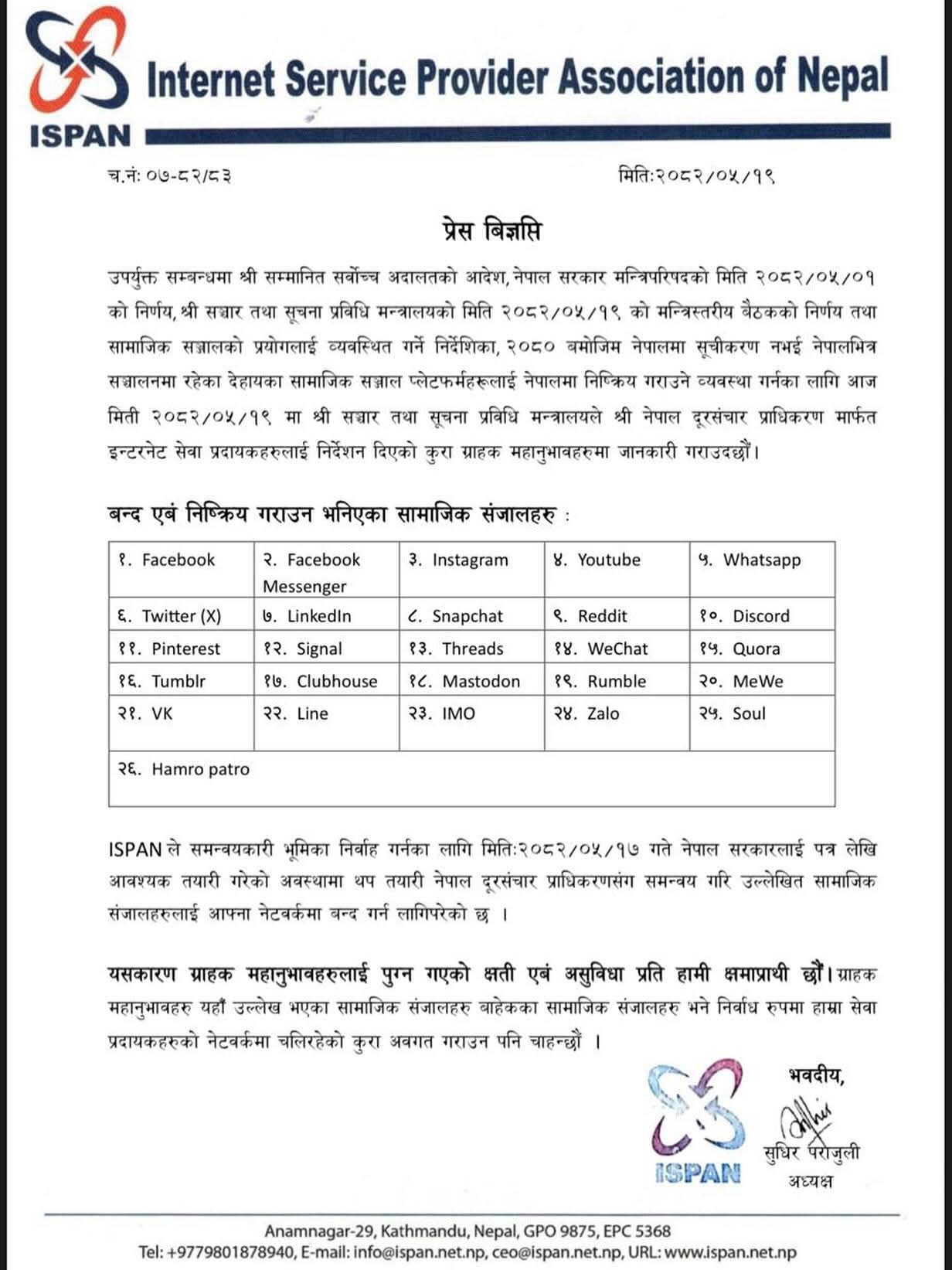
Which social media apps are banned in Nepal?
Here is the list of banned social media apps in Nepal:
- Messenger
- YouTube
- X (Twitter)
- Snapchat
- Discord
- Signal
- Threads
- Kora
- Tumblr
- Clubhouse
- Mastadon
- Rumble
- MeWe
- VK
- Line
- IMO
- Jalo
- Sol
- Hamro Patro
However, the bill has sparked considerable controversy. It has been widely criticized by human rights groups and free speech advocates who argue it is less about accountability and more about granting the government sweeping powers to censor dissent and punish political opponents who criticize authorities online. They condemn it as a direct threat to freedom of expression and a violation of fundamental rights.
The legislation has not yet been fully debated or passed into law, making the preemptive ban a subject of intense debate within the country.
Fact Check: The announcement of the social media ban was confirmed by a government official. The claims about the bill’s intent and the criticism from rights groups are accurately represented based on available international news reports. The situation is developing.
Related Stories
 Auto
Auto Daily News
 Auto
Auto Daily News
 Auto
Auto Daily News
 Daily News
 Daily News
 Daily News
 Daily News