
Best display smartphone: It’s never simple to find a phone with an excellent display when each and every brand attempts to outshine the other with audacious features. This lineup introduces some of the strongest flagships going head-to-head. There are bright screens and silky smooth refresh rates, and these are devices built for those who want the very best watching experience. Let’s analyze each of them and determine which one is brightest.
Read More: OnePlus Open vs Google Pixel 9 Pro Fold: Open vs Closed Design
OnePlus 13
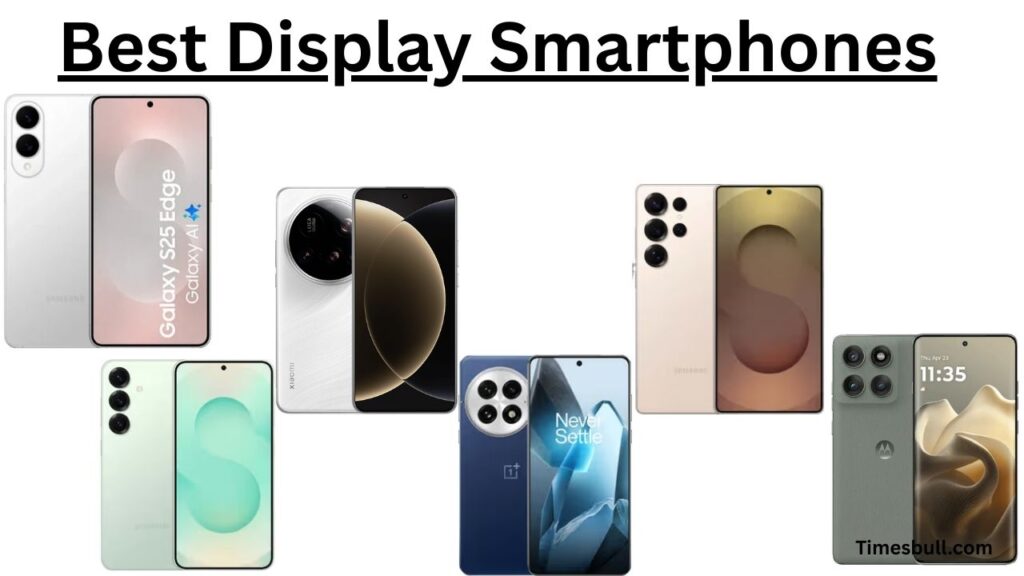
OnePlus 13 comes with a 6.82-inch LTPO AMOLED screen providing 1440 × 3168 pixels resolution at 510 ppi. With HDR10+,Dolby Vision, and up to 4500 nits of peak brightness, visuals appear clear and punchy even under sunlight. Super-Ceramic Glass protection keeps it safe. Powered by a Snapdragon 8 Elite chip, 12GB RAM, and a 6000mAh battery with 100W charging, it’s designed for heavy users.
Xiaomi 15 Ultra
Xiaomi 15 Ultra features a 6.73-inch LTPO AMOLED screen with 1440 × 3200 pixels resolution at 522 ppi, the crispest among competitors. Pro HDR, Dolby Vision, Original Color Pro, and TÜV certifications make it a pleasure for content enthusiasts. It is powered by Snapdragon 8 Elite, 16GB RAM, and a 5410mAh battery with 90W wired and 80W wireless charging support. Clearly, this device targets premium buyers.
Samsung Galaxy S25 Ultra
Samsung S25 Ultra sweeps the floor with a 6.9-inch LTPO AMOLED display that has 1440 × 3120 pixels resolution at 498 ppi. The screen tops at 2600 nits with HDR10+ and Always-on Display. It receives additional strength from Corning Gorilla Armor 2. Under the hood is the Snapdragon 8 Elite for Galaxy, accompanied by 12GB RAM. Its 200MP quad camera serves to increase its appeal further, while a 5000mAh battery with 45W fast charging keeps it going.
Motorola Edge 60 Pro
Motorola Edge 60 Pro features a 6.7-inch OLED display with 1220 × 2712 pixels resolution at 446 ppi. With HDR10+ content recognition, Pantone-validated color performance, and SGS certifications, it provides precise images. It is powered by a Dimensity 8350 Extreme chip and 8GB RAM. A 6000mAh battery with 90W fast charging provides extended performance. Lightweight build and robust color calibration make it attractive to balance-conscious users.
Samsung Galaxy S25
Samsung S25 provides a 6.2-inch LTPO AMOLED screen with 1080 × 2340 pixels at 416 ppi. Although small in size, it still provides HDR10+ video with 2600 nits peak brightness. It is based on Snapdragon 8 Elite, aided by 12GB RAM and a 4000mAh battery with 25W wired and 15W wireless charging. Thin and light, this one is for those who value portability without sacrificing performance.
Samsung Galaxy S25 Edge
Samsung S25 Edge boasts a 6.7-inch Dynamic AMOLED 2X screen with 1440 × 3120 pixels resolution at 513 ppi. The screen goes up to 2600 nits and is HDR10+ supported. Gorilla Glass Ceramic 2 protects it. It runs on Snapdragon 8 Elite with 12GB RAM and a 3900mAh battery that can be charged to 25W. Its thin 5.8mm design makes it stylish and capable.
Final Verdict
OnePlus 13 and Xiaomi 15 Ultra emphasize ultra-bright displays and robust protection, but Samsung S25 Ultra takes the prize for size and camera advantage. Motorola Edge 60 Pro is a combination of design, display capability, and power saving. Samsung S25 and S25 Edge offer slim designs without compromising on flagship-quality visuals. If brilliance on display is the priority, Xiaomi 15 Ultra and OnePlus 13 appear to be the most appealing, and Samsung S25 Ultra is for those who need size with style.