


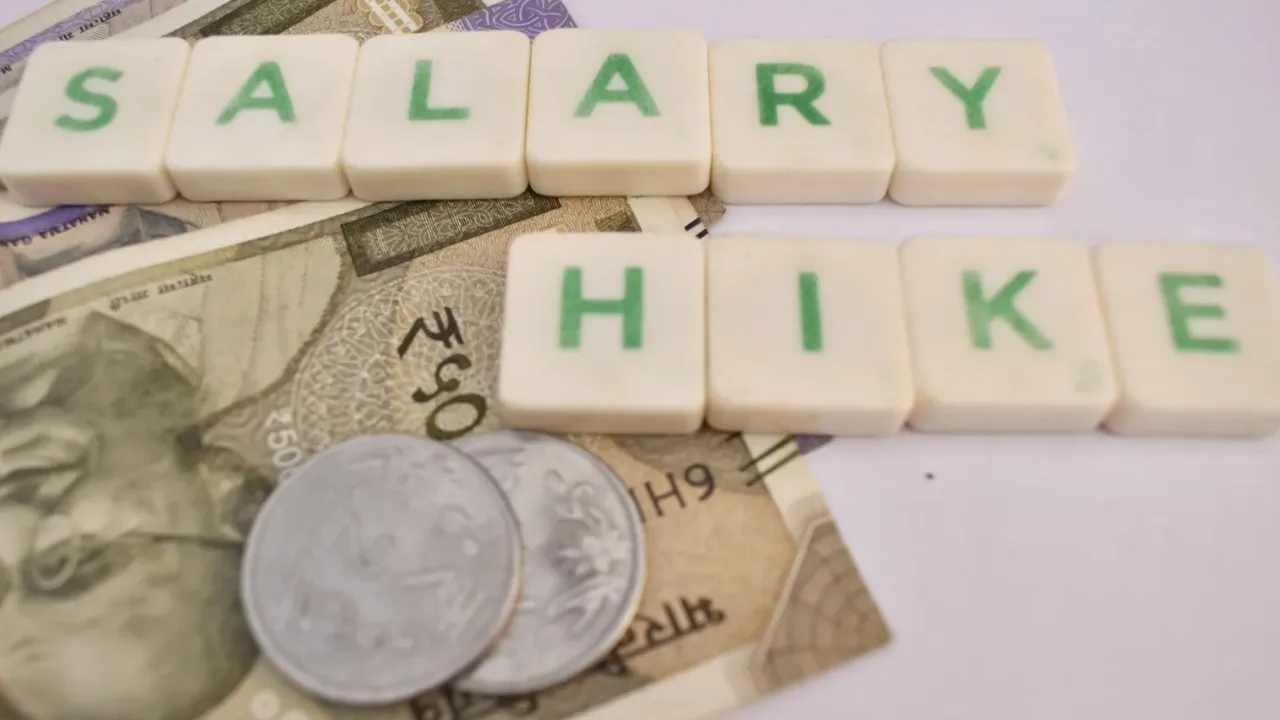
8th Pay Commission Salary Hike: Retail inflation in India rose to 6.09 percent in October 2026, exceeding the Reserve Bank of India’s 6 percent upper limit. This increase in inflation has intensified calls for higher salaries and pensions for central government employees and pensioners under the Eighth Pay Commission.
While the 7th Pay Commission set the fitment factor at 2.57, various employee unions and federations are now requesting a fitment factor between 3.0 and 4.38 for the 8th Pay Commission. But does rising inflation necessarily guarantee a larger salary hike? Let’s examine the details.
What is the primary demand of employee unions?
Demand for minimum basic salary to Rs 69,000: The National Council-Joint Consultative Machinery (NC-JCM) has called for raising the minimum basic pay from Rs 18,000 to Rs 69,000, based on a fitment factor of 3.833. The union also seeks a revision of the family size criteria used to calculate the minimum wage.
Lower-level employees bear the brunt: Rohitashv Sinha, partner at King Stubb & Kasiva, notes that food inflation is a key driver of retail inflation, which has reached a two-year peak. Since junior level-1 employees allocate a large part of their budget to food and beverages, and pensioners live on fixed incomes, they are most affected by inflation.
Will rising inflation increase the fitment factor?
Financial and legal experts suggest that while rising inflation will strengthen the unions’ case, it is unlikely to directly result in a higher fitment factor:
Evaluating the government’s financial burden: Rohitashv Sinha explains that inflation figures give unions a strong argument before the commission and the public, but decisions will not be based solely on a single month’s Consumer Price Index (CPI) data. The commission will also consider long-term inflation trends, current dearness allowance (DA) rates, and the financial impact on the government treasury. It is worth mentioning that the DA was raised to 63% in July 2026.
As per experts, clarifies that CPI measures retail inflation based on household spending and guides the RBI’s monetary policy. In contrast, the All-India Consumer Price Index for Industrial Workers (AICPI-IW) reflects industrial workers’ expenditure and serves as the basis for DA revisions for central government employees. The AICPI-IW index rose by 1.1 points to 155.5 in September 2026.
Fitment factor is not directly tied to inflation: Adil Shetty further explains that the fitment factor is a one-time multiplier decided by the new pay commission after a thorough review of salary structures and the government’s financial capacity. Inflation influences this only indirectly and is not part of a formula.
When will the 8th Pay Commission report be released?
Formation of 8th Pay Commission: Established on 3 November 2025.
Expected submission timeline: Approximately 18 months after formation, i.e. in the first half of 2027 (H1 2027).
Final approval process: Once submitted, the Finance Ministry and the Union Cabinet will review the report and make the final decision.