

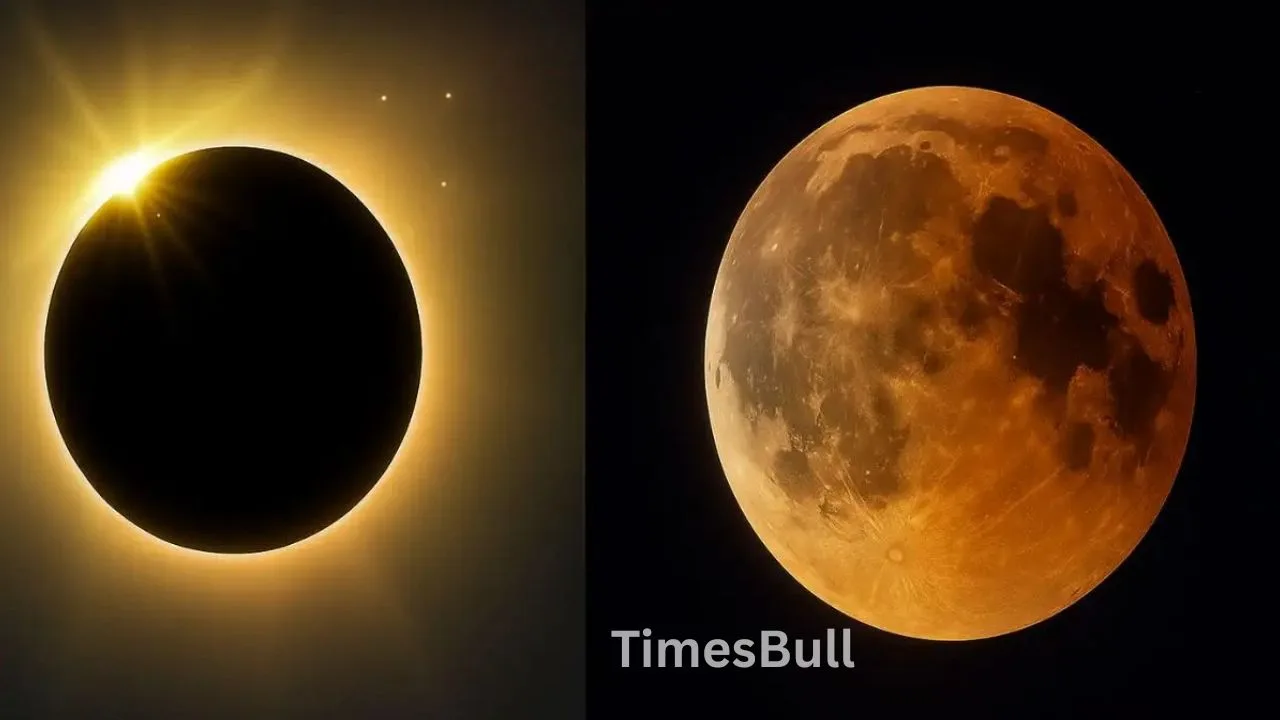
Surya Grahan 2026 Time: The first solar eclipse of 2026 is scheduled to occur on February 17th, coinciding with the Phalguna Amavasya (new moon day). This is an annular solar eclipse (“ring of fire”). In this eclipse, the Moon does not completely cover the Sun, creating a ring of fire around the Sun.
This solar eclipse will be visible primarily in the Southern Hemisphere. The question now is whether this solar eclipse will be visible in India or not. Will there be a Sutak period? And what will be the timing of this eclipse?
Sutak period will not be observed in India
According to religious beliefs, the Sutak period for a solar eclipse begins 12 hours before the eclipse begins. However, this solar eclipse will not be visible in India, so the Sutak period will not be valid.
Auspicious activities can be performed on day of solar eclipse
According to astrology, the rules of Sutak do not apply where the solar eclipse is not visible. Therefore, there will be no special religious restrictions or Sutak in India on February 17th. If you wish to perform any auspicious work, worship, or marriage, you can do so as usual.
Auspicious Timings for Solar Eclipse
According to astrologers, the Amavasya Tithi on February 17th will last until 5:30 pm. The constellation Dhanishtha will last until 9:16 pm. The Moon will transit in Capricorn. Sunrise will occur at 6:58 am and sunset at 6:13 pm.
Inauspicious Times for Solar Eclipse
On the day of the solar eclipse, Rahukaal will last from 3:24 pm to 4:48 pm. Therefore, it is advised not to perform any auspicious work during this time. Additionally, Yamaganda is considered an inauspicious time from 9:47 am to 11:11 am. Adal Yoga will also occur from 9:16 am to 6:57 am.
Where will the “Ring of Fire” be visible?
The eclipse on February 17th will be visible primarily in most parts of Antarctica, creating a beautiful “Ring of Fire”-like spectacle. While the Moon will almost completely cover the Sun, it will be visible in the Antarctic continent and areas around the Southern Ocean. A partial solar eclipse will also be visible in South America, South Africa, the South Atlantic Ocean, the South Pacific Ocean, and other parts of Antarctica.
solar eclipse will not be visible in these areas:
This eclipse will not be visible in India, Sri Lanka, Nepal, Afghanistan, Myanmar, or other Asian countries; Europe; most parts of North America; central and northern Africa; or Australia.