
Smart Cool Roof Techniques: 5 Easy Ways to Block Solar Heat and Keep Your Home Cool Without Air Conditioning
Smart Cool Roof Techniques: Don’t let your house turn into like an oven this summer. Learn 5 simple , budget friendly smart cool roof tricks, including white reflective coatings, green netting, terrace gardening, and evaporative jute bags , so the indoor air can cool down naturally and you can also cut the electricity bills.

 Join Us
 Add as a preferred
Smart Cool Roof Techniques
When direct sun exposure hits an untreated concrete terrace, that surface temperature can climb fast, and it can get honestly unbearable around 60°C to 70°C . This intense warmth doesn’t really “sit there” either , it keeps radiating downward through the ceiling, so top-floor rooms start feeling like absolute ovens. During strong heatwaves, like Nautapa moving across the Indian sub-continent , depending only on air conditioning can lead to sharp energy surges and, yes, painful electricity bills.
Good news though if you manage the thermal entry barrier on your roof properly, you can reduce the indoor temperature by roughly 4°C to 8°C . As per health advisories and municipal guidance frameworks, here are 5 simple, affordable, smart cool roof approaches, that can help shield your house naturally from blazing seasonal heatwaves.
1. Apply White Reflective Cool Roof Paints
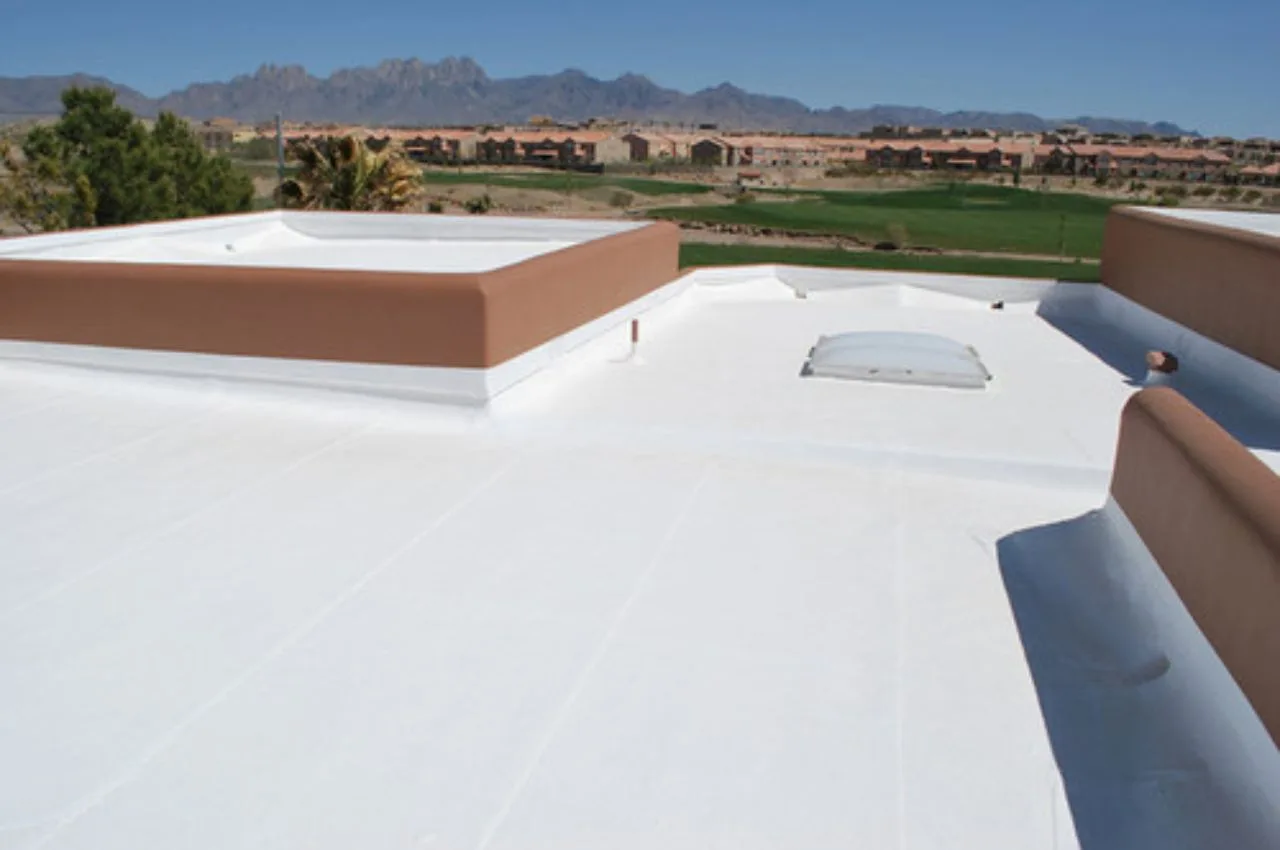
Standard dark, or sort of unfinished grey concrete, soaks up over 80% of the sunlight that lands on it . One of the quicker and honestly most impactful corrective moves is to change the surface albedo (you know, that number for how much light a surface reflects, give or take).
if you put specialized elastomeric white cool roof coatings, or even high-grade waterproof reflective paints onto it , then your roof starts behaving like a kind of radiant mirror for solar energy. These coatings and paints can throw back as much as 90% of the incoming solar radiation into the upper atmosphere.
first clean the terrace surface properly , take off loose dirt , moss, all that. Then apply two thick coats of reflective white roof paint, using a roller brush. If you want something that is ultra-budget friendly, try a traditional lime wash (chuna coating) mixed with an industrial adhesive . That combo gives an immediate temporary guard and it can cut sub-surface heat loads by up to 5°C.
2. Install Green Agro-Net Shading
If you’re renting a top-floor flat, or you just need a quick temporary fix that won’t mess with your terrace floor in any permanent way, then high-density polyethylene (HDPE) green nets kind of become the, best practical option.
those green shade nets (usually around a 75% to 90% shade block factor) work like an outer canopy, catching the sun’s harsh ultraviolet rays a few feet before they can really hit your physical concrete setup.
You can use metal pipes, or even rely on existing structural corner pillars, then lift and fasten a good quality green agro-net at least 4 to 6 feet above the terrace floor. That little structural gap forms an airflow zone, so hot air currents get carried away, and the concrete underneath doesn’t just bake under direct daylight.
3. Set Up a Strategic Terrace Garden (Eco-Roofing)
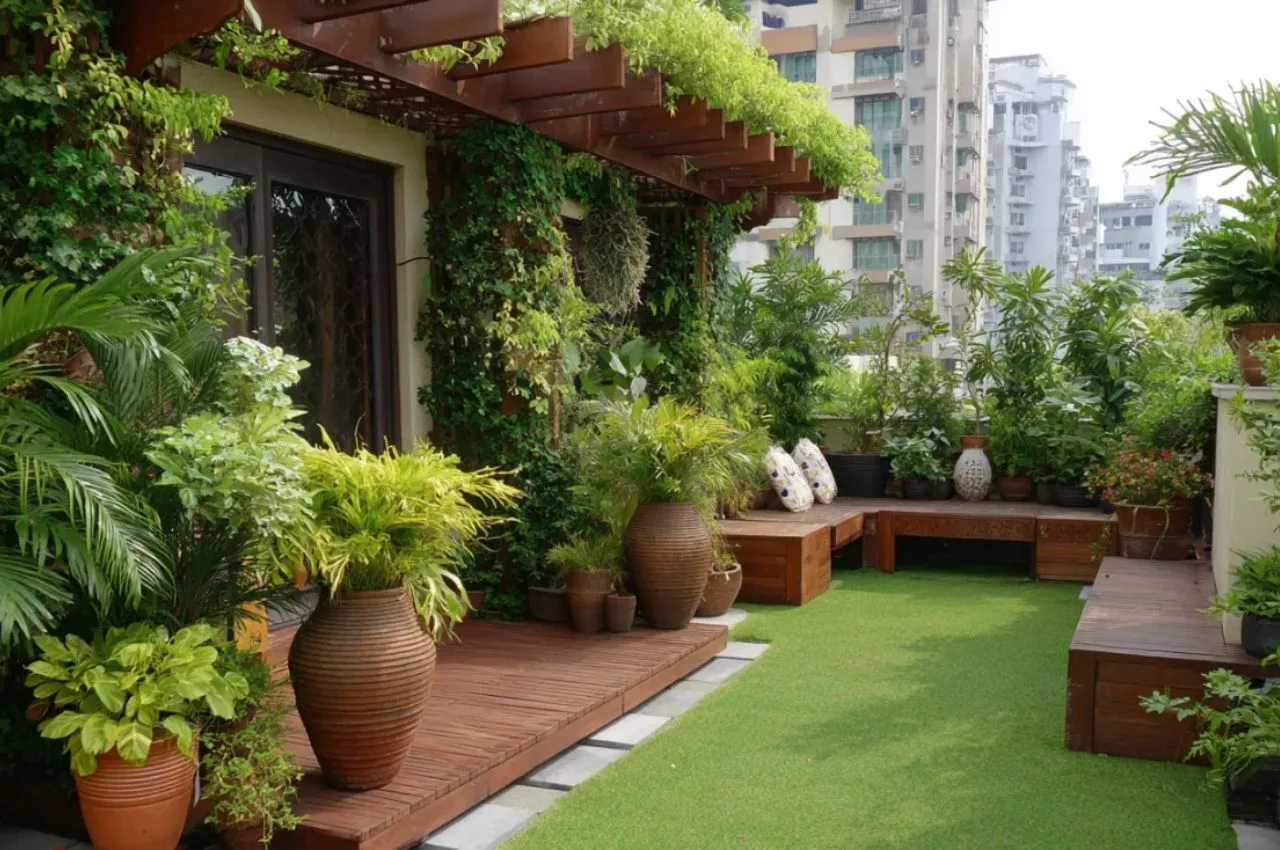
Turning your open rooftop area into a green roof plan is a solid long-term ecological idea to curb radiant heat transfer, and it kinda helps stabilize the whole microclimate too.
The vegetation layers work like a two step shield. The soil mass and pots block much of the direct sun hitting the surface, while the plants cool the nearby air pockets via evapotranspiration, basically sending out moisture vapor into the atmosphere during their life processes.
Place broad planters grow bags, or even lawn patches across the terrace, and try to focus on the zones that sit right above your main living room and bedroom areas. Just make sure your terrace floor has reliable waterproofing layers in place before you start building out bigger garden beds. Then water the plants early in the morning or late at night, so the evaporative cooling stays stronger for longer rather than fading too fast.
4. Jute Bag Cooling System
If you’re hunting for an instant, dirt-cheap hack to cool down a brutally hot ceiling before a long summer night, the classic Indian “jute sack” trick is, honestly , a pretty effective way around it.
The science part is simple and kind of intuitive. This method leans on evaporative cooling only. When water changes from liquid into vapor it grabs on to nearby thermal energy , so the heat gets pulled out of the concrete slab.
How to do it, not too complicated. Grab some old jute gunny bags , slice them open, then spread them flat across the whole exposed area of your concrete terrace. Usually around 4:00 PM or 5:00 PM, wet the bags thoroughly with a hose. The jute soaks up and keeps the moisture for a good while; then as the remaining afternoon sunlight continues, it slowly evaporates the trapped water, and that evaporation drags the stored heat away from the ceiling. Result is a cooler room and, later on, a much more comfortable sleep.
5. Upgrade to Heat Insulation Tiles during Construction
If you’re in the middle of renovating or starting a brand new building design, putting money into high-thermal-mass building materials can give you a sort of permanent, low hassle climate control , like, for real without much ongoing maintenance.
Traditional terracotta, or those specialized cooling tiles, are made to work with internal air pockets, or they’re produced using very reflective mineral rich compounds that show ultra low thermal conductivity.
Swap out the usual floor tiles for white ceramic cooling tiles, or go with naturally insulated broken china mosaic overlays. This structural change permanently helps block the big heat penetration loops, so your home stays highly energy-efficient and structurally insulated , year after year , without you constantly thinking about it.

Sachin Kumar
Next Article
DA Hike by 2%, Direct benefit to 16 lakh employees, pensioners
DA Hike: Big decision by the government. Today marks a notable occasion for government employees and pensioners in Uttar Pradesh. Chief Minister Yogi Adityanath has sanctioned a 2% rise in the dearness allowance (DA) and dearness relief (DR) for state employees. As a result of


DA Hike: Big decision by the government. Today marks a notable occasion for government employees and pensioners in Uttar Pradesh. Chief Minister Yogi Adityanath has sanctioned a 2% rise in the dearness allowance (DA) and dearness relief (DR) for state employees. As a result of this important decision, the DA for state employees has risen from 58% to 60%.
Deepak Kumar, the Additional Chief Secretary of the Finance Department for the Uttar Pradesh government, released an official government order regarding this on Thursday. This initiative will offer substantial financial relief to millions of state employees in light of increasing inflation.
Write a Comment