

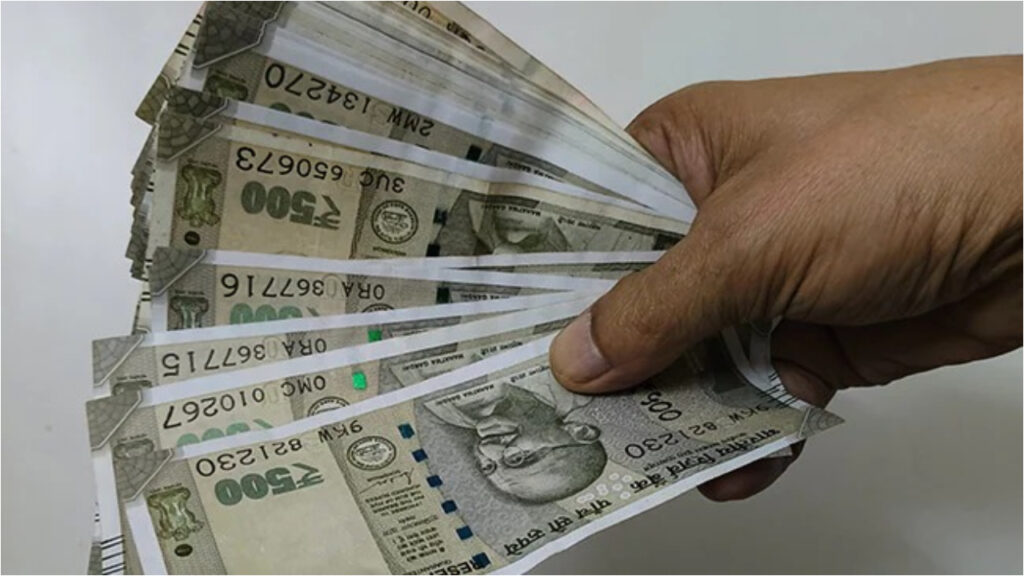
These days, the threat of fake notes has increased in the market, especially fake ₹500 notes often look very similar to genuine ones. The government and the Reserve Bank of India (RBI) have expressed concern over this and issued an alert for the general public. In such a situation, it is extremely important for all of us to know whether the ₹500 note we have is real or fake. A little caution and information can save you from financial loss.
Why Are Fake Notes a Threat?
Counterfeiters work so skillfully that at first glance, it becomes difficult to differentiate between a real and a fake note. These fake notes harm our economy and can also cheat us personally. Therefore, it is very important to know the security features specified by RBI.
How to Identify a Real ₹500 Note? (Key Security Features from RBI):
A real ₹500 note has several security features that distinguish it from a fake one. You can identify a genuine note using these methods:
Quality of Paper and Printing: A real ₹500 note is made of special paper that feels slightly thick and distinctive to the touch. Its printing is very clean, precise, and of high quality. The paper of a fake note might be ordinary, thin, or easily tearable, and the printing can often look blurry, faded, or ragged at the edges.
When Seen Against Light (Watermark & See-through Register):
- When the note is held straight against light, the watermark of Mahatma Gandhi’s picture and the electrotype 500 watermark (numeral 500 as a water mark) are clearly visible in the empty space on the right side.
- Similarly, the floral design printed on the left side of the note, when viewed against light, its front and back prints match perfectly (this is called the See-through Register) and 500 appears visible. In a fake note, these watermarks will either be missing, blurry, or in the wrong place, and the See-through Register will not be present or won’t match correctly.
When the Note is Tilted (Security Thread, Latent Image & Colour Shift):
- The security thread passing right through the middle of the note appears green when the note is held straight and blue when tilted slightly. ‘Bharat’ and ‘RBI’ are written on this thread. A fake thread is often flat, doesn’t change colour, or the writing on it isn’t clear.
- To the right of Gandhi ji’s picture, where his face is, the numeral 500 is written. This is not visible when viewed from the front but becomes clearly visible when the note is tilted at an angle of approximately 45 degrees to eye level (this is called the Latent Image).
- Also, the colour of the numeral ₹500 written in the bottom right corner changes from green to blue when the note is tilted (this uses Colour Shifting Ink). In a fake note, this colour will not change.
Feel by Touch (Intaglio Printing): Some prints like Mahatma Gandhi’s picture, the Ashoka Pillar emblem, and the circle or diamond shape on the right side (which are for the visually impaired) are in raised printing (Intaglio Printing) on a real note. You can feel these by lightly running your finger over the note. In a fake note, this printing might be flat or the raised effect could be very minimal.
Micro Lettering: Near Gandhi ji’s picture, ‘Bharat’ and ‘INDIA’ are written in very tiny letters. You might need a magnifying glass to see this, but it is clear and distinct on a real note. In a fake, it will either be absent, blurry, or incorrectly written.
Number Panel: Serial numbers are printed in black on the top left and bottom right of the note. The serial number on the top left is printed in ascending size from left to right. In fake notes, all numbers are often of the same size.
Other Identification Marks: On the back of a real note, the Swachh Bharat logo, the language panel (where the value of the note is written in 15 languages), the picture of the Red Fort, and the year of printing are clear and in the correct position. In a fake note, some of these might be missing, misplaced, or blurred.
What to Do If You Find a Fake Note?
If you suspect a note is fake, absolutely do not try to pass it on. Circulating fake notes is a legal offense and can lead to punishment.
- Keep that note separate and immediately go to the nearest bank branch (you can go to any bank) and inform the officials. Bank officials will examine the note and take further action according to RBI guidelines.
- You can also file a report at the police station, especially if you know who gave you the fake note.
- A better way to avoid the risk of fake notes is to use digital payment methods available nowadays like UPI, mobile wallets, net banking, debit/credit cards, etc., instead of cash transactions.
Important Information and Fact Check:
All the security features mentioned here for identifying a real ₹500 note are based on information available on the official website of the RBI (Reserve Bank of India) and are generally correct. These are the same methods bank officials use to check notes.
The claim made in the original article about ‘E’ being replaced by ‘A’ in the spelling of ‘RESERVE BANK OF INDIA’ (RESERVA) is NOT included in the official security features provided by RBI for identifying fake notes, and this information is generally NOT reliable. While mistakes can occur in fake notes, this specific spelling error is not a certified or official method of identification. Always rely on the security features listed by RBI on their website.
Conclusion:
With a little awareness and by knowing these easy security features told by RBI, you can protect yourself and others from fake notes. Whenever you receive a ₹500 note, especially if it is from an unfamiliar person, be sure to check these features. Stay safe and promote digital payments!






Comments
0