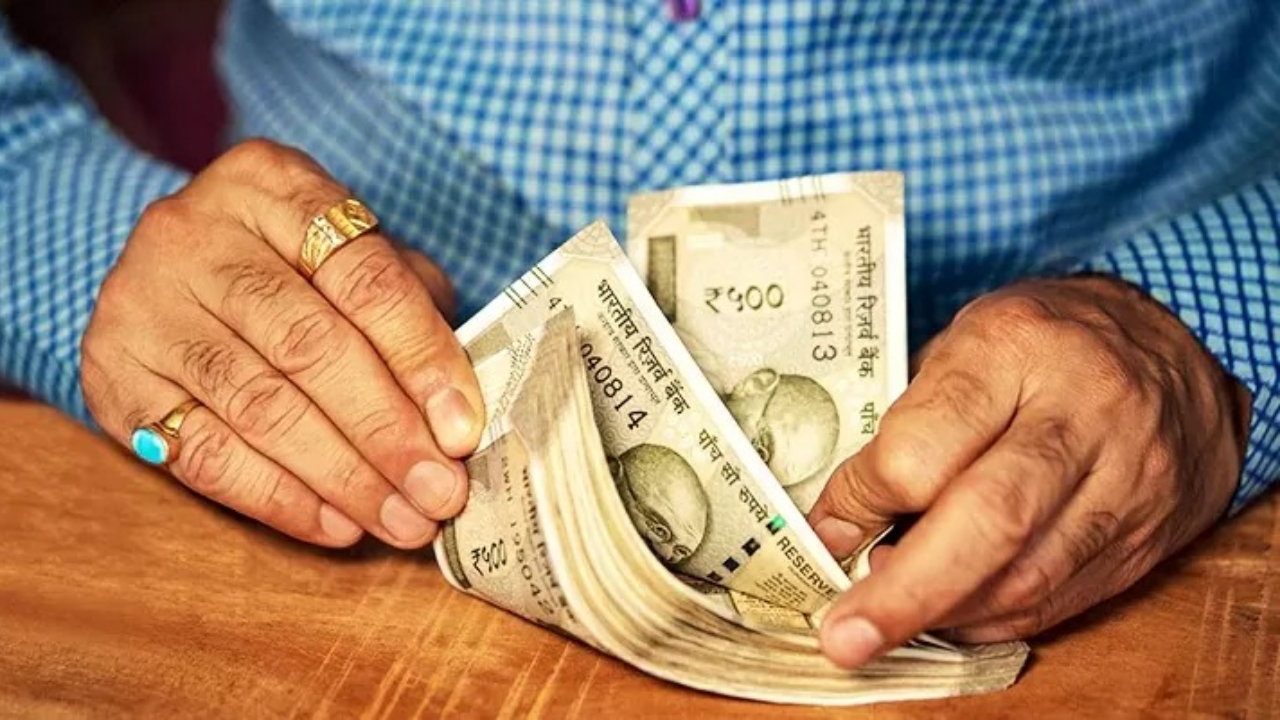
It’s a good practice to save your hard-earned money and deposit it into a bank account. But are you aware that there are certain rules when depositing cash in the bank, ignoring which can bring you under the scrutiny of the Income Tax Department and potentially lead to a notice? Especially if you are depositing large sums.
Income Tax Scrutiny on Large Cash Deposits in Savings Accounts:
The Income Tax Department keeps an eye on certain high-value financial transactions, and large cash deposits in bank accounts are one of them. It is extremely important for you to know about this so you don’t unknowingly violate the rules.
This is the Limit for Cash Deposits in Savings Accounts:
Under Income Tax rules, a total cash deposit of ₹10 lakh or more in the savings accounts of banks and post offices during a financial year (from April 1 to March 31) is considered a ‘High-Value Financial Transaction’.
This limit is not for any single account, but applies to the total cash deposit made across all your savings accounts linked to one PAN card. This means if you have savings accounts in two different banks and you deposit more than ₹10 lakh cash combined in both, it will be reported.
Banks Do the Reporting:
When your total cash deposits cross the ₹10 lakh limit, banks and other financial institutions submit this information to the Income Tax Department. The department compares this information with the Income Tax Return (ITR) filed by you. If the deposited amount does not match your declared income, you could receive a notice.
Rule for Daily Deposit of ₹50,000:
Another rule is that if you deposit a cash amount of ₹50,000 or more in a single day in the bank, providing your PAN card number is mandatory. If you do not have a PAN card, you will have to fill and submit Form 60 or 61. Making such a large cash deposit without a PAN or form can be difficult.
Interest Earned on Savings Accounts is Also Taxable:
The interest you earn on the amount deposited in your savings account is also subject to tax. If the total interest earned from your savings accounts in a financial year is more than ₹10,000, the amount above ₹10,000 is considered your ‘Income from Other Sources’ and is taxable according to your tax slab.
Provision for Interest Exemption:
- Section 80TTA: Individuals below 60 years of age and Hindu Undivided Families (HUFs) can claim a deduction from their total income on interest earned from savings accounts up to ₹10,000.
- Section 80TTB: Senior citizens (60 years or above) get an exemption of up to ₹50,000 on the total interest earned from savings accounts and Fixed Deposits (FDs) in banks and post offices.
General Limit for Cash Transactions (Not Just Deposits):
Apart from bank deposits, there are also general limits on cash transactions. Under Section 269ST of the Income Tax Act, no person can receive a cash amount of ₹2 lakh or more in a single day from a single person or in relation to a single transaction. Violating this rule can attract heavy penalties.
What to Do If You Receive an Income Tax Notice?
If you receive a notice from the Income Tax Department regarding a high-value transaction or any other reason, do not panic. Stay calm and keep these points in mind:
- Read and understand the notice carefully to know what it is about.
- Keep your bank statements, documents related to the source of income (like salary slips, business records, sales bills, investment proofs, etc.) ready. You will need to prove the legitimate source of the cash you deposited.
- If needed, consult an experienced tax advisor or Chartered Accountant (CA). They can help you respond correctly to the notice.
- Respond to the notice on time and with accurate information, online or through the prescribed method. Avoid ignoring it.
Important Information and Fact Check:
The rules mentioned here, such as the reporting of annual cash deposits over ₹10 lakh in savings accounts, mandatory PAN on daily cash deposits of ₹50,000+ (or Form 60/61), tax on interest and its exemptions (Section 80TTA/80TTB), and the cash transaction limit of ₹2 lakh under Section 269ST, are based on the current rules of the Income Tax Department (especially SFT reporting guidelines and cash transaction restrictions) and are generally correct. Compliance with these rules is mandatory for all banks and financial institutions. However, tax rules can change periodically. Always check official government sources (like the Income Tax Department website) for the latest and most accurate information or consult a certified tax professional.
Conclusion:
Correct knowledge of tax rules can save you from unintentional mistakes and future troubles. Keep these rules in mind when planning your finances and making cash deposits so that you stay safe and can avoid Income Tax notices. Always declare your income and transactions correctly in your Income Tax Return.
Latest News
- PM Kisan Samman Nidhi Yojana: नहीं मिल रही 2000 रुपये की किस्त तो किसान तुरंत करवा लें यह काम

- Aadhaar Card Update Rules – How Many Times Can You Change Address, DOB & Number?

- Train Ticket: How to book a confirmed train ticket without an agent? Learn the Easy Steps

- Indian Railways– 155 Trains Express Declared High-Speed, Thousands of Railway Staff to Benefit

- Monsoon Alert – Warning Heavy to Very Heavy Rain alert & thunderstorms in 22 States Over Next 4 Days

- America-Iran War: मिडिल ईस्ट में तनाव होगा खत्म! ईरान ने होर्मुज रास्ते पर कही बड़ी बात

- PM Surya Ghar Yojana 2026: Get Up to Rs 78,000 Subsidy within 6 Easy Steps, Know Here

- Cheapest Available 5G Smartphones in India Under 10000

- UPSC Prelims Answer Key 2026 – How to Download UPSC Prelims Answer Key at upsc.gov.in

- 8th Pay Commission: एनपीएस और पुरानी पेंशन में कौन सी बेहतर, जानिए बड़ा अपडेट