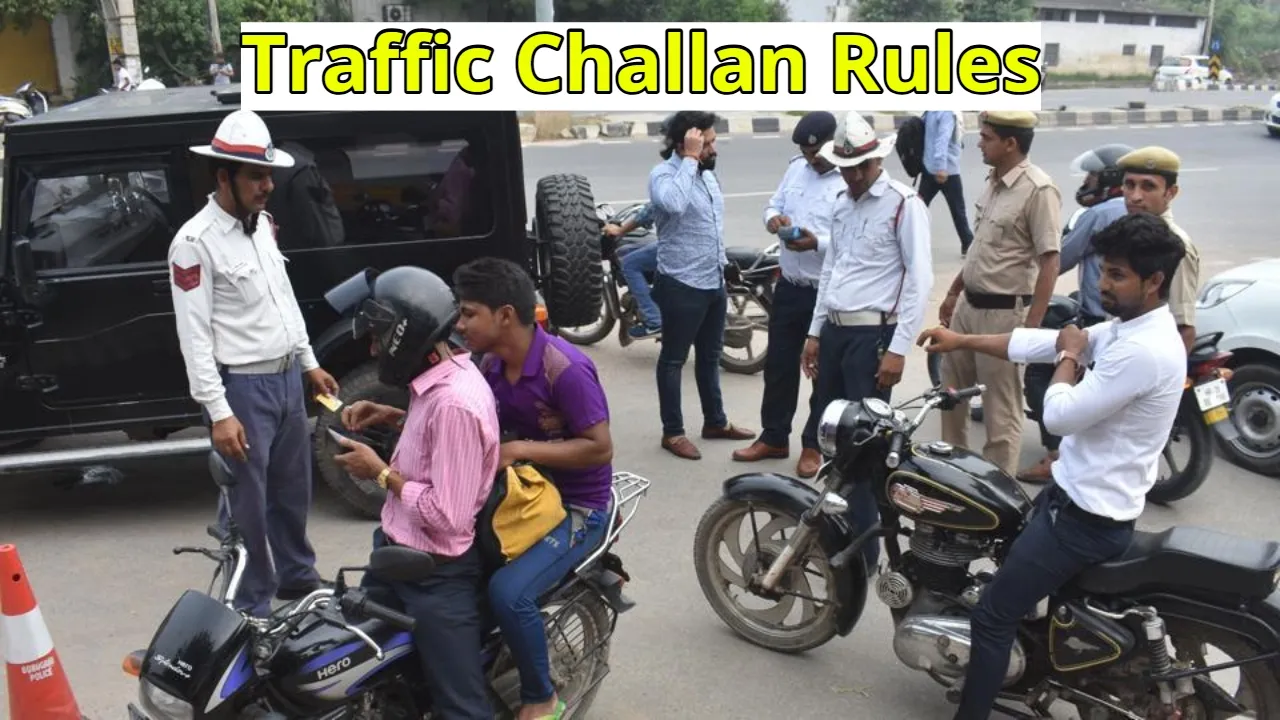
Traffic Challan Rules: Given the rising air pollution in Delhi, the traffic police have intensified their monitoring of Pollution Under Control Certificates (PUCCs). Despite this, a large number of vehicle owners are not complying with the rules. Surprisingly, it’s not car drivers, but rather motorcycle and scooter riders who are leading in this negligence. Following the implementation of the Graded Response Action Plan, a sharp increase in PUCC violations was recorded between October and November.
Read Here: No money in your account? Make instant UPI payments with BharatPe Pay Later
What the Data Shows
According to official figures, more than one lakh challans (fines) related to PUCCs were issued from October 14 to the end of November. Approximately 78% of these challans were issued to two-wheelers. This means that in four out of every five cases, the violators were found to be motorcycle or scooter riders. Significantly, not a single car is included among the top five vehicles with repeated PUCC violations.
Vehicles with Repeated Violations
Some motorcycles and scooters have been identified that have received dozens of challans. In many cases, the vehicle owners never obtained a PUCC, yet the vehicles continued to operate on the roads for years. The traffic police are now considering such cases not as simple mistakes, but as serious negligence. Vehicles with more than 10 pending challans are considered habitual offenders, and these cases may be referred to court.
Read Here: New Government Scheme Announced, 5 Lakh Loan Available Without Interest or Guarantee
PUCC Rules and Penalties
Under the Motor Vehicles Act, 1988, it is mandatory for every vehicle to have a valid PUCC. New vehicles require a PUCC after one year, and older vehicles need to renew their PUCC every six months. Violation of the rules now carries not only fines but also provisions for license suspension and even imprisonment. A heavy fine is imposed for the first offence, and the penalties become stricter for repeat offenders. In Delhi, this rule is being effectively enforced through e-challans.
Latest News
- Weather warning – Heavy Rain, thunderstorms, lightning Alerts for 13 States Over Next 3 Days

- UP TGT Exam City Slip 2026 Released – Download at upessc.up.gov.in, Exam June 3-4

- ATM Alert: एटीएम में फंस जाए डेबिट कार्ड तो घबराएं नहीं, फटाफट यह काम करने से होगा समाधान
- Post Office Scheme – 7.5% Interest Rate, ₹5 Lakh Becomes ₹7,24,974 in 5 Years, Start with Just ₹1,000
- Best AI Video Editing Laptops Under 60,000 INR: Top Picks Her

- Best CNG Cars: पेट्रोल के बढ़ते दाम के बीच ये सीएनजी गाड़ी खरीदकर खर्च करें कम, माइलेज भी जबरदस्त

- Samsung Stable One UI 8.5 Update to Galaxy Tab S10 FE and Tab S10 FE+

- बुढ़ापे की लाठी बनेंगी ये तीन स्कीम्स, निवेश से पहले जानिए कितना मिल रहा ब्याज

- OnePlus Nord CE 6 vs Samsung Galaxy A57: Which Mid-Range 5G Phone Wins?

- Lenovo LOQ 15 Gen 11 Review: Best Budget Gaming Laptop?