
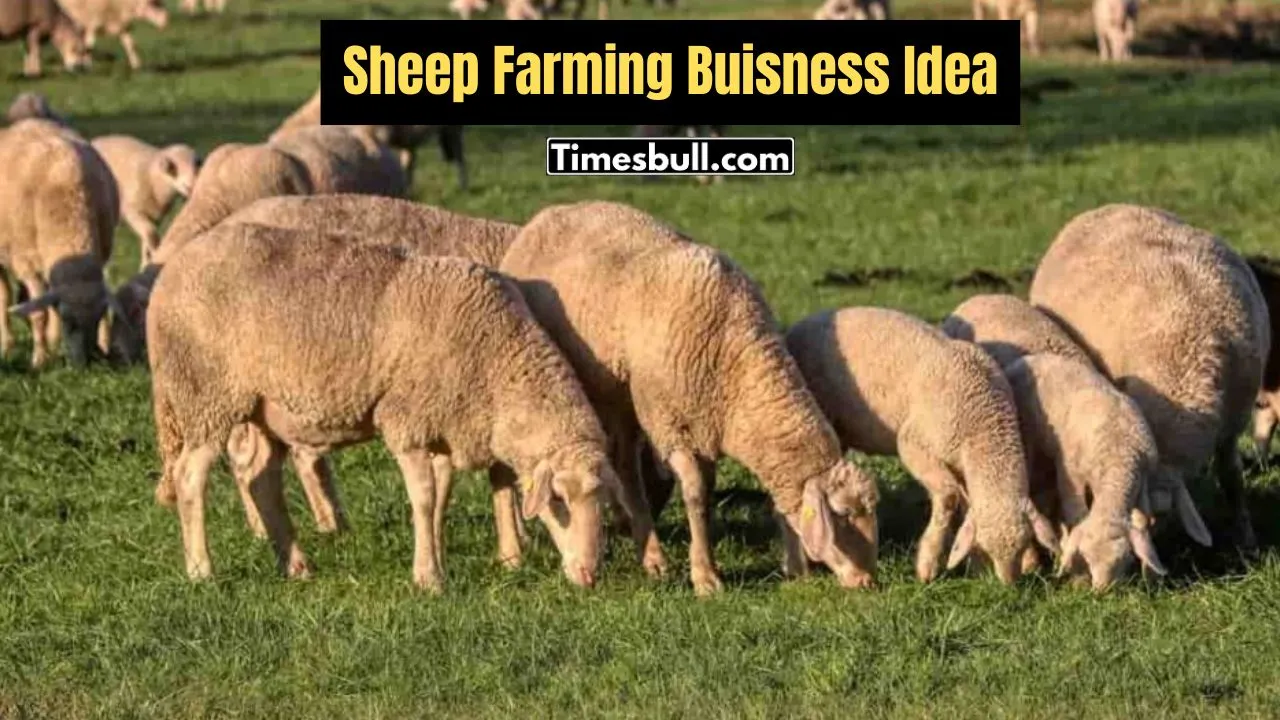
The income from animal husbandry in India is steadily increasing, and sheep farming is becoming an attractive business. Due to its low cost and good income, many farmers are turning to sheep farming. It offers good profits through the production of wool, milk, and meat. If you also want to start sheep farming, take a look at the special breeds, benefits, and important information.
Benefits of Sheep Farming
Sheep farming can be highly beneficial for small and marginal farmers. Here are some key benefits:
- Low Investment, High Profit: Sheep farming requires minimal capital to start. With the right breed and proper care, it can become profitable.
- Good Income from Wool, Milk, and Meat: Wool, milk, and meat from sheep are sold at good prices in the market. Breeds like Merino and Rambouillet, known for wool production, are especially profitable.
- Farming on Poor Land: Sheep farming doesn’t require fertile land. It can be done well even on dry and low-grass land.
- Government Schemes for Support: The central and state governments offer various schemes to promote sheep farming, providing subsidies and financial assistance.
Popular Sheep Breeds in India
Sheep breeds vary based on their purpose (wool, meat, or milk). Some popular breeds in India include:
Merino Sheep
- Best breed for wool.
- Produces soft and high-quality wool.
- Suitable for colder areas.
Nali Sheep
- Popular in Rajasthan, Haryana, and Punjab.
- Good wool production.
- Strong body and needs less care.
Malpura Sheep
- Found mainly in Rajasthan.
- Ideal for meat production.
- It can survive in dry conditions with less water.
Rambouillet Sheep
- Suitable for both wool and meat.
- Great for cold climates.
- Fast-growing breed.
Bellary Sheep
- Found mainly in Karnataka.
- Best for meat production.
- Fast-growing breed.
How to Start Sheep Farming?
-
Choose the Right Breed: Pick the breed based on your climate and market demand. Merino and Rambouillet are good for wool, while Malpura and Bellary are better for meat.
-
Build a Proper Shed: Ensure the sheep are kept safe from weather and disease by providing a suitable shed.
-
Provide a Balanced Diet: Feed the sheep green fodder, dry fodder, mineral salts, and clean water for proper growth and better quality wool/meat.
-
Health Care: Regular vaccinations and veterinary care are necessary to keep the sheep healthy and safe from diseases.
-
Sell in the Right Market: Selling wool, milk, and meat in the right market will bring in higher profits. Consider local markets, online platforms, and wholesalers.
Government Schemes and Subsidies
The Government of India and state governments provide subsidies and loans to promote sheep farming. Programs like the National Livestock Mission and NABARD offer financial assistance to farmers.
Latest News
- Weather warning – Heavy Rain, thunderstorms, lightning Alerts for 13 States Over Next 3 Days

- UP TGT Exam City Slip 2026 Released – Download at upessc.up.gov.in, Exam June 3-4

- ATM Alert: एटीएम में फंस जाए डेबिट कार्ड तो घबराएं नहीं, फटाफट यह काम करने से होगा समाधान

- Post Office Scheme – 7.5% Interest Rate, ₹5 Lakh Becomes ₹7,24,974 in 5 Years, Start with Just ₹1,000

- Best AI Video Editing Laptops Under 60,000 INR: Top Picks Her

- Best CNG Cars: पेट्रोल के बढ़ते दाम के बीच ये सीएनजी गाड़ी खरीदकर खर्च करें कम, माइलेज भी जबरदस्त

- Samsung Stable One UI 8.5 Update to Galaxy Tab S10 FE and Tab S10 FE+

- बुढ़ापे की लाठी बनेंगी ये तीन स्कीम्स, निवेश से पहले जानिए कितना मिल रहा ब्याज

- OnePlus Nord CE 6 vs Samsung Galaxy A57: Which Mid-Range 5G Phone Wins?

- Lenovo LOQ 15 Gen 11 Review: Best Budget Gaming Laptop?