
In today’s times, saving a small portion of your monthly income regularly and investing it in safe investments is crucial for everyone. If you’re planning to build a substantial corpus by depositing money in small installments and earning a fixed interest rate upon maturity, a recurring deposit (RD) is a great option.
It allows you to deposit a fixed amount every month and earn a fixed interest rate on it. Often, investors struggle to decide which will yield the highest returns: a Post Office RD or an RD from the country’s largest bank, SBI. Let’s address this financial dilemma by comparing the interest rates, return calculations, and maturity amounts of both schemes in detail.
Post Office RD
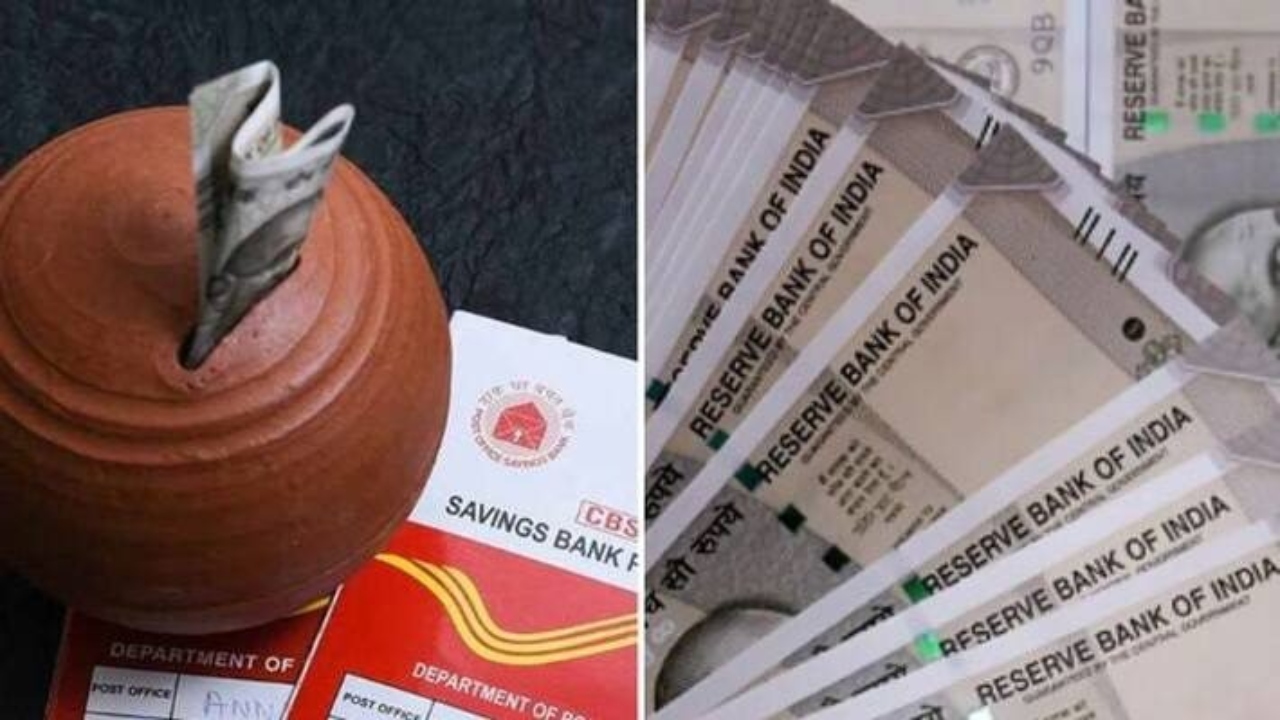
Post Office RD is considered one of the most reliable and risk-free investments in India, as it is regulated by the Government of India. The tenure of a Post Office RD is 5 years, and it currently offers a fixed interest rate of 6.7 percent. This rate is very attractive for ordinary investors.
If you save ₹10,000 every month and invest it in a Post Office RD, your total investment will reach ₹6 lakh by the end of 5 years. This robust investment will earn you an interest rate of approximately ₹1,13,546 at a rate of 6.7 percent. Thus, when your RD matures after 5 years, you will receive a substantial sum of ₹7,13,546. This means that a guaranteed profit of over ₹1.13 lakh will be added to your savings.
SBI RD
State Bank of India (SBI), the country’s largest public sector bank, also offers excellent rates on its recurring deposit scheme, but interest rates vary depending on your investment period and age group. SBI RD tenures can range from 3 years to 10 years.
Looking at SBI’s rates, for a 3- to 4-year term, general customers earn an interest rate of 6.55 percent, while senior citizens receive a robust 7.05 percent. However, for longer terms, from 5 to 10 years, the general rate drops slightly to 6.30 percent, and for senior citizens, it’s 6.80 percent.

Now, consider a 5-year RD with a monthly investment of ₹10,000. At 6.30 percent, a total investment of ₹6 lakh for a general citizen would yield approximately ₹706,750 at maturity. This is approximately ₹6,796 less than the post office return. However, if you’re a senior citizen, at 6.80 percent, your maturity amount would be around ₹720,500, which is higher than the post office rate.
Which is more beneficial
As a typical investor, if you deposit ₹10,000 monthly for 5 years, a Post Office RD (6.7%) guarantees a higher return of ₹713,546, while an SBI RD (6.30%) yields approximately ₹706,750. In this head-to-head comparison, the Post Office RD proves to be a slightly better option for ordinary citizens due to its higher interest rate.
However, the picture changes for senior citizens. SBI’s higher rates of 7.05% and 6.80% offer them greater benefits than the Post Office. Furthermore, a major advantage of a bank RD is that you can start investing for a shorter period, such as 3 years, while the Post Office’s minimum term is 5 years. Therefore, make a decisive decision based on your investment horizon, age, and liquidity needs.
Latest News
- Apple MacBook Neo Deal Alert: Get It For Under ₹58,000 on Amazon Right Now

- Pakistan Attack: आत्मघाती हमले से दहला पाकिस्तान, 23 लोगों की मौत, 50 से ज्यादा घायल, जानें

- Honor Magic 9 Series Leaks: Flagship Upgrades with Massive 8,000mAh Battery and 200MP Cameras

- Motorola Edge 60 Fusion Review: Mid-Range King or Outdated?

- FD Update– Breaking Your FD Early? Know the consequences

- Bank Holiday–RBI Announces Closure of SBI, HDFC and All Banks Next Week, Save the Dates

- Samsung Galaxy S26 Ultra Amazon Deal – Get ₹23,509+ Discount with Bank Offers and Exchange Benefits

- Best Scooters For College Girls 2026 – Perfect Mix Of Mileage, Style And Lightweight Design

- Kodak Matrix QLED Google TV 2026 Series Launched in India Just Under 10,999

- Senior Citizen FD Rates: सीनियर सिटीजन को यहां से मिल रहा बंपर ब्याज, जल्द करें निवेश