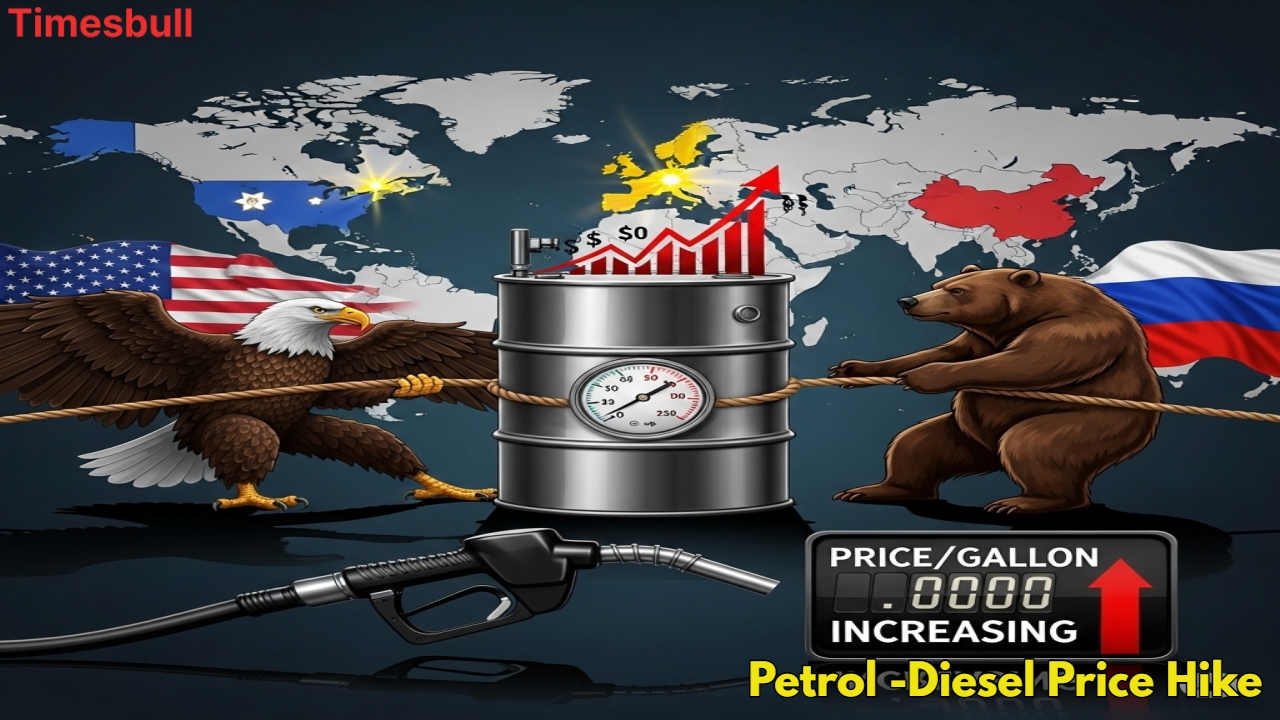
The impact of the ongoing tension between Russia and the US is now visible on crude oil prices as well. Experts believe that due to this tension, Brent crude prices may reach $80-82 per barrel by the end of 2025. This news is worrying for all of us, as it will have a direct impact on our pockets. In this article, we will know why crude oil prices are rising, what impact they will have on India, and what we should expect in the future.
Russia-US tension
There are many reasons for the surge in crude oil prices in the world, but the biggest reason is the tension between the US and Russia.
America’s tough stance
NS Ramaswami, Head of Commodities & CRM, Ventura, said that Brent crude prices for October 2025 delivery have risen from $72.07 to close to $76, and it is getting strong support at $69. He estimates that it may remain in the range of $80-82 by the end of the year. He said that if the US imposes strict sanctions on countries trading with Russia, global oil supply could be disrupted, causing prices to rise sharply.
Trump’s 12-day warning
US President Donald Trump has given Russia a deadline of 10-12 days to stop military action in Ukraine. If this does not happen, countries buying oil from Russia could be charged an additional duty of up to 100%. Energy analyst Narendra Taneja said that if Russian oil is removed from the market, the price of Brent crude could go up to $100-120 per barrel, which will have a major impact on countries like India.
Challenge for India
There will be no immediate shortage of crude oil for India, as we buy oil from more than 40 countries. But controlling the prices of petrol and diesel at the retail level can become a big challenge. If crude oil prices rise too much, the burden can also be put on consumers. Taneja said, “We will manage the oil supply, but controlling prices for consumers will be the most difficult aspect.”
Why is there a risk of supply shortage

The spare capacity of oil production in the world is already limited. If the supply of a big producer like Russia is disrupted, a major crisis can arise at the global level. Even though Saudi Arabia or OPEC+ can intervene in this situation, the lack of time and resources in increasing production can become a hindrance. According to experts, Trump wants to reduce oil prices due to domestic politics, but America itself cannot increase production rapidly.
Impact on the market
The interest rate policy of the US Federal Reserve and the data on US oil reserves are also affecting the volatility in the oil market. The strong dollar has so far controlled the prices a bit, but it cannot completely stop the geopolitical risks.
Some relief, but the danger remains
The recent US-EU trade agreement and the growing consensus between the US and China have brought some stability. But if Russian supplies stop and OPEC+ does not increase production, the world could face a major oil crisis. In such a situation, prices could rise much more than current estimates.
Latest News
- Weather warning – Heavy Rain, thunderstorms, lightning Alerts for 13 States Over Next 3 Days

- UP TGT Exam City Slip 2026 Released – Download at upessc.up.gov.in, Exam June 3-4

- ATM Alert: एटीएम में फंस जाए डेबिट कार्ड तो घबराएं नहीं, फटाफट यह काम करने से होगा समाधान

- Post Office Scheme – 7.5% Interest Rate, ₹5 Lakh Becomes ₹7,24,974 in 5 Years, Start with Just ₹1,000

- Best AI Video Editing Laptops Under 60,000 INR: Top Picks Her

- Best CNG Cars: पेट्रोल के बढ़ते दाम के बीच ये सीएनजी गाड़ी खरीदकर खर्च करें कम, माइलेज भी जबरदस्त

- Samsung Stable One UI 8.5 Update to Galaxy Tab S10 FE and Tab S10 FE+

- बुढ़ापे की लाठी बनेंगी ये तीन स्कीम्स, निवेश से पहले जानिए कितना मिल रहा ब्याज

- OnePlus Nord CE 6 vs Samsung Galaxy A57: Which Mid-Range 5G Phone Wins?

- Lenovo LOQ 15 Gen 11 Review: Best Budget Gaming Laptop?