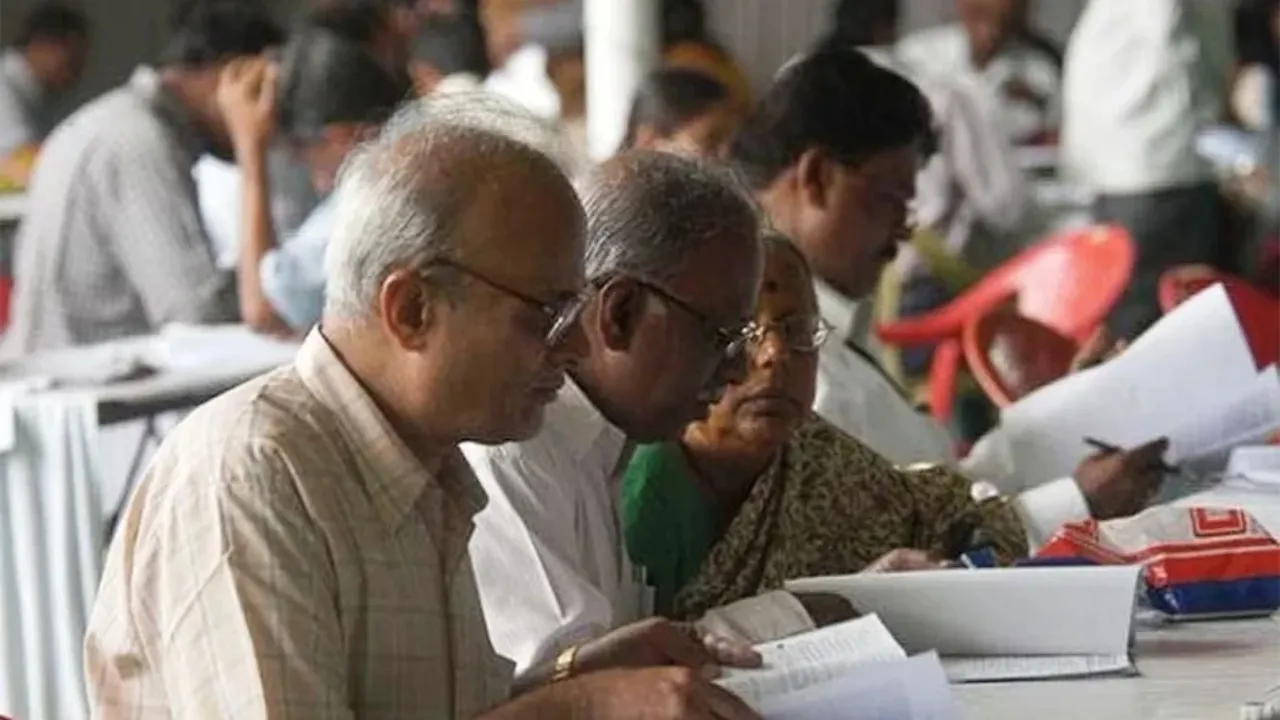
Pension Update: Big news for pensioners. Government workers often find themselves questioning whether they’ll get a pension if they leave their jobs early. The Supreme Court has shed light on this matter with an important ruling. To get more insight, we chatted with Amit Kumar, a Chartered Accountant based in Gurugram.
He clarified that government employees might forfeit their pension if they resign before finishing their service period. However, they are still entitled to their Provident Fund (PF) and gratuity. The case that made its way to the Supreme Court involved a former employee of the Delhi Transport Corporation (DTC). Amit Kumar took a closer look at the ruling in this case and broke down the whole situation.
The ex-DTC employee had been a conductor at the Delhi Transport Corporation for almost 30 years. He resigned on August 7, 2014, but soon realized that his resignation could impact his job and retirement benefits. He tried to retract his resignation, but the officials denied his request and accepted it instead. After leaving, Mr. Kumar received his PF balance, but he didn’t get his pension, gratuity, or leave encashment. This led him to take his case to court, eventually reaching the Supreme Court.
What are the Pension Rules 1972 that the SC referred to?
In this case, the Supreme Court referenced the Central Civil Services (Pension) Rules, 1972. The court pointed out that according to Rule 26, if a government employee resigns, their entire previous service is considered terminated. Therefore, such an employee is not eligible for a pension. Since Mr. Kumar resigned, Rule 26 is applicable to his situation.
Can resignation be viewed as voluntary retirement?
Mr. Kumar contended that since he had served for over 20 years, his resignation should be treated as voluntary retirement, making him eligible for a pension. However, the Supreme Court dismissed this claim. The court clearly stated that voluntary retirement requires a minimum notice period of three months, which Kumar had not provided. Therefore, this would be considered a resignation, not voluntary retirement.
What was the decision on gratuity?
The Supreme Court ruled in Mr. Kumar’s favor regarding gratuity. The court stated that under the Gratuity Act, an employee who has served for more than five years is entitled to gratuity. Overall, this decision makes it clear that resigning from a government job does not result in a pension, regardless of the length of service. However, benefits such as gratuity and pension payments are available under the law. Employees should understand the rules thoroughly before leaving their jobs to avoid significant losses in the future.
Latest News
- Weather warning – Heavy Rain, thunderstorms, lightning Alerts for 13 States Over Next 3 Days

- UP TGT Exam City Slip 2026 Released – Download at upessc.up.gov.in, Exam June 3-4
- ATM Alert: एटीएम में फंस जाए डेबिट कार्ड तो घबराएं नहीं, फटाफट यह काम करने से होगा समाधान

- Post Office Scheme – 7.5% Interest Rate, ₹5 Lakh Becomes ₹7,24,974 in 5 Years, Start with Just ₹1,000

- Best AI Video Editing Laptops Under 60,000 INR: Top Picks Her

- Best CNG Cars: पेट्रोल के बढ़ते दाम के बीच ये सीएनजी गाड़ी खरीदकर खर्च करें कम, माइलेज भी जबरदस्त

- Samsung Stable One UI 8.5 Update to Galaxy Tab S10 FE and Tab S10 FE+

- बुढ़ापे की लाठी बनेंगी ये तीन स्कीम्स, निवेश से पहले जानिए कितना मिल रहा ब्याज

- OnePlus Nord CE 6 vs Samsung Galaxy A57: Which Mid-Range 5G Phone Wins?

- Lenovo LOQ 15 Gen 11 Review: Best Budget Gaming Laptop?