Category: Business

Stay ahead of the curve in India’s dynamic financial landscape with Timesbull. We deliver real-time updates and in-depth analysis on Indian business, finance, and the stock markets. Get the latest BSE/NSE news, ensuring you’re always informed about market movements.

Track the pulse of the Indian economy with our comprehensive coverage of Sensex and Nifty updates. Timesbull provides crucial personal finance insights to help you manage your money effectively and make informed investment decisions.

Beyond breaking news, we offer expert market analysis and insightful perspectives on economic trends shaping India and the global economy. Whether you’re a seasoned investor, business professional, or just starting to manage your finances, Timesbull is your trusted source.

Rely on Timesbull for accurate, timely, and insightful business and finance news, empowering you to navigate the complexities of the Indian market with confidence. Visit Timesbull today to unlock your financial potential.

  • 8th Pay Commission: Government to Revamp Salary Structure, Increase DA and Allowances for Central Employees

    8th Pay Commission: Government to Revamp Salary Structure, Increase DA and Allowances for Central Employees

    For the last few days, discussions about the 8th Pay Commission have increased in the country. Central employees are eagerly waiting to know when the Central Government will set up the 8th Pay Commission. The 7th Pay Commission was formed in 2014 during the Manmohan Singh government and has now completed 10 years. Because of this, employees are curious about the formation of the 8th Pay Commission. Let us tell you that the 7th Pay Commission will end on January 1, 2026.

    When Will the 8th Pay Commission Be Formed?

    Some media reports suggest that the central government may announce the formation of the 8th Pay Commission in the upcoming budget. However, no official statement has been made yet. Meanwhile, central employees and labor unions are adopting a “wait and watch” approach regarding this new pay commission.

    Possible Change in Fitment Factor

    It is too early to predict the exact salary hike for government employees. However, Shiv Gopal Mishra, Secretary of the National Council of Joint Consultative Machinery, has indicated that the next pay commission may introduce a fitment factor of at least 2.86. If approved, the minimum basic salary of central government employees could rise by 186%, increasing from ₹18,000 to ₹51,480. This would be a significant hike. Additionally, other allowances, including Dearness Allowance (DA), will also increase. The government forms a pay commission to review and revise the salary structure of central employees.

    Over 1 Crore Employees and Pensioners to Benefit

    The 7th Pay Commission was set up by former Prime Minister Manmohan Singh on February 28, 2014. It submitted its report on November 19, 2015, and its recommendations were implemented from January 1, 2016. Based on this timeline, the 8th Pay Commission is expected to come into effect from January 1, 2026. This will provide much-needed relief to over 1 crore central government employees and pensioners.


     

  • SCSS: Steady and secure income after retirement, guaranteed by the Government

    SCSS: Steady and secure income after retirement, guaranteed by the Government

    SCSS: This government initiative is known as the Senior Citizen Savings Scheme (SCSS). It is regarded as one of the most advantageous investment options for ensuring a secure and stable income post-retirement.

    Know about the Senior Citizen Savings Scheme (SCSS)

    The Senior Citizen Savings Scheme (SCSS) provides fixed returns for retirees, allowing them to invest without any associated risks. Managed by the government, this scheme offers the highest interest rates among small savings programs, making it an appealing choice for seniors looking to enhance their savings. Participants in the SCSS receive an annual interest rate of 8.2 percent. This scheme not only helps senior citizens safeguard their retirement funds but also ensures a consistent income stream. Individuals can establish SCSS accounts either solely or jointly with their spouses.

    Maximum deposit of Rs 30 lakh

    Each account permits a maximum deposit of Rs 30 lakh, with a minimum investment requirement of Rs 1,000. Cash deposits are allowed up to Rs 1 lakh, while amounts exceeding this limit must be submitted via cheque. Retired couples can maximize their benefits by opening separate SCSS accounts, effectively increasing their investment ceiling to Rs 60 lakh.

    This arrangement yields a quarterly interest of Rs 1,20,300, translating to an annual interest income of Rs 4,81,200. Over a five-year period, the total interest accrued upon maturity will amount to Rs 24,06,000. Thus, by investing Rs 60 lakh across two accounts, one can expect to receive Rs 24 lakh in interest after five years.

    What would be the profit from an investment of up to Rs 30 lakh in a single account?

    Quarterly interest – Rs 60,150

    Annual interest – Rs 2,40,600

    Total interest over five years – Rs 12,03,000

    Total maturity amount – Rs 42,03,000.

    Disclaimer

    This is general information based on available online sources. Please verify before making any transactions. Times Bull is not responsible for any financial investments made, as it is entirely your responsibility. For better results, please consult a financial advisor.

  • Plan your SIP like experts, just do this work after receiving salary

    Plan your SIP like experts, just do this work after receiving salary

    If you are planning for a SIP investment plan, then this article is for you. Mutual funds are super popular with investors in the country. One of the easiest ways to get into mutual funds is through a Systematic Investment Plan (SIP). This approach is all about long-term investing, which really helps with compounding benefits. SIPs can help you average out the cost of buying mutual fund units, boosting your chances of scoring higher returns.


    Some folks think that the specific date you invest in SIPs can impact your wealth growth. So, does it really matter if you pick the 7th or the 15th? There are plenty of theories floating around, but experts aren’t buying into any of them. A wealth advisor told Mint that it’s the overall time you spend investing that really counts for long-term wealth, not the exact timing of your investments.


    Consistency is key

    Preeti Zende, a SEBI-registered investment advisor and founder of Apna Dhan Financial Services, emphasizes that it’s the duration in the market that shapes your wealth over time, not just when you jump in. She advises investors to focus on making consistent investments and to think long-term for building wealth.


    Research has been done to see if picking a specific investment date makes a difference, and the findings show it doesn’t really impact the fund. So, investors are encouraged to set up their SIP on any date that works for them. If you’re worried about blowing through your salary too quickly, consider starting your SIP in the first week of the month to invest before you spend.


    Kick off your SIP right around the time you get your paycheck


    Ravi Saraogi, co-founder of Samasthiti Advisors, mentioned that the timing of your SIP doesn’t really impact wealth creation. Even if past data seems to show a link, it’s just a coincidence. The best practice is to start your SIP as soon as you get your salary, so you can save before you start spending.


    Desclaimer: For any financial invest anywhere on your own responsibility, Times Bull will not be responsible for it.


  • SBI’s amazing SIP scheme, you will get Rs 17 lakh by depositing just Rs 250

    SBI’s amazing SIP scheme, you will get Rs 17 lakh by depositing just Rs 250

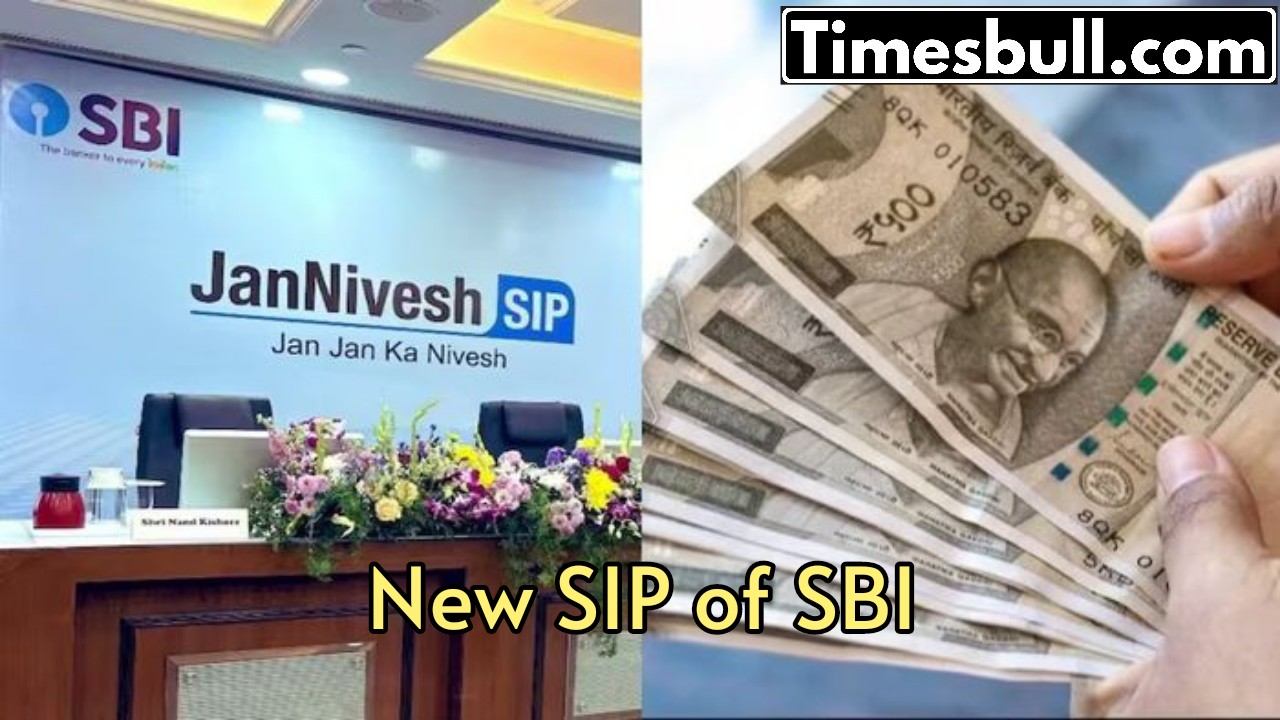
    Again India’s largest government bank State Bank of India gives a big surprise to everyone. People generally aim to save up for retirement to avoid financial struggles later in life. Even setting aside a small amount each month can make a big difference. The State Bank of India (SBI) has launched a new SIP scheme that allows you to start investing with just Rs 250. This initiative is particularly aimed at encouraging first-time investors and those with lower incomes to get involved in investing.


    The key to successful investing is consistency. It doesn’t matter if you’re putting in a little or a lot; what matters is that you keep at it. Over time, your investments can grow significantly, potentially leading to great returns down the line.


    You might be curious about how investing just Rs 250 monthly can lead to a substantial amount. Think of it like filling a pot—every drop counts, and your portfolio will grow as you keep investing.


    So, where does the SBI Jan Nivesh put your money? It invests in the SBI Balanced Advantage Fund, which is a hybrid fund that balances between equity and debt to help manage risk while aiming for solid returns. You can kick off your investment in this fund with just Rs 250 each month.


    Unlike funds that focus solely on equity or debt, Balanced Advantage Funds offer more stability during market fluctuations. Looking at the SBI Balanced Advantage Fund’s performance, it has delivered an 8.3% return over the past year and a 12.2% return over the last three years.


    You can build a portfolio worth lakhs with just a monthly SIP of Rs 250


    If you invest Rs 250 every month in the SBI Balanced Advantage Fund through Jan Nivesh, after 40 years, assuming a 12% annual return, your investment could grow to about Rs 29,70,605. So, with a total investment of Rs 1,20,000, you could see a return of around Rs 28,50,605 in 40 years.


    Keep in mind that this calculation doesn’t factor in inflation or rising prices of everyday goods. As an investor, it’s important to consider these factors when planning your investments, as they can affect the real value of your returns down the line.


    How to invest in SBI Jan Nivesh SIP?

    You can start this mutual fund through the SBI YONO app or other fintech platforms like Paytm, Groww, and Zerodha.


    How to set up a Jan Nivesh SIP on Paytm?

    To invest in Jan Nivesh via Paytm, just follow these steps:


    Step 1: Open your Paytm App.

    Step 2: Click on the JanNivesh SIP@250 tab.

    Step 3: Choose your preferred investment frequency (daily, weekly, or monthly).

    Step 4: Enter your PAN number, complete the KYC process, and set up your SIP.

    Step 5: Once verified, the SIP amount will be automatically deducted from your selected bank account each month.


    Desclaimer: For any financial invest anywhere on your own responsibility, Times Bull will not be responsible for it.

  • DA Hike: Good news before Holi festival? Salary will increase upto Rs 9720! Know the update 

    DA Hike: Good news before Holi festival? Salary will increase upto Rs 9720! Know the update 

    Good news for central government employees. This Holi in 2025 could be extra special for central government employees and pensioners. Rumor has it that some good news might drop just before the festival. Holi falls on March 14 this year, and there’s talk that the government might announce a hike in the dearness allowance (DA) for central employees right before the celebrations.
     

    This DA increase is aimed at easing the burden of inflation, which could lead to a noticeable boost in both salaries and pensions. Just a heads up, under the 7th Pay Commission, the dearness allowance gets adjusted twice a year—once on January 1 and again on July 1.


    So, the first adjustment for 2025 will kick in on January 1, and we might hear the official announcement in March. However, the government hasn’t confirmed anything yet.


    Now, how much could the DA go up?


    Employee groups are suggesting that the government might announce a 3 to 4 percent increase in dearness allowance for central employees and pensioners around Holi in March 2025. For instance, if an entry-level central government employee has a basic salary of about Rs 18,000 per month, their salary could rise by Rs 540-720 starting January 1, 2025.


    To break it down, let’s say a government employee earns Rs 30,000 a month, with a basic salary of Rs 18,000. They currently receive Rs 9,000 as dearness allowance, which is 50 percent of their basic pay. If the DA goes up by 3 percent, they’d get Rs 9,540 instead of Rs 9,000, meaning an increase of Rs 540. If it’s a 4 percent hike, the DA would rise to Rs 9,720.


    Pensioners are set to gain from this too.


    The rise in DA isn’t just for government workers; it’s also a win for pensioners. This time around, over 1 crore central employees and pensioners will see the benefits. Just to clarify, while employees get Dearness Allowance (DA), pensioners receive something called Dearness Relief.

  • Upcoming Mobile Phones : Infinix Note 40S 4G, Nothing Phone 3, Balckview Hero 10 and Poco M6 4G

    Upcoming Mobile Phones : Infinix Note 40S 4G, Nothing Phone 3, Balckview Hero 10 and Poco M6 4G

    Upcoming Mobile Phones : This year many branded companies are going to launch their latest smartphones. Nowadays people have started needing a smartphone a lot, keeping this in mind, big companies are preparing to launch their smartphones. These Upcoming Mobile Phones include Infinix Note 40S 4G, Nothing Phone 3, Balckview Hero 10 and Poco M6 4G smartphones. All these smartphones will be awesome. Amazing display, powerful battery, camera, processor and features are available in all these smartphones. A lot of information is coming out related to these upcoming mobile phones. Let us know further about the information related to these Upcoming Mobile Phones.

    Infinix Note 40S 4G Smartphone

    Infinix Note 40S 4G smartphone can be launched in the coming months. It is rumored that this smartphone may have a 6.78 inches display with 2436×1080 pixels (FHD+) resolution. This phone can have a 5000 mAh battery and a 108 MP + 2MP dual rear camera. The company can provide 8GB RAM and 256GB inbuilt memory in this phone.

    Upcoming Mobile Phones
    Upcoming Mobile Phones
    Display 6.78 inches
    Battery 5000 mAh
    Camera 108 MP + 2MP Dual Rear Camera
    Front Camera 32 MP
    Processor Octa core
    RAM 8 GB
    Storage 256 GB
    OS Android 14
    Price 14,990


    Nothing Phone 3 Smartphone

    Upcoming Mobile Phones
    Upcoming Mobile Phones
    Display 6.67 inches
    Battery 5000 mAh
    Camera 64 MP + 50 MP + 32 MP
    Front Camera 32 MP
    Processor Octa core
    RAM 8 GB
    Storage 128 GB
    OS Android v14
    Price 45,990


    Balckview Hero 10 Smartphone

    Upcoming Mobile Phones
    Upcoming Mobile Phones
    Display 6.9 inches
    Battery 4000 mAh
    Camera 108 MP Primary Camera
    Front Camera 32 MP
    Processor Octa core
    RAM 12 GB
    Storage 256 GB
    OS Android v13
    Price 35,499

    Poco M6 4G Smartphone

    Upcoming Mobile Phones
    Upcoming Mobile Phones
    Display 6.74 inches
    Battery 5000 mAh
    Camera 50 MP Primary Camera
    Front Camera 5 MP
    Processor Octa core
    RAM 4 GB
    Storage 128 GB
    OS Android v13
    Price Rs. 9,178
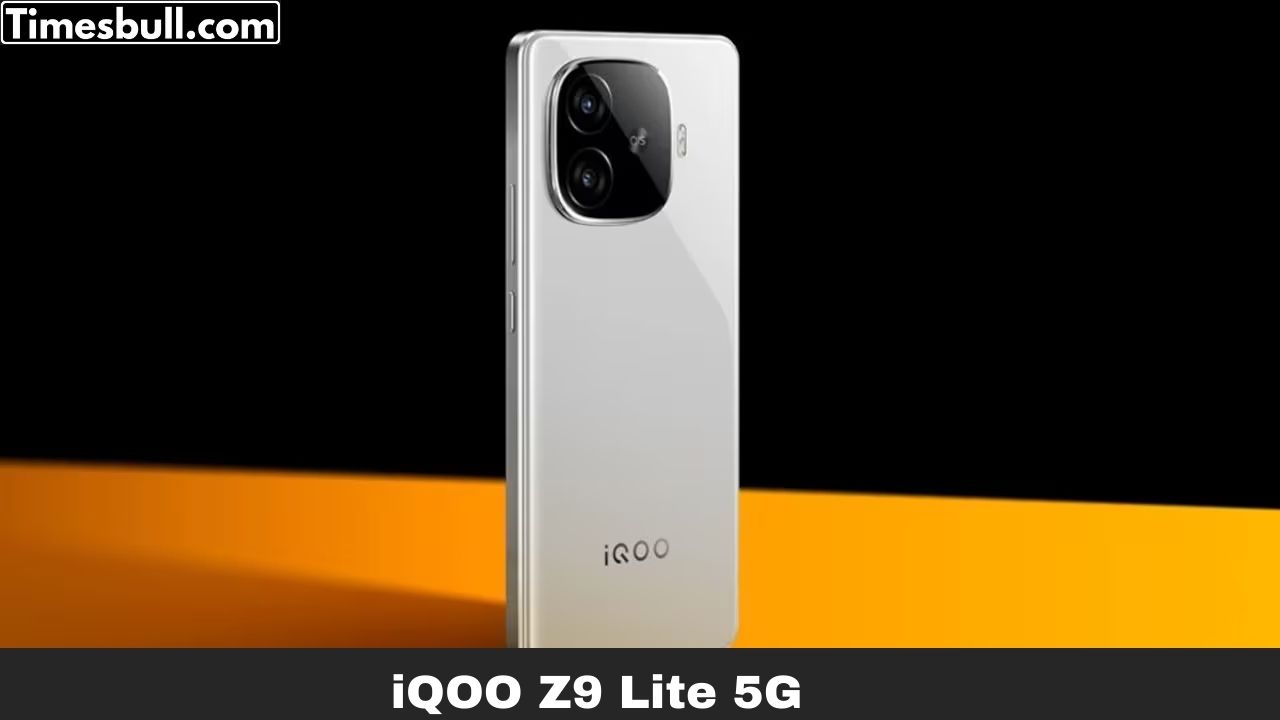
  • iQOO Z9 Lite 5G: Budget-Friendly 5G with 90Hz Display & Long Battery – India Launch Price

    iQOO Z9 Lite 5G: Budget-Friendly 5G with 90Hz Display & Long Battery – India Launch Price

    iQOO Z9 Lite 5G: If you are looking for a budget-friendly 5G smartphone that comes with attractive features and modern design, then iQOO Z9 Lite 5G can be a great option for you. iQOO has introduced this phone in the Indian market, which promises to provide the best experience to the users. Before buying, let us know all its features and design:

    Attractive design and display of iQOO Z9 Lite 5G:

    The design of iQOO Z9 Lite 5G is slim and stylish.

    Display: 6.56 inch HD+ LCD display (720×1612 pixels resolution)

    Refresh rate: 90Hz (smooth visual experience)

    Brightness: 840 nits peak brightness (clear and bright visuals)

    Design: Slim and stylish

    Weight: 185 grams (lightweight)

    Color options: Aqua Flow (blue) and Mocha Brown (brown)

    Powerful processor and performance of iQOO Z9 Lite 5G:

    In terms of performance, the iQOO Z9 Lite 5G performs well in the budget segment.

    Processor: MediaTek Dimensity 6300 5G chipset (clock speed up to 2.4GHz)

    Performance: Fast and smooth performance (better for multitasking and gaming)

    RAM and storage of iQOO Z9 Lite 5G:

    iQOO Z9 Lite 5G is available in two variants.

    RAM variants: 4GB RAM and 6GB RAM
    Storage: 128GB storage (expandable up to 1TB with microSD card)
    iQOO Z9 Lite 5G camera quality:

    For photography, the iQOO Z9 Lite 5G has a dual camera setup.

    Rear camera: Dual rear camera setup
    50 megapixel primary AI camera
    2 megapixel bokeh sensor
    Front camera: 8 megapixels (for selfie and video calling)
    Camera quality: High quality photos and videos
    iQOO Z9 Lite 5G battery backup and charging:

    This phone will not disappoint you even in terms of battery.

    Battery: 5000mAh (long-lasting battery)
    Fast charging: 15W fast charging (charges the phone quickly)
    iQOO Z9 Lite 5G software and other features:

    iQOO Z9 Lite 5G comes with the latest software and security features.

    Operating System: Android 14 based Funtouch OS 14
    Updates: 2 years of Android updates and 3 years of security updates promised
    Security: Side-mounted fingerprint sensor
    Water and dust resistance: IP64 rating (protection against dust and water)
    iQOO Z9 Lite 5G Affordable Price and Availability:

    The iQOO Z9 Lite 5G is available at a budget-friendly price.

    Price (4GB RAM + 128GB storage): ₹10,499 (₹9,999 with ICICI/HDFC Bank offer)
    Price (6GB RAM + 128GB storage): ₹11,499 (₹10,999 with ICICI/HDFC Bank offer)
    Availability: Starting July 20 on Amazon and other retail outlets
    Overall, the iQOO Z9 Lite 5G is a balanced and affordable smartphone that comes with modern features and excellent performance. If you want a good 5G smartphone on a budget, the iQOO Z9 Lite 5G is an attractive option.

  • Gold price Today –  Check Latest 24, 22 , 18 & 14 carat Gold Rate Per 10 Gram

    Gold price Today – Check Latest 24, 22 , 18 & 14 carat Gold Rate Per 10 Gram

    Gold price Today:- There is a continuous change in the prices of gold and silver. The rates of gold and silver are continuously increasing. The rising rate of gold has heated the market environment. Seeing the rising rate of gold, people cannot understand how to get gold jewellery made.

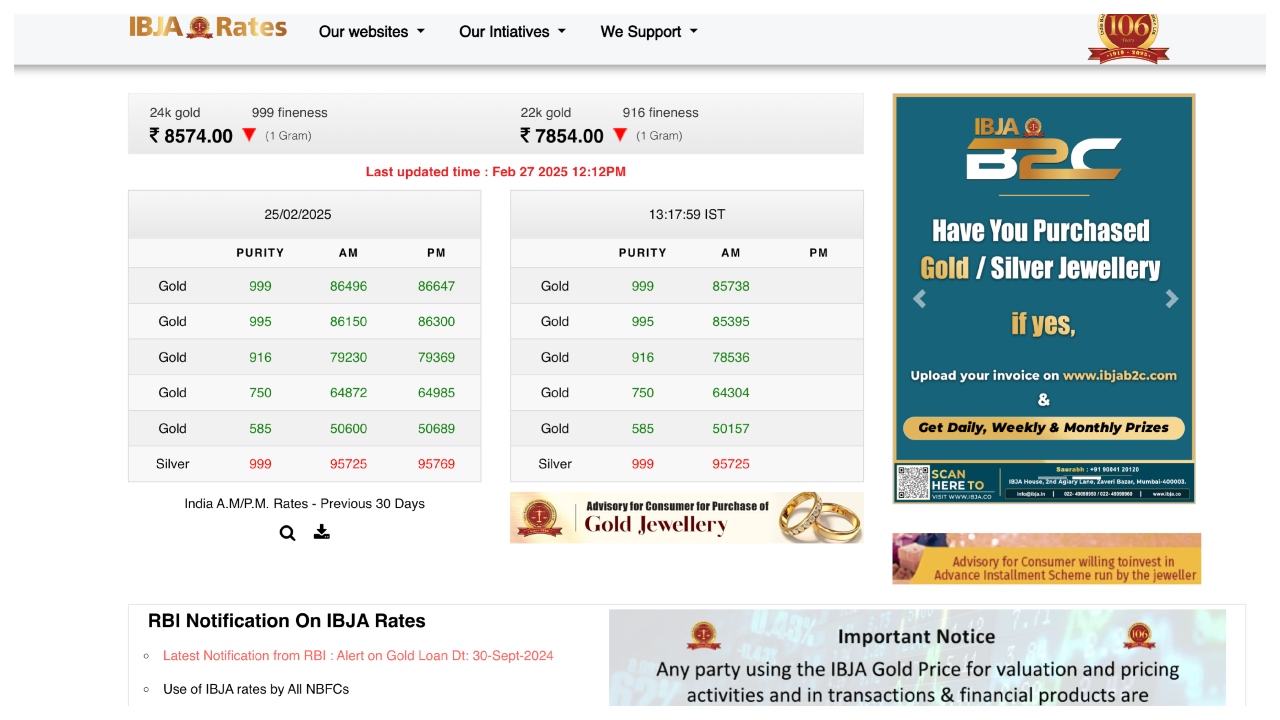
    Once again, there has been a change in the rate of gold. There has been a slight decline in the rate of gold today, i.e. on February 27. However, the rate of gold is still above 85 thousand.

    At the national level, the cost of 24-carat gold of 999 purity has reached Rs 85738 per 10 grams, while silver of 999 purity is Rs 95725 per kg. So, let’s take a look at the latest rates of gold:-

    What is the rate of gold today?

    According to the official website ibjarates.com, 995 purity gold is Rs 85395 per 10 grams today. At the same time, the price of 916 (22 carat) purity gold is Rs 78356 per 10 grams. The 750 (18 carat) purity gold rate is Rs 64304 per 10 grams. At the same time, the price of 585 (14 carat) purity gold is Rs 50157 per 10 grams. Meanwhile, the price of 999 purity silver is Rs 95725 per kg.

    Let us tell you that 22-carat gold is used in jewellery. This gold is considered 91.6 per cent pure. Please note that the prices released by the Indian Bullion Jewelers Association are before tax and making charges. GST is not included in its prices. Please note that while buying jewellery, the rate of gold is higher because it includes tax.

    Gold price in Chennai
    24K – 88050/ 10 Gram
    22K – 80710/ 10 Gram
    18K- 66410/ 10 Gram

    Gold price in Mumbai
    24K – 89050/ 10 Gram
    22K – 80710/ 10 Gram
    18K- 66040/ 10 Gram

    Gold price in Delhi
    24K – 88200/ 10 Gram
    22K – 80860/ 10 Gram
    18K- 66160/ 10 Gram

    Gold price in Kolkata
    24K – 88050/ 10 Gram
    22K – 80710/ 10 Gram
    18K- 66040/ 10 Gram

    Gold price in Ahmedabad
    24K – 88100/ 10 Gram
    22K – 80760/ 10 Gram
    18K- 66080/ 10 Gram

    Gold price in Jaipur
    24K – 88200/ 10 Gram
    22K – 80860/ 10 Gram
    18K- 66160/ 10 Gram

  • Lock your Aadhar Card like this to avoid major risk

    Lock your Aadhar Card like this to avoid major risk

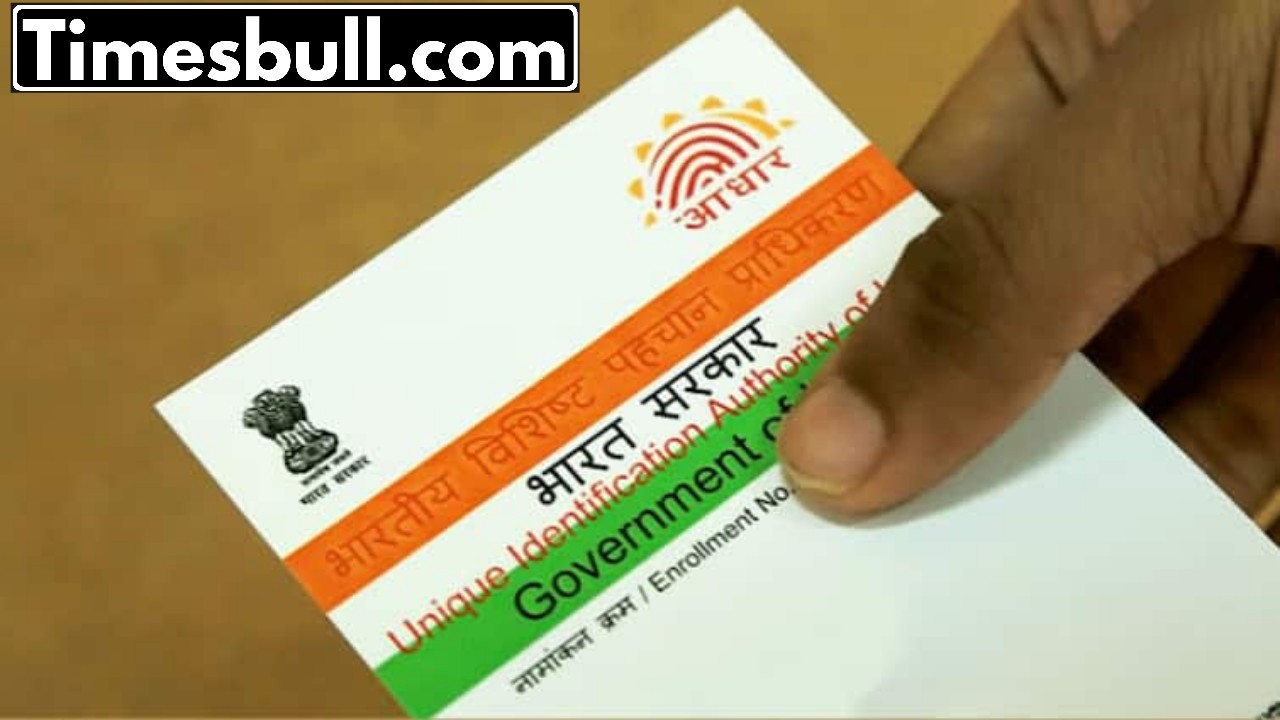
    Aadhaar Card: The Aadhaar card holds sensitive personal information, making it crucial to safeguard it against potential misuse. In today’s world, the Aadhaar card is necessary for a variety of tasks, both minor and significant, which complicates the process of keeping it secure. Instances of fraud linked to Aadhaar have also been reported, raising concerns about how to protect this important document.

    Effective method to enhance the security of your Aadhaar

    One effective method to enhance the security of your Aadhaar is by locking its biometric data. The UIDAI offers Aadhaar users the option to lock and unlock their biometric information, which includes fingerprints and iris scans, thereby enhancing the privacy of this data. Once the biometrics are locked, no one can utilize your Aadhaar biometrics for authentication purposes.

    How to lock the biometric data of your Aadhaar? Know step by step

    To lock the biometric data of your Aadhaar, start by visiting the official Aadhaar website at https://resident.uidai.gov.in/bio-lock. Upon accessing the site, you will need to check a box indicating that you cannot authenticate your biometrics unless you unlock them first. After selecting this option, proceed to click on Lock/Unlock Biometrics.

    This action will direct you to a new page where you must input your 12-digit Aadhaar number and the captcha code before clicking on Send OTP. An OTP will be sent to your registered mobile number; enter this OTP and click on submit. Once the OTP is verified, you will have the option to either lock or unlock your biometric data according to your preference.

  • You can claim benefit from personal loan as well, know expert opinion

    You can claim benefit from personal loan as well, know expert opinion

    Personal Loan: Many individuals may have obtained a personal loan, yet they might be unaware that income tax exemptions can also apply to such loans. Are you aware that tax exemptions are available for personal loans? If not, allow us to clarify. Typically, personal loans do not qualify for tax exemptions in the same manner as other types of loans.

    However, in certain specific circumstances, deductions can be claimed. For instance, if a personal loan is utilized for purchasing, constructing, or renovating a home, one can claim a deduction on the interest payments under Income Tax sections 80C, 24B, 80E, and 371. Additionally, if a personal loan is taken to cover educational expenses, tax deductions can also be claimed.

    Benefit is available solely to individuals under the old tax regime

    Firstly, if the loan is taken for the purpose of acquiring a house, a tax rebate will be applicable. It is important to note that this benefit is exclusively for purchasing a house and does not extend to the acquisition of land. This benefit is available solely to individuals under the old tax regime. Secondly, if a personal loan is utilized for business-related expenses, it is essential to demonstrate in your tax return that the personal loan was indeed used for such expenses. Beyond these two scenarios, no income tax rebates are available for personal loans.

    Personal loan for the higher education

    If you have secured a personal loan for the higher education of yourself, your spouse, or your children, you can claim a tax exemption on the interest payments under section 80C. This exemption can be claimed for a maximum of eight years or until the loan is fully repaid, and it applies only to interest payments, with no exemptions available for the principal amount. Regarding business loans, if a personal loan is used for business expenses, the interest can be reported as a business expense under section 371. If the property is rented out, the entire interest amount can be claimed for tax exemption.

    To qualify for this exemption, it is crucial that the loan proceeds are actually utilized for the construction, purchase, or renovation of the property. If the loan is specifically for renovation or repair, a tax exemption on interest payments up to Rs 30,000 can be claimed under section 24B.

  • Amazfit GTS 3: India Price, Features, & Battery Life – Best Fitness Smartwatch Under ₹12,000?

    Amazfit GTS 3: India Price, Features, & Battery Life – Best Fitness Smartwatch Under ₹12,000?

    Amazfit GTS 3 : If you are looking for a great smartwatch with many advanced features for health and fitness tracking, then Amazfit GTS 3 can be a great option for you. Its battery backup is good, and it comes with a stylish design. Although it does not have Bluetooth calling, the rest of the features make it a great option. Let’s know the full details about Amazfit GTS 3:

    Stylish design and display of Amazfit GTS 3:

    The design of Amazfit GTS 3 is lightweight and premium looking.

    Design: Stylish and lightweight, aluminum body (premium look)

    Display: 1.75 inch AMOLED display (390 x 450 pixel resolution, bright and clear)

    Display quality: Easy to read even in sunlight

    Weight: 24.4 grams (comfortable to wear)

    Amazfit GTS 3’s amazing health and fitness features:

    Amazfit GTS 3 comes with many advanced features for health and fitness tracking.

    Heart rate monitoring: 24×7 heart rate tracking
    SpO2 monitor: Measures blood oxygen level
    Sleep tracking: Tracks sleep quality and patterns
    Stress monitoring: Monitors mental state
    PAI health score: Analyzes physical activities and gives health score
    Sports mode: More than 150 sports modes (running, cycling, yoga, swimming etc.)
    Water resistance: 5ATM (can be worn while swimming)
    Battery and performance of Amazfit GTS 3:

    Battery life is also good in Amazfit GTS 3.

    Battery: 250mAh
    Normal use: Battery life up to 12 days
    Sensor active use: Battery life up to 6-7 days
    Smart features of Amazfit GTS 3:

    Amazfit GTS 3 is also equipped with smart features, although it does not have Bluetooth calling.

    Notifications and messages: Can be seen

    Voice assistant: Alexa voice assistant (voice command support)

    Operating system: Zepp OS (smooth and fast)

    Navigation: GPS and GLONASS support (accurately tracks running and cycling)

    Amazfit GTS 3 price and availability:

    The Amazfit GTS 3 is available at a reasonable price with premium features.

    Price (in India): Around ₹10,000-₹12,000

    Availability: Online platforms (Amazon, Flipkart) and offline stores
    The Amazfit GTS 3 smartwatch is a great device that has many advanced features of health and fitness tracking and comes with a stylish design. Although it does not have Bluetooth calling, the rest of the features make it a great option. If you want basic fitness tracking and smart features, then this watch can be a great choice.

  • Banking-like services from their EPF accounts, from this time of the year the new service can start

    Banking-like services from their EPF accounts, from this time of the year the new service can start

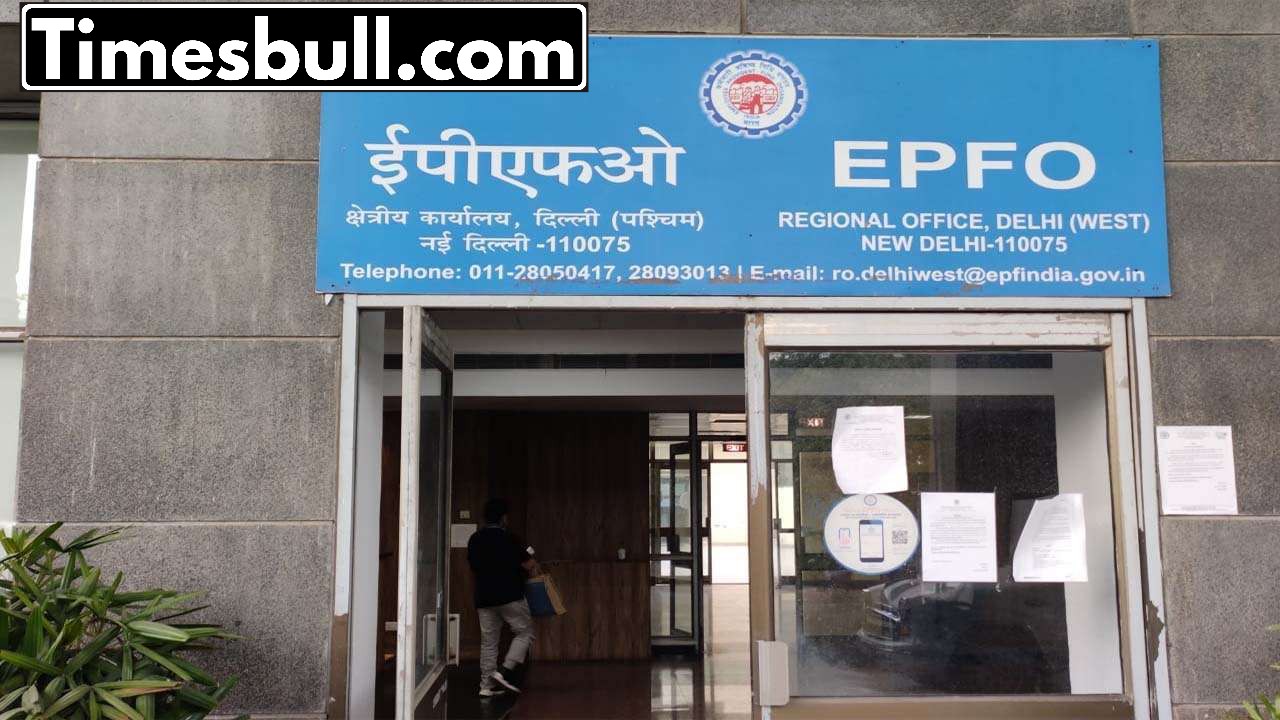
    EPFO 3.0: The objective has been established to finalize the Centralized IT-Enabled System (CIETS 2.01) and EPFO 3.0 for the Employees’ Provident Fund Organization (EPFO) by March 31. Officials affiliated with EPFO have indicated that a trial will take place following the completion of the IT system development.

    Banking-like services from their EPF accounts

    It is anticipated that by mid-June of this year, EPFO members will begin to receive banking-like services from their EPF accounts. Various matters were addressed during the 112th meeting of the Executive Committee (EC) of the EPF, which is part of the Central Board of Trustees of EPFO, held on Tuesday.

    New system will be established under EPFO 3.0

    The meeting highlighted that a new system will be established under EPFO 3.0, aimed at broadening social security coverage through the use of advanced technology. Members will have the option to withdraw a predetermined amount from their PF accounts as needed, similar to banking practices. Additionally, in the future, EPFO members will have access to various online services, including the ability to increase their own contributions.

    The meeting also resolved to eliminate unnecessary verification processes, facilitating easier access for EPFO members to withdraw small amounts through a simplified partial withdrawal mechanism. EPFO underscored the importance of ensuring prompt claim settlements, seamless pension disbursements, and enhanced service delivery for its members, thereby accelerating digital transformation and member-focused reforms. The EC also deliberated on the topic of pensions based on higher wages, noting that applications related to this matter are being updated in accordance with the Supreme Court’s ruling from November 4, 2022.

    The update process is expected to be completed by March 31. Furthermore, the EC stressed the necessity of a timely transition to an Aadhaar-based payment system (ABPS), advocating for pension payments to be directly deposited into Aadhaar-linked bank accounts to enhance security and efficiency.