Category: Business

Stay ahead of the curve in India’s dynamic financial landscape with Timesbull. We deliver real-time updates and in-depth analysis on Indian business, finance, and the stock markets. Get the latest BSE/NSE news, ensuring you’re always informed about market movements.

Track the pulse of the Indian economy with our comprehensive coverage of Sensex and Nifty updates. Timesbull provides crucial personal finance insights to help you manage your money effectively and make informed investment decisions.

Beyond breaking news, we offer expert market analysis and insightful perspectives on economic trends shaping India and the global economy. Whether you’re a seasoned investor, business professional, or just starting to manage your finances, Timesbull is your trusted source.

Rely on Timesbull for accurate, timely, and insightful business and finance news, empowering you to navigate the complexities of the Indian market with confidence. Visit Timesbull today to unlock your financial potential.

  • PAN Card: This mistake can be more costlier than you think, income tax department has strict opinions about this

    PAN Card: This mistake can be more costlier than you think, income tax department has strict opinions about this

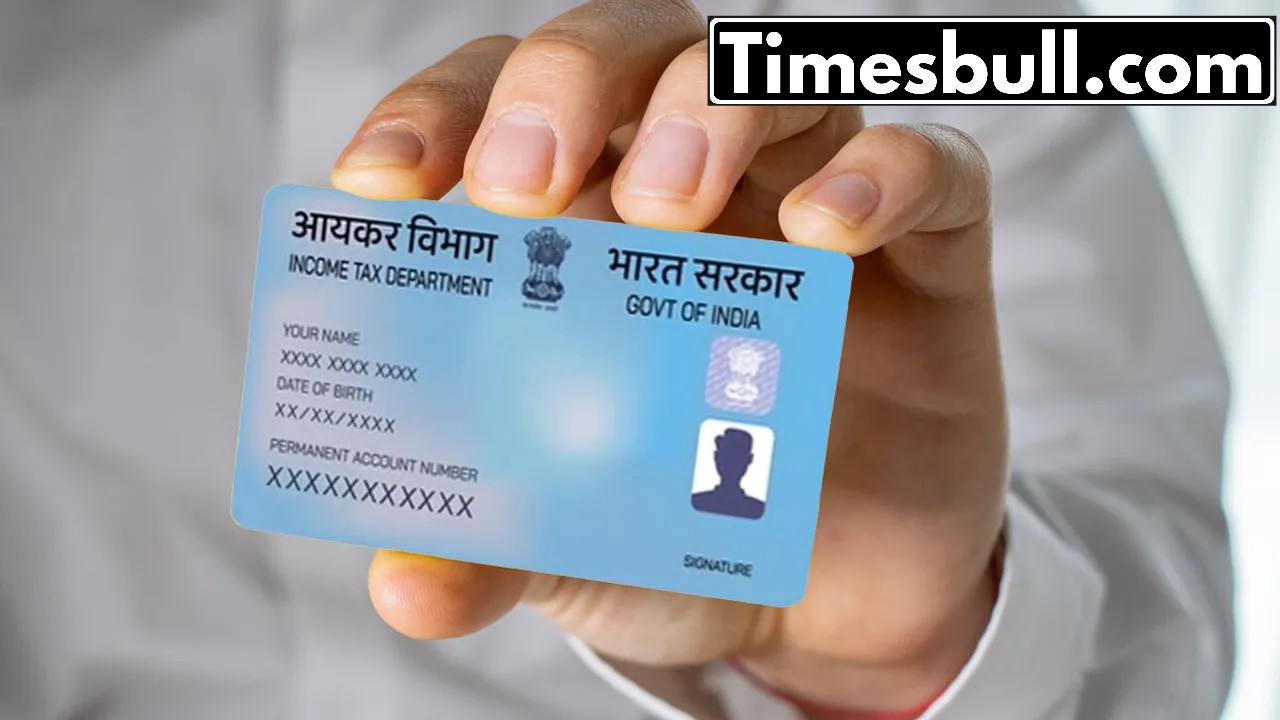
    PAN Card: The government is committed to enhancing all services associated with the Permanent Account Number (PAN) through advanced e-governance initiatives. In this regard, the government has introduced PAN 2.0, which aims to completely eradicate duplicate PANs. However, individuals possessing multiple PAN cards should exercise caution. The Income Tax Department has resolved to implement stringent measures against holders of duplicate PAN cards. Under the new regulations, failure to surrender any additional PAN card may result in a penalty of up to Rs 10,000.

    Imperative to surrender it without delay

    According to the Income Tax Act of 1961, both taxpayers and non-taxpayers are prohibited from holding more than one PAN card. If an individual inadvertently or deliberately possesses a duplicate PAN card, it is imperative to surrender it without delay. Non-compliance may lead to severe repercussions from the government, which is treating this issue with utmost seriousness. The identification of duplicate PAN cards is being facilitated through the use of innovative technology.

    PAN 2.0 scheme

    The recently approved PAN 2.0 scheme aims to streamline and modernize the management of PAN and Tax Deduction and Collection Account Number (TAN). Its objectives include the elimination of duplicate PAN cards and the prevention of fraudulent activities. Additionally, the government seeks to expedite and simplify the processes related to PAN and TAN. This initiative employs new technology to ensure that each individual holds only one PAN card, thereby mitigating the risk of fraud.

    Penalty of up to Rs 10,000

    Individuals who fail to surrender a duplicate or secondary PAN card may incur a penalty of up to Rs 10,000, as stipulated under section 272B. Furthermore, such individuals may encounter difficulties in filing tax returns and may experience disruptions in banking and financial transactions. To avoid incurring this penalty, it is advisable to promptly surrender any extra PAN cards. The government is adopting a firm stance against duplicate PAN cards, and those who intentionally utilize multiple PAN cards may face legal action.


  • Gold Price Today – Check Updated Gold Rates for 14K, 18K, 22K & 24K Per tola

    Gold Price Today – Check Updated Gold Rates for 14K, 18K, 22K & 24K Per tola

    Gold Price Today: Changes are seen in the daily prices of gold and silver. Gold rates have changed once again today i.e. on February 27. If you are considering buying gold, you should know the rate of gold. There has been a decline in the prices of gold and silver in the Indian bullion market today (February 27, 2025).

    However, the price of gold is still above Rs 85 thousand per 10 grams. At the same time, silver is running above Rs 95 thousand per kg. At the national level, the price of 24-carat gold with 999 purity is Rs 85593 per 10 grams, while silver with 999 purity is Rs 95048 per kg.

    What is the price of gold today?

    According to the official website ibjarates.com, today, the price of gold with 995 purity is Rs 85250 per 10 grams. At the same time, the price of 916 (22 carat) purity gold is Rs 78403 per 10 grams. The 750 (18 carat) purity gold rate is Rs 64195 per 10 grams. At the same time, the price of 585 (14 carat) purity gold is Rs 50072 per 10 grams. Meanwhile, the price of 999 purity silver is Rs 95048 per kg.

    Know the difference between 22 and 24 carat?

    24 carat gold is 99.9% pure, and 22 carat is about 91 percent pure. Jewellery is made by mixing 9% other metals like copper, silver, and zinc in 22-carat gold. Jewellery is not made of 24-carat gold.

    How do we know the purity of gold?

    ISO gives Hall marks to identify the purity of gold. 999 is written on 24-carat gold jewellery, 958 on 23-carat, 916 on 22-carat, 875 on 21-carat and 750 on 18-carat. Most people use 22-carat gold to make gold jewellery. While some people also use 18-carat gold.

    Check gold rates with missed calls.

    You can quickly get the price of gold and silver from home. by making a missed call to 8955664433. After this, you will receive information about the materials rapidly. Making charges and taxes are charged separately.

  • Fitbit Sense Smartwatch: Your Guide to Premium Health Monitoring & Fitness Tracking in India

    Fitbit Sense Smartwatch: Your Guide to Premium Health Monitoring & Fitness Tracking in India

    If you want a premium health-focused smartwatch that prioritizes health and fitness, then Fitbit Sense can be a great option for you. This smartwatch is great for those who put health and fitness above everything else. Know the details about this smartwatch:

    Premium design and display of Fitbit Sense:

    The design of Fitbit Sense is premium and stylish, which is comfortable to wear.

    Design: Premium and stylish, aluminum body, silicone strap (light and comfortable)

    Display: 1.58 inch AMOLED touchscreen display (336×336 pixel resolution, bright and clear)

    Display quality: Good brightness (clearly visible even in sunlight)

    Water resistance: Up to 50 meters (can be worn even while swimming)

    Fitbit Sense’s amazing health and fitness features:

    Fitbit Sense is specially designed for health tracking.

    ECG sensor (electrocardiogram): Detects irregularities in heart rate
    SpO2 sensor: Monitors blood oxygen levels
    24×7 heart rate tracking: Monitors heart rate throughout the day
    Stress management sensor (EDA): Detects stress levels
    Sleep tracking: Analyzes sleep quality
    Body temperature sensor: Measures body temperature
    Fitbit Sense fitness tracking and activity modes:

    Fitbit Sense is also useful for tracking fitness activities.

    Exercise modes: Over 20 (running, cycling, yoga, swimming, walking, etc.)
    GPS: Built-in GPS (tracks running and cycling routes)
    Active zone minutes: Indicates workout effectiveness

    Fitbit Sense smart features and connectivity:

    Fitbit Sense is also equipped with smart features and connectivity options.

    Connectivity: Bluetooth, Wi-Fi, NFC

    Voice Assistant: Built-in Amazon Alexa and Google Assistant (voice command support)

    Notification: View call, message and app notifications

    Fitbit Sense’s strong battery life and charging:

    Battery life and charging are also good in Fitbit Sense.

    Battery life: Up to 6 days (great for long term use)

    Fast charging: Full day backup in 12 minutes of charging

    Fitbit Sense price and availability:

    Fitbit Sense is available at different price points with premium features.

    Price (in India): Between ₹20,000 to ₹25,000

    Availability: Amazon, Flipkart and other online stores
    The Fitbit Sense smartwatch is a great smartwatch for those who prioritize health and fitness. If you want a premium health-focused smartwatch, this can be a good option.

  • How Much Gratuity Will You Get? Learn the Right Formula to Calculate It

    How Much Gratuity Will You Get? Learn the Right Formula to Calculate It

    Whenever you join a new company, various benefits like gratuity and EPF (Employees’ Provident Fund) are included in your CTC (Cost to Company). While EPF calculation is easy to understand, many people are unsure about how gratuity is added to CTC.

    Under the Payment of Gratuity Act, 1972, companies provide gratuity to employees who have completed 5 or more years of service. Throughout this article, we will share the right formula to calculate your gratuity.

    What is Gratuity?

    A gratuity is a lump sum payment given by an employer to an employee as a reward for long service. It is a way of showing appreciation for the employee’s dedication and contribution to the company. Gratuity is part of an employee’s gross salary but is not paid regularly like a monthly salary. Instead, it is given when the employee leaves the company.

    Gratuity is calculated based on the employee’s salary and company policy. It is paid in different situations, such as:

    • Retirement (Superannuation)
    • Resignation
    • Death or permanent disability
    • Layoff or retrenchment
    • Voluntary retirement
    • Termination (if not due to the employee’s fault)

    Correct Formula for Gratuity Calculation

    Gratuity is calculated using this formula:

    (Last Drawn Monthly Salary × 15) ÷ 26

    This means the gratuity is based on 15 days’ salary. Below is an example for better understanding.

    Example: How Gratuity is Calculated

    If an employee’s annual basic salary is ₹100, then:

    Monthly basic salary = ₹100 ÷ 12 = ₹8.33
    Gratuity per year = ₹8.33 × (15 ÷ 26) = ₹4.81
    So, 4.81% of the employee’s CTC will be added as a gratuity.

    How Gratuity Affects CTC

    HR adds 4.81% of the basic salary to an employee’s CTC as a gratuity. However, this percentage may change every year with salary revisions. As the basic salary increases, the gratuity amount in CTC also increases.

  • Want To Earn a Pension of ₹1000 to ₹5000 Per Month Without Hassle? Invest in This Government Scheme

    Want To Earn a Pension of ₹1000 to ₹5000 Per Month Without Hassle? Invest in This Government Scheme

    Retirement is now easier, with no financial stress. You can receive ₹5000 every month through a pension scheme, ensuring a stable income after retirement. This scheme is called the Atal Pension Yojana (APY). As of October 2024, more than 7 crore people have already enrolled in this scheme, proving its popularity and success in providing financial security. Throughout this article, we will explain how you can earn a pension of ₹1000 to ₹5000 per month without hassle through this government scheme.

    What is Atal Pension Yojana?

    Atal Pension Yojana (APY) is a government scheme launched by Prime Minister Narendra Modi on 9th May 2015. The scheme is aimed at providing financial security, especially for those working in the unorganized sector or in low-income jobs. It is managed by the Pension Fund Regulatory and Development Authority (PFRDA) and is part of the National Pension System (NPS).

    How Does Atal Pension Yojana Work?

    The scheme provides a pension after the age of 60. The pension amount depends on how much you contribute during your working life. You can receive a monthly pension ranging from Rs 1000 to Rs 5000. For example, if you want a pension of Rs 1000 and start contributing at the age of 18, you will need to contribute only Rs 42 per month.

    Benefits of Atal Pension Yojana

    1. Guaranteed Pension: Once you start contributing, you will receive a fixed pension every month after the age of 60.
    2. Family Protection: If the pensioner dies, the spouse will continue to receive the pension.
    3. Affordable Contribution: You can start with a small contribution, and your pension amount will increase based on your monthly payments.
    4. Secure Future: The scheme ensures that you will have financial independence in old age without depending on others.

    How to Apply for Atal Pension Yojana?

    You can apply for APY either offline or online.

    Offline Application:

    • Visit your nearest bank (most banks offer APY registration).
    • Collect the application form from the bank or download it from the website.
    • Fill in your details, including the pension amount you want.
    • Submit the form along with your Aadhaar card and other required documents.
    • After submission, you will receive a message with your Atal Pension Yojana account number.

    Online Application:

    1. Visit your bank’s portal or mobile banking app.
    2. Find the Social Security Schemes section or search for Atal Pension Yojana.
    3. Log in using your ID and password.
    4. Fill in the application form and provide your details.
    5. Agree to automatic monthly debit for contributions.
    6. Review the form carefully and submit it.
  • Post Office RD: Invest ₹2000, ₹3000, or ₹5000 Monthly and See How Much You Will Earn in Returns

    Post Office RD: Invest ₹2000, ₹3000, or ₹5000 Monthly and See How Much You Will Earn in Returns

    The post office offers various investment schemes where you can earn good returns. These schemes ensure the safety of your money and provide fixed returns. If you want to earn profits by investing a small amount, you can consider the Post Office Recurring Deposit (RD) scheme. Throughout this article, we will share how investing ₹2000, ₹3000, or ₹5000 monthly can give you surprising returns.

    About the Post Office RD Scheme

    The Post Office RD (Recurring Deposit) Scheme is a great way to build a significant fund by investing a small amount each month. You can start investing with just Rs 100. The scheme offers an interest rate of 6.7%, and it matures in 5 years.

    Monthly Investment of Rs 2000 in RD Scheme

    If you invest Rs 2000 every month in the Post Office RD Scheme, you’ll invest a total of Rs 1,20,000 over 5 years. On maturity, you will receive Rs 1,42,732. Your interest earned will be Rs 22,732.

    Monthly Investment of Rs 3000 in RD Scheme

    If you invest Rs 3000 every month in the RD scheme, you’ll invest a total of Rs 1,80,000 in 5 years. At maturity, you will receive Rs 2,14,097, with Rs 34,097 as your interest.

    Monthly Investment of Rs 5000 in RD Scheme

    By investing Rs 5000 every month in the RD scheme, you’ll invest a total of Rs 3,00,000 over 5 years. On maturity, you will receive Rs 3,56,830, and your interest earned will be Rs 56,830.

    How to Open a Post Office RD Account?

    Opening a Recurring Deposit (RD) account in the post office is simple and can be done both offline and online. Follow these steps:

    1. Open RD Account Offline (At Post Office Branch)

    1. Visit your nearest post office.
    2. Collect the RD account opening form and fill in the required details.
    3. Submit KYC documents (Aadhaar, PAN, and passport-size photo).
    4. Deposit the minimum amount (Rs 100 or more) in cash or cheque.
    5. Your RD account will be opened, and you’ll receive a passbook.

    2. Open RD Account Online (India Post Website/App)

    • Log in to the India Post eBanking portal (ebanking.indiapost.gov.in).
    • Navigate to ‘New RD Account’ under deposit accounts.
    • Enter the deposit amount and tenure (5 years).
    • Select the fund source (linked savings account) and confirm.
    • Your RD account will be activated, and details will be available in your profile.
  • Big news for nearly 7 crore members of EPFO, know this current update

    Big news for nearly 7 crore members of EPFO, know this current update

    A major update is on the way for over 6.5 crore members of the Employees’ Provident Fund Organization (EPFO). These members might face some surprising news tomorrow, Friday. The Central Board of Trustees (CBT) of EPFO is set to meet, where they’ll be discussing the EPF interest rates for the financial year 2025.


    Reports suggest that there could be a decision to lower the deposit interest rate during this meeting, influenced by an increase in claim settlements and a decline in the stock market and bond yields. Last year, the EPFO had raised the interest rates from 8.15% to 8.25%.


    An important announcement could come from the CBT board meeting. Just last week, the Investment and Accounts Committee of EPFO reviewed the organization’s earnings and expenses, leading to a recommendation to cut interest rates on deposits. If the CBT backs this recommendation, it could mean a significant shock for millions of EPF members.


    For context, EPFO provided an interest rate of 8.25% on an income of Rs 1,07,000 crore for the year 2023-24, while the previous year saw an interest rate of 8.15%. The highest interest rate ever given was 12% back in the year 1989-90.


    EPFO is looking to set up a fund reserve.


    They’re planning to create this reserve to ensure that all 6.5 crore members receive consistent interest every year. The goal is to shield members from the ups and downs of stock market interest rates and other investment tools.


    Officials are currently working on this proposal. Recently, it was reported that a team led by the EPFO chairman has started an internal review to develop a system for this. An official mentioned to ET Bureau, “The EPFO aims to safeguard its members from any variations in returns from investments in different instruments, including exchange-traded funds. Once this reserve is established, EPFO members will enjoy stable interest on their deposits.”

  • Google Pay Transactions to Get Costlier! Find Out Why and Who Will Be Affected

    Google Pay Transactions to Get Costlier! Find Out Why and Who Will Be Affected

    Google Pay Convenience Fees Update: Google Pay is one of the most used UPI apps in India. Right now, a news update is coming that may disappoint Google Pay users. It is believed that Google Pay may soon introduce a convenience fee on UPI payments, making transactions slightly more expensive for some users.

    Other major UPI payment apps in India, like PhonePe and Paytm, already charge processing fees on mobile recharges and other payments. Now, Google Pay is also expected to follow this trend.

    Let’s find out why Google Pay has decided to introduce a convenience fee and which users will be most affected by this decision.

    Why Was This Decision Taken?

    Fintech companies do not directly earn from UPI payments. As a result, many fintech companies have been incurring losses while also spending on UPI payments. To address this loss, UPI apps like PhonePe, Paytm, and Google Pay have decided to impose a convenience fee on select UPI payments. Let’s see which UPI payments will have a convenience fee.

    Who Will Be Affected?

    Google Pay may impose a convenience fee on utility payments like electricity and gas bills. According to an Economic Times report, if you pay your electricity or gas bill through Google Pay using a credit or debit card, you may have to pay a convenience fee of 0.5% to 1%. Along with the convenience fee, GST will also be applied to your payment.

    How to Add a Bank Account to Google Pay (GPay)

    • Open Google Pay and log in with your mobile number.
    • Tap your profile (top right) and select “Bank Accounts” or “Payment Methods”.
    • Click “Add Bank Account” and choose your bank.
    • Verify your account via SMS and set your UPI PIN (if not already set).
    • Once verified, your bank account is linked and ready to use.

    Tip: Ensure your mobile number is active for verification.

  • Check PF Balance Without UAN from Home! Follow These 2 Simple Methods to Get Instant Updates

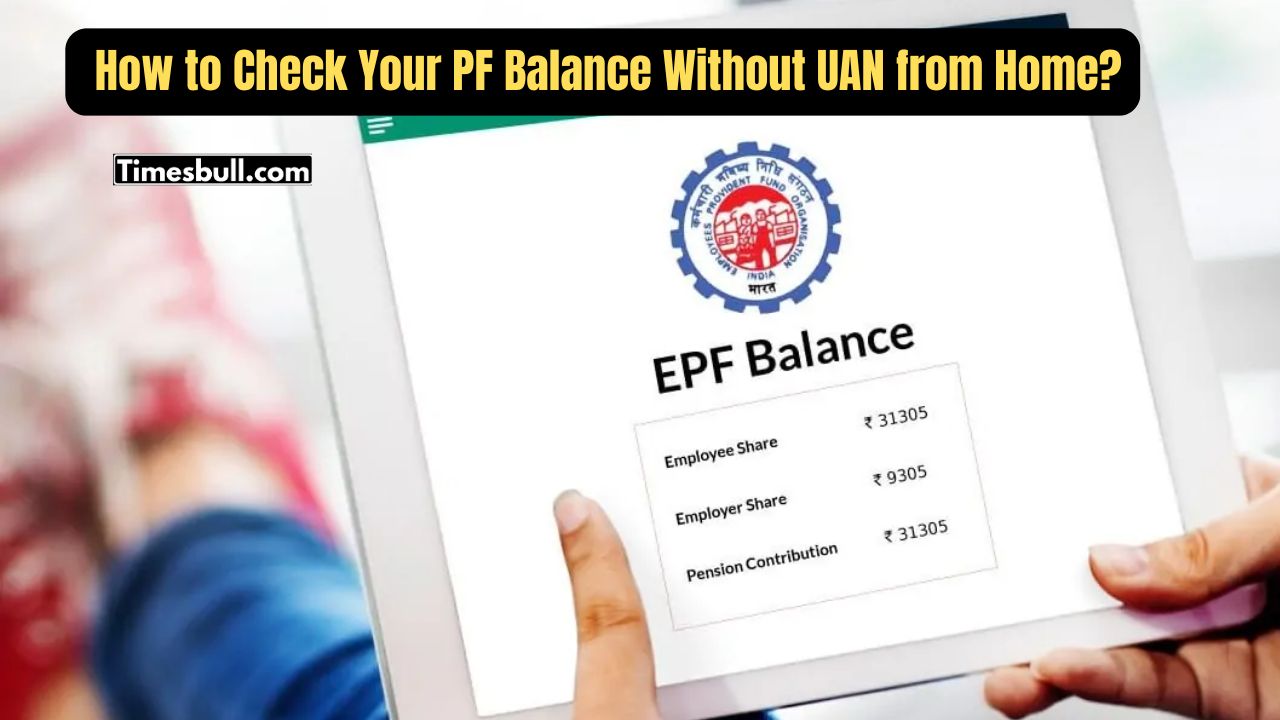
    Check PF Balance Without UAN from Home! Follow These 2 Simple Methods to Get Instant Updates

    In recent years, the Employees’ Provident Fund Organization (EPFO) has been improving its services to help crores of members easily access EPF benefits. To use most EPF-related services, having a Universal Account Number (UAN) is very important. However, many EPF members still do not have a UAN.

    Check PF Balance Without UAN

    If you don’t have a UAN, there’s no need to worry. In this article, we will show you how to check your PF balance in minutes from home, even without a UAN. EPF members can easily check their PF balance via missed call or SMS, even if they don’t have a Universal Account Number. Let’s dive into the details.

    How to Check PF Balance via SMS

    To check your PF balance through SMS, follow these steps:

    • Send an SMS from your registered mobile number to 7738299899.
    • The SMS format should be: ‘EPFOHO UAN [selected language code]’

    For example:

    • To get updates in English, type “EPFOHO UAN ENG”.
    • To receive updates in Marathi, type “EPFOHO UAN MAR”.
    • Use the language code for any other language of your choice.

    Note: Only members whose UAN is active and linked to their bank account, Aadhaar, and PAN can avail of this service. If your UAN is not linked to your bank account or Aadhaar, you must complete the e-KYC verification first.

    How to Check PF Balance via Missed Call

    To check your PF balance through a missed call, follow these simple steps:

    1. Dial 9966044425 from the mobile number registered in your EPFO account.
    2. Your call will automatically disconnect, and within a few seconds, you will receive an SMS with your PF balance details.

    This service is free of charge; there’s no fee to use it.

    How to Find Your UAN Number

    If you don’t have a registered mobile number and want to know your UAN, here’s how you can find it:

    • Check your salary slip, as it often contains your UAN number.
    • Alternatively, you can contact the HR department at your workplace to get your UAN.
  • BIG News – UP CM Yogi Adityanath announces salary hike for sanitation workers

    BIG News – UP CM Yogi Adityanath announces salary hike for sanitation workers

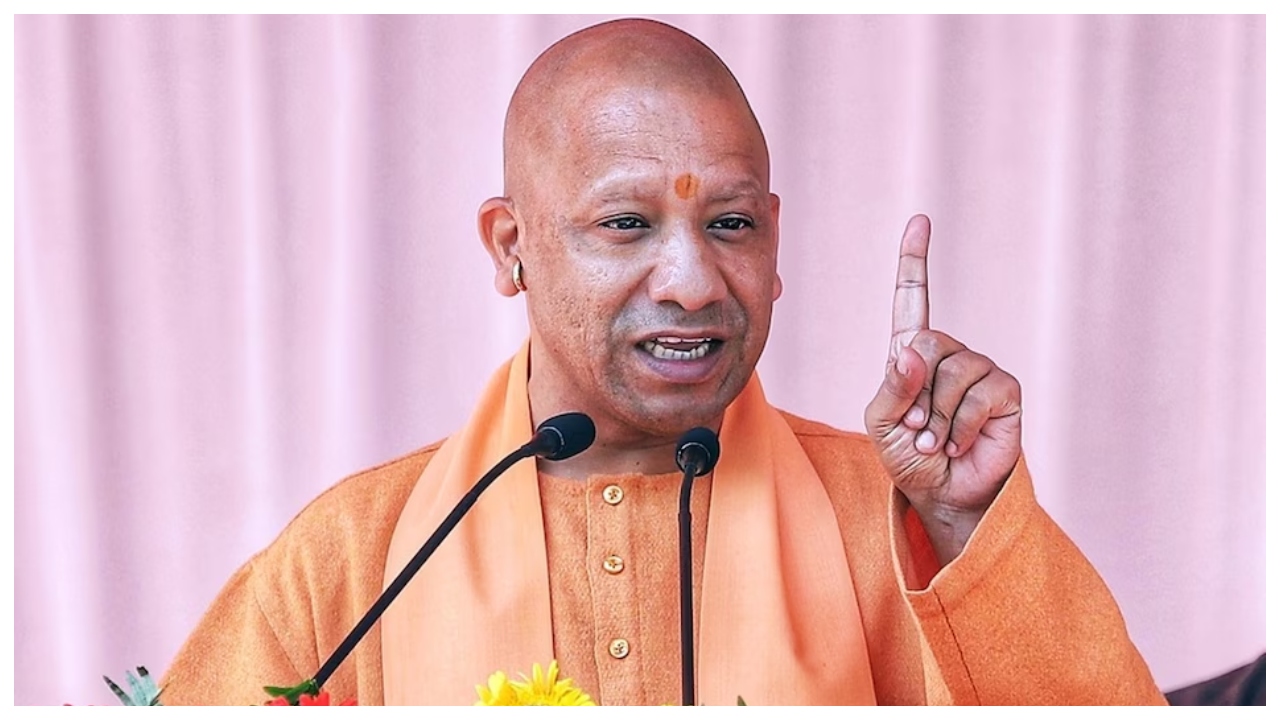
    UP CM Yogi Adityanath:- Uttar Pradesh CM Yogi Adityanath made the sanitation workers happy by giving them a significant gift at the closing of Maha Kumbh Mela in 2025. During the felicitation ceremony of sanitation workers, CM Yogi Adityanath announced a salary hike. Announcing this, CM Yogi said sanitation workers will be given a bonus of Rs 10,000. Apart from this, every sanitation worker will be given a monthly salary of Rs 16,000 from April 1. CM Yogi has also announced health insurance of Rs 5,00,000 for sanitation workers.

    Currently, sanitation workers working on contract in UP get a monthly salary of Rs 14 thousand. The government has increased this by Rs 2,000. CM Yogi Adityanath said, “Mahakumbh has given many circuits of spiritual tourism within Uttar Pradesh. For example, there was a complete congregation in Prayagraj from 13 January to February 26… Crores of people used to come here. Between 10 to 15 lakh devotees used to visit Kashi Vishwanath Dham. During this period, 7 lakh to 12 lakh devotees have visited Ayodhya.

    The world’s largest religious congregation-Mahakumbh, which lasted for 45 days in Prayagraj, ended on Wednesday with the last bathing festive,l Mahashivratri. In this fair which started on January 13, 66.30 crore devotees from the country and abroad have dipped in the Ganga and Sangam. According to the data released by the fair administration, till 8 pm on Wednesday, more than 1.53 crore devotees had taken a dip in the Ganga and Sangam.

  • Will Rs 7500 be credited soon in your account? Let’s find out 

    Will Rs 7500 be credited soon in your account? Let’s find out 

    There’s been a long-standing push to raise the minimum pension for private sector workers under the Employees’ Provident Fund Organisation (EPFO). Back in September 2014, the government set the minimum pension at Rs 1,000 through the Employees’ Pension Scheme (EPS) managed by the EPFO. Employees contribute 12% of their basic salary to the Provident Fund, and employers match that amount. Out of the employer’s contribution, 8.33% goes to the EPS, while 3.67% is put into the EPF account.


    Pensioners’ group EPS-95 Aandolan Samiti has mentioned that Union Labor Minister Mansukh Mandaviya has promised to take timely action on their requests, including the minimum pension under EPS-95. According to a statement from the group, the government has shown a positive attitude towards the long-standing demands of over 78 lakh pensioners under the EPFO nationwide.


    In addition to raising the minimum EPS pension, the pensioners’ group is also asking for free medical services for retired employees and their spouses, as well as corrections to errors in applications for higher pension benefits.


    The statement noted that the minister assured the delegation that these issues would be resolved soon.


    The EPS-95 National Movement Committee (NAC), which has been advocating for pensioners’ rights for years, expressed that recent talks with the government have sparked hope that the minimum pension under EPS-95 will finally see an increase after a decade.


    Is there going to be a rise in the minimum pension in 2025?


    As we gear up for Budget 2025, a group of retired EPS-95 employees had a chat with Finance Minister Nirmala Sitharaman, pushing for an increase in the minimum pension to Rs 7,500 a month, plus a dearness allowance (DA). The EPS-95 National Movement Committee mentioned that the Finance Minister promised to take their requests into account.


    For the past 7-8 years, pensioners have been consistently asking for a boost in their pension. They’re looking to raise the current Rs 1,000 to Rs 7,500, along with DA benefits. Additionally, they’re also advocating for free medical services for retired employees and their spouses.


  • Weather Update: Against possibilities of rain! Know latest weather forecast

    Weather Update: Against possibilities of rain! Know latest weather forecast

    Weather Update: Again rain possibilities in Bengal! The Alipore Meteorological Department has shared which areas are likely to get wet. They’ve issued a thunderstorm warning for four districts in North Bengal. Darjeeling and Kalimpong might even see some snowfall mixed in with the rain. On the flip side, South Bengal is expected to stay dry for the time being, with mostly clear skies ahead. The temperature could rise a bit, according to the latest updates from the Alipore Meteorological Department.

    Expect rain and thundershowers in numerous districts of North Bengal

    In North Bengal, expect rain and thundershowers in Darjeeling, Jalpaiguri, Kalimpong, and Alipurduar until Friday. Cooch Behar and Uttar Dinajpur might see some light rain scattered around on Friday too. Plus, there’s a chance of snowfall in the higher elevations of Kalimpong and Darjeeling until next Wednesday.

    Weather changing in south part of West Bengal

    Now, shifting gears to South Bengal’s weather, the MeT department says it’ll stay dry across all districts. No rain is expected anywhere, and temperatures are likely to stay pretty stable over the next couple of days. We might see a slight increase of two to three degrees in the coming days.

    Latest weather report in kolkata

    On Thursday, Kolkata recorded a minimum temperature of 20.1 degrees Celsius, which is just a tad below normal. The maximum temperature hit 29.8 degrees Celsius on Wednesday. There’s currently a cyclonic circulation over Rajasthan, and a new western storm could roll in on March 2, creating favorable conditions for rain in North Bengal. But for now, South Bengal will enjoy clear weather.