
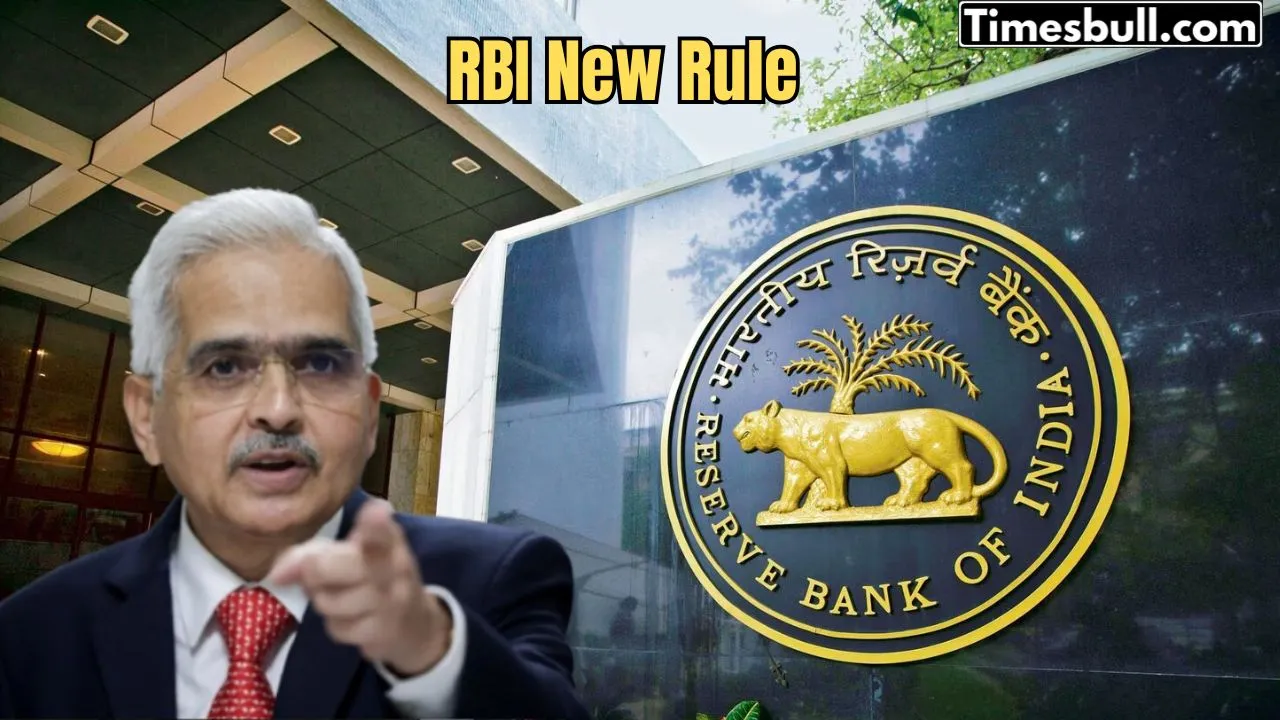
Many people take loans from banks or financial institutions to start small businesses or to meet urgent needs. However, one issue that often causes additional stress during loan repayment is foreclosure charges. Many borrowers wish to repay their loans before the term ends, but banks impose extra charges for early repayment. To address this problem, the Reserve Bank of India is set to introduce a solution. In this article, we will share all the details regarding RBI’s new rules.
What Changes is the Reserve Bank of India Bringing?
A recent notification from the RBI clearly states that banks will no longer be able to deduct foreclosure charges or pre-payment penalties if the loan is repaid early. According to the new rules, no additional charges will apply to customers who pay off floating-rate loans in advance.
There will be no log-in period, meaning the borrower can repay the loan at any time. All banks and NBFCs will be required to inform customers about this facility in advance. This rule will apply not only to personal loans but also to MSME (Micro, Small, and Medium Enterprises) loans.
Additional Benefits for MSMEs
The RBI’s new rule will benefit MSMEs as well. MSME traders who take loans from Tier 1 and Tier 2 government banks and some NBFCs will not have to pay foreclosure charges. MSMEs taking loans up to Rs 7.50 crore will be exempt from these charges. If any bank or NBFC violates this rule, they will face fines.
When Will the New Rule Come into Effect?
The RBI has not yet made a final decision. The views of stakeholders will be taken until March 21, 2025. A final decision will be made after that date.
Why is This Decision Important?
In the past, many customers and small traders avoided early loan repayment due to the burden of foreclosure charges. With this new rule, borrowers will be able to repay their loans without additional charges, making it easier for them. This will also help MSMEs grow by reducing financial pressure.
This move by the RBI is not only convenient for general customers but also provides relief to small traders. If implemented, it could bring significant changes to the banking sector in the future.
Latest News
- Weather warning – Heavy Rain, thunderstorms, lightning Alerts for 13 States Over Next 3 Days

- UP TGT Exam City Slip 2026 Released – Download at upessc.up.gov.in, Exam June 3-4

- ATM Alert: एटीएम में फंस जाए डेबिट कार्ड तो घबराएं नहीं, फटाफट यह काम करने से होगा समाधान

- Post Office Scheme – 7.5% Interest Rate, ₹5 Lakh Becomes ₹7,24,974 in 5 Years, Start with Just ₹1,000

- Best AI Video Editing Laptops Under 60,000 INR: Top Picks Her

- Best CNG Cars: पेट्रोल के बढ़ते दाम के बीच ये सीएनजी गाड़ी खरीदकर खर्च करें कम, माइलेज भी जबरदस्त

- Samsung Stable One UI 8.5 Update to Galaxy Tab S10 FE and Tab S10 FE+

- बुढ़ापे की लाठी बनेंगी ये तीन स्कीम्स, निवेश से पहले जानिए कितना मिल रहा ब्याज

- OnePlus Nord CE 6 vs Samsung Galaxy A57: Which Mid-Range 5G Phone Wins?

- Lenovo LOQ 15 Gen 11 Review: Best Budget Gaming Laptop?