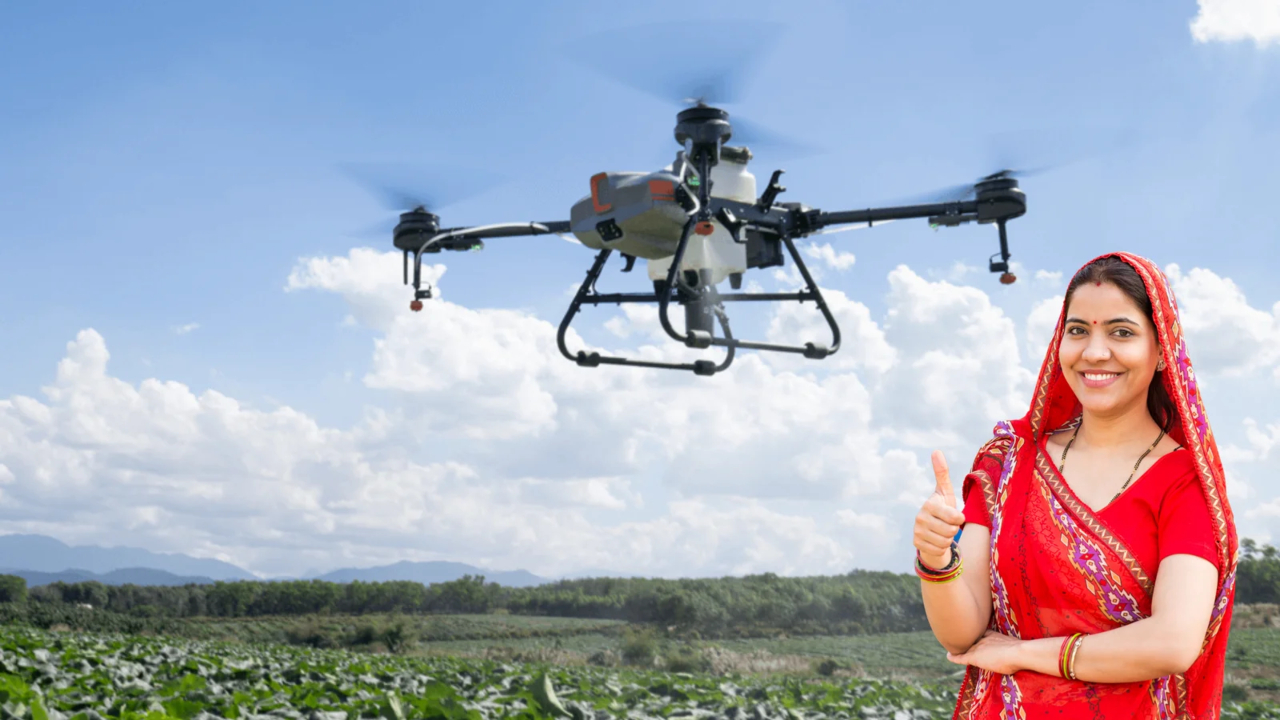
Namo Drone Didi Yojana: Big news for everyone. The “Namo Drone Didi Yojana,” introduced by the Government of India, stands out as a significant initiative aimed at empowering women in rural regions while promoting the use of modern technology in agriculture. This program not only enhances women’s economic status but also signifies a robust effort to merge traditional farming practices with technological advancements.
This initiative was unveiled in late 2023. Its aim is to train women linked with Self Help Groups (SHGs) nationwide in drone technology, transforming them into “Drone Didis.” The government plans to supply drones to around 15,000 women Self Help Groups (SHGs) by the year 2024-25. Specifically tailored for rural women, this initiative allows them to harness modern technology in agriculture and generate additional income.
Objective of the scheme
The main goal of the Namo Drone Didi scheme is to empower women through technology and create new job opportunities for them. Drones can assist in various tasks such as monitoring crops, spraying fertilizers and pesticides, surveying land, and assessing crop health with improved accuracy and efficiency. Additionally, this scheme aids farmers by lowering farming expenses and boosting production through the application of drone technology. This leads to enhanced productivity and efficiency within the agricultural sector.
What is the budget for the Namo Drone scheme?
Dr. Chandrashekhar Pemmasani, the Minister of State for Rural Development, shared comprehensive details about the scheme in the Lok Sabha. He mentioned that the Namo Drone Didi initiative has been sanctioned as a Central Sector Scheme. Its implementation period spans from 2023-24 to 2025-26. The government has set aside a budget of ₹1,261 crore for the entire initiative.
According to the government, fertilizer companies have already distributed 500 drones to women’s groups under this scheme in 2023-24 . All these “Drone Didis” have been trained at DGCA-accredited institutions. The Agricultural Development and Rural Transformation Centre (ADRTC) in Bengaluru conducted a study to understand the impact of this scheme. It found that women who were previously limited to traditional farming are now becoming more efficient and productive with the help of drone technology. Their incomes have increased and new job opportunities have opened up.
Training and financial assistance
Under the scheme, selected women receive specialized training in drone flying and maintenance. This training typically lasts 10 to 15 days, covering both technical knowledge and practical exercises. The government provides each self-help group with an 80% subsidy for the purchase of a drone. An agricultural drone costs approximately Rs 8 to Rs 10 lakh, with the government covering the majority of the cost. The remaining cost is borne by the group or provided as a bank loan.
Latest News
- Apple MacBook Neo Deal Alert: Get It For Under ₹58,000 on Amazon Right Now

- Pakistan Attack: आत्मघाती हमले से दहला पाकिस्तान, 23 लोगों की मौत, 50 से ज्यादा घायल, जानें

- Honor Magic 9 Series Leaks: Flagship Upgrades with Massive 8,000mAh Battery and 200MP Cameras

- Motorola Edge 60 Fusion Review: Mid-Range King or Outdated?

- FD Update– Breaking Your FD Early? Know the consequences

- Bank Holiday–RBI Announces Closure of SBI, HDFC and All Banks Next Week, Save the Dates

- Samsung Galaxy S26 Ultra Amazon Deal – Get ₹23,509+ Discount with Bank Offers and Exchange Benefits

- Best Scooters For College Girls 2026 – Perfect Mix Of Mileage, Style And Lightweight Design
- Kodak Matrix QLED Google TV 2026 Series Launched in India Just Under 10,999

- Senior Citizen FD Rates: सीनियर सिटीजन को यहां से मिल रहा बंपर ब्याज, जल्द करें निवेश