
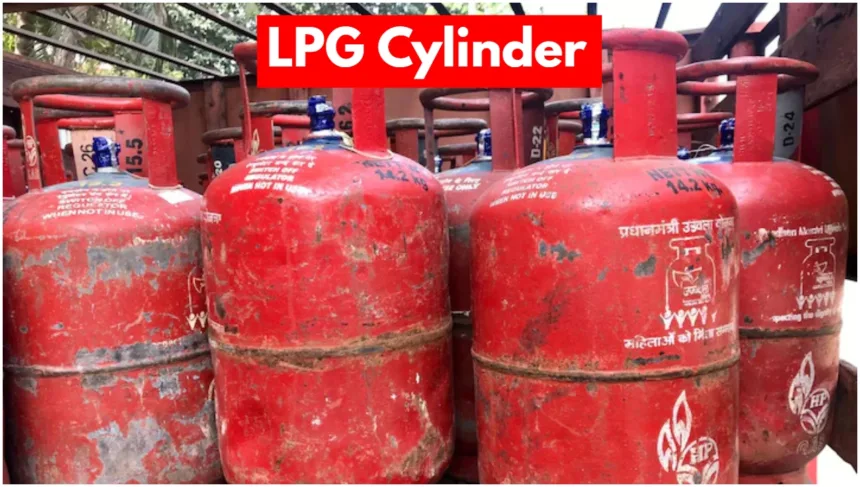
New Delhi: Due to rising tensions in the Middle East, the global crisis regarding LPG supply is intensifying. With ships passing through the Strait of Hormuz facing security risks, the supply chain has been severely impacted. In light of this, the Government of India has now taken a stringent measure. If your household is equipped with both LPG cylinders and a PNG pipeline connection, you may face complications.
Key Highlights
🌍 Why This Rule Now? — The Global Trigger
| Factor | Details |
|---|---|
| 🔥 Root Cause | Escalating Middle East tensions |
| 🚢 Supply Chain Hit | Ships through the Strait of Hormuz face security risks |
| 📦 LPG Crisis | Global supply severely disrupted |
| 🇮🇳 India’s Response | Ban on dual LPG + PNG connections |
| 🎯 Additional Goal | End black marketing & subsidy misuse |
⚖️ The New Rule — What Exactly Changed?
| Parameter | Details |
|---|---|
| 📅 Amendment Date | March 14, 2026 |
| 📋 Legal Basis | Amendment to regulations under the Essential Commodities Act |
| 🏛️ Issued By | Ministry of Petroleum & Natural Gas |
| 👤 Key Official | Sujata Sharma, Joint Secretary |
| ❌ What’s Now Illegal | Holding both LPG cylinder + PNG pipeline connection |
| ✅ What’s Required | Surrender one connection immediately |
Given the disruption to gas supplies caused by escalating global tensions, holding a “double connection”—that is, having both an LPG cylinder and a PNG pipeline—has now been declared completely illegal. Consequently, you will be required to surrender one of your connections; failure to do so could lead to significant difficulties.
Curbing the “Double Benefit
For those households that have a piped gas supply (PNG) installed while also keeping an LPG cylinder tucked away in a corner, this news is likely to be a cause for concern. The government is now fully prepared to put an end to this practice of availing a “double benefit.” According to a report from Delhi, the government is currently identifying households where both LPG and PNG connections are operating simultaneously. This step has been taken with the specific objective of curbing black marketing, thereby ensuring that the benefit of the LPG subsidy reaches only those who are genuinely in need of it.
Government Issues Directives
Just a few days ago, the government issued a stern directive stating that households receiving cooking gas via a pipeline (PNG) are no longer eligible to retain a subsidised domestic LPG cylinder.
On March 14, the Ministry of Petroleum and Natural Gas amended the existing regulations under the Essential Commodities Act, making this mandate compulsory. If, for any reason, you currently hold a PNG connection, you are now required to immediately surrender your domestic LPG connection. Furthermore, a major underlying reason behind this decision is the ongoing global energy crisis.
Impact of the New Rule
The impact of this new government regulation will extend beyond just the consumers; it will also significantly affect oil companies and gas distributors. Public sector oil companies and their authorised dealers have been issued strict instructions not to provide a new LPG connection to any customer who already possesses a PNG connection.
Furthermore, they have been directed not to refill LPG cylinders for any household that already has an active PNG supply. In this context, Sujata Sharma, Joint Secretary at the Ministry of Petroleum, shared significant information, stating that an assessment is currently underway to determine the number of households across the country that are availing the benefits of both facilities.
How Many People Have Surrendered Their LPG Connections?
Providing further details, Sujata Sharma noted that over 43,000 individuals have come forward and voluntarily decided to surrender their LPG connections, as they already possess a PNG connection. According to the government, however, this figure remains quite low.
In reality, there could be hundreds of thousands of people holding dual connections. The government is currently gathering data in an effort to identify such individuals. By leveraging this data, the government aims to reach out to these people to ensure strict compliance with regulations and to take appropriate action against those who do not voluntarily surrender their connections.