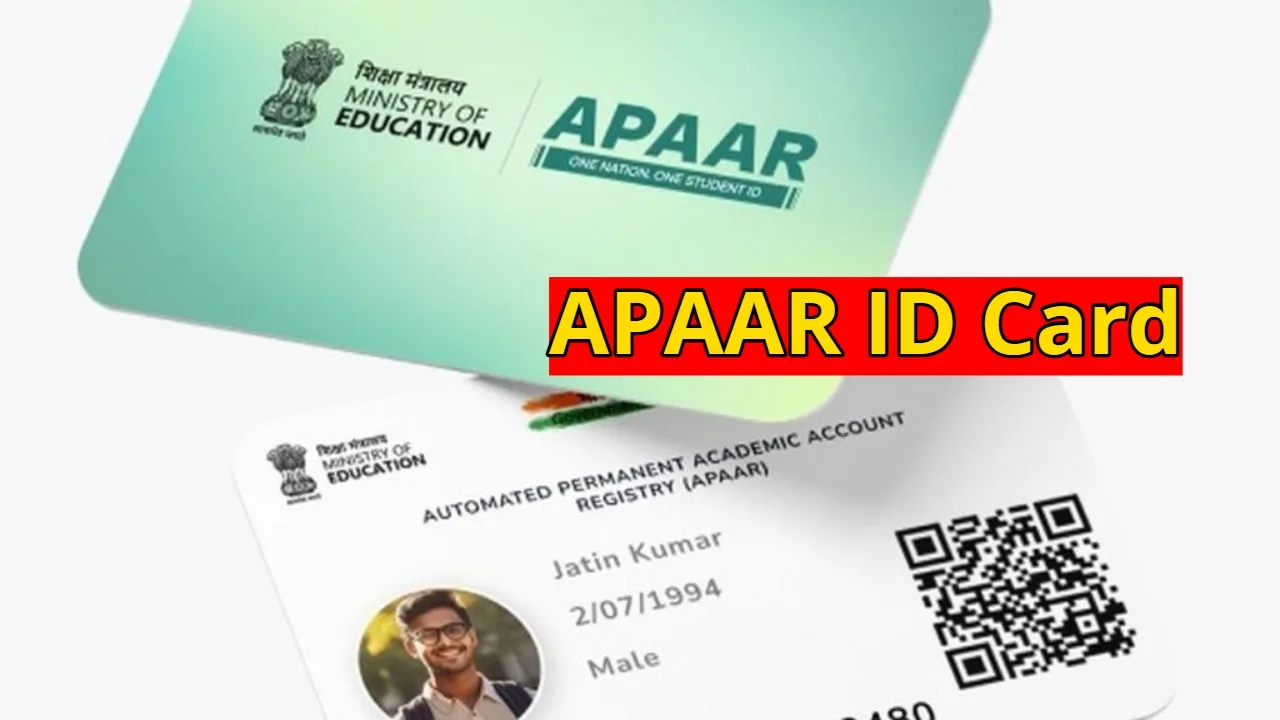
APAAR ID Card: Bihar has accelerated its implementation of the One Nation, One Student ID scheme at the grassroots level. Under this ambitious initiative of the central government, the process of creating Apaar ID cards is progressing rapidly in government schools across the state. According to the latest data, as of February 11, 2026, out of 16,598,489 enrolled students in Bihar, Apaar cards have been generated for 12,269,756 students. This represents approximately 73.92 percent of the total number, which is considered a significant step towards digital education.
What is Apaar ID and its purpose?
Apaar ID is a unique 12-digit identification code designed to digitally secure students’ educational records. Its purpose is to make a student’s entire educational journey available on a unified digital platform. While it hasn’t been made completely mandatory, most educational institutions are rapidly implementing it, recognizing its necessity so that any educational information remains secure and accessible in the future.
Why is this digital identity important?
The Aapar ID will prove useful for students in many ways. Documents such as mark sheets, certificates, and degrees will be available as secure digital records. If a student transfers from one school to another, it will ease the cumbersome documentation process. Furthermore, this ID will also help access scholarships and other government benefits.
Improved progress at the secondary level
State data shows that AAPAR cards have been issued for 6,748,365 students from sixth to twelfth grades, representing approximately 55 percent of the total cards issued. In contrast, only 5,521,391 students from first to fifth grades have received cards. The relatively slow progress at the primary level remains a concern for the administration.
Lack of Aadhaar cards is a major obstacle
Aadhaar cards are mandatory for creating Aapar IDs. 29,98,278 children in Bihar’s government schools still lack Aadhaar cards. Many children, especially in the first grade, were enrolled provisionally. Due to the limited availability of Aadhaar centers, headmasters are facing difficulties in obtaining Aadhaar cards for children and subsequently issuing them. This is why the process is relatively slow in primary grades.
Aadhaar’s Importance Beyond Education
The Aadhaar card is essential not only for the Aadhaar ID but also for many other services. It is required for opening bank accounts, obtaining loans, and accessing government benefits like ration and pension. It is also used as identity proof for jobs, passports, and travel. Aadhaar also plays a crucial role in digital KYC processes, obtaining SIM cards, and filing income tax returns.
Moving Toward Digital Education
Efforts are being made to digitalize the education system through the Aadhaar ID. This will ensure transparent, secure, and easy access to student records. While the lack of Aadhaar cards is a major challenge, the administration is working to address it. The target of 100% coverage has been set for the coming time, so that every student can get a digital identity.
Latest News
- Weather warning – Heavy Rain, thunderstorms, lightning Alerts for 13 States Over Next 3 Days

- UP TGT Exam City Slip 2026 Released – Download at upessc.up.gov.in, Exam June 3-4

- ATM Alert: एटीएम में फंस जाए डेबिट कार्ड तो घबराएं नहीं, फटाफट यह काम करने से होगा समाधान

- Post Office Scheme – 7.5% Interest Rate, ₹5 Lakh Becomes ₹7,24,974 in 5 Years, Start with Just ₹1,000

- Best AI Video Editing Laptops Under 60,000 INR: Top Picks Her

- Best CNG Cars: पेट्रोल के बढ़ते दाम के बीच ये सीएनजी गाड़ी खरीदकर खर्च करें कम, माइलेज भी जबरदस्त

- Samsung Stable One UI 8.5 Update to Galaxy Tab S10 FE and Tab S10 FE+

- बुढ़ापे की लाठी बनेंगी ये तीन स्कीम्स, निवेश से पहले जानिए कितना मिल रहा ब्याज

- OnePlus Nord CE 6 vs Samsung Galaxy A57: Which Mid-Range 5G Phone Wins?

- Lenovo LOQ 15 Gen 11 Review: Best Budget Gaming Laptop?