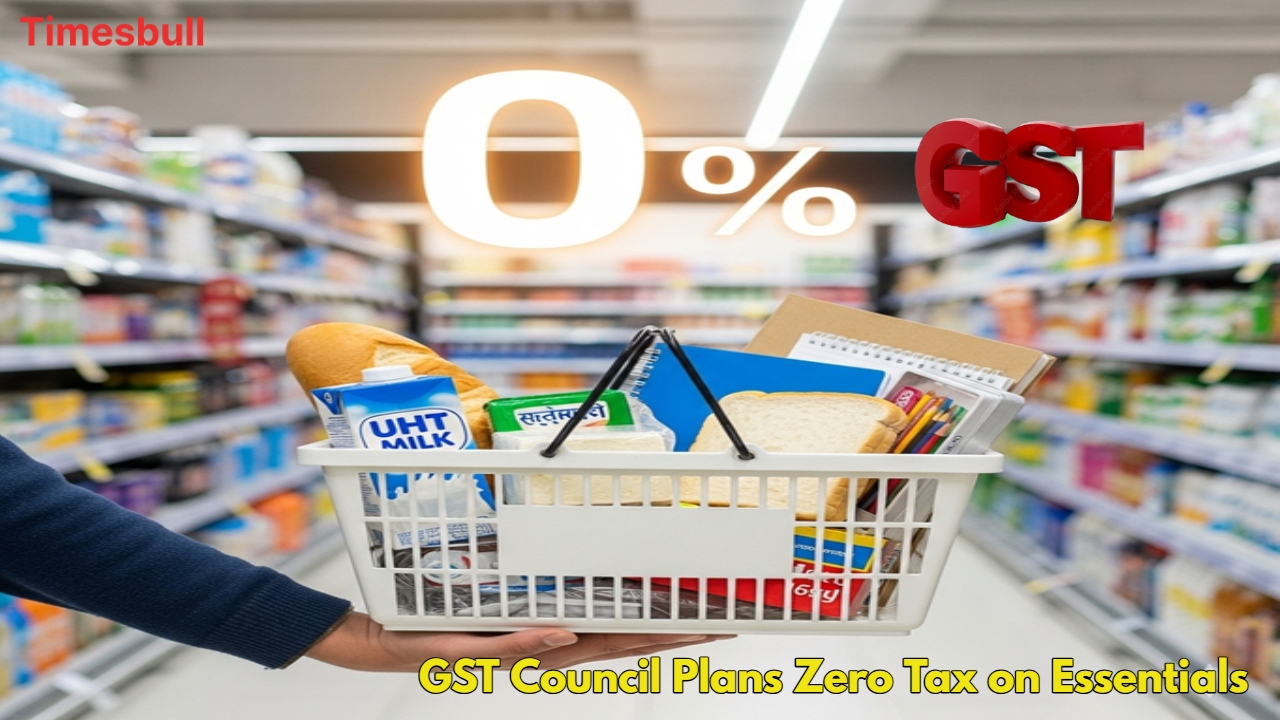
Inflation Relief: Soon your pocket is going to get a big relief. The GST Council is preparing to take many things out of the scope of tax. According to the news, the scope of the zero tax slab is being expanded even further. This means that in the coming time, there will be more such things on which no GST of any kind will be levied. This step is being taken with the aim of giving relief to the common man from inflation and making everyday essential items cheaper. Especially, food items, medicines, and household essentials are likely to be included in this scope.
Every day, things will become cheaper
According to a report by Business Today, the GST Council can expand the scope of the zero tax slab and can make the 5% and 18% GST levied on many essential products zero. If this happens, then in the coming time, GST will not be levied on everyday food items like UHT milk, pre-packaged paneer, pizza bread, khakhra, chapati, and roti. Similarly, paratha and parotta (which were earlier taxed at 18%) are also proposed to be brought under the zero rate. This is big news for the common man.
Education-related items are also tax-free
Not just food items, but education-related items are also likely to be taxed. The GST Council may make maps, atlases, globes, pencil sharpeners, all types of pencils, exercise books, graph books, and laboratory notebooks zero by removing them from 12% tax. According to officials, this step is being taken to rationalise the indirect tax structure and reduce the number of tax slabs. This decision will give great relief to students and families, as well as make the system simple and transparent.
List of possible ‘Zero GST slabs’
Everyday food items: GST will not be applicable on UHT milk, pre-packed paneer (chhena), pizza bread, khakhra, chapati, roti, etc.
Other food products: Butter, condensed milk, jam, mushrooms, dates, dry fruits, namkeen, etc. – these currently attract 12% GST, but the filtering committee has suggested that these be put in the zero slab instead of 5%.
This move is a great way for the government to control inflation and provide direct economic relief to the common people. If these decisions are implemented, it will help improve the budget of every household.
Latest News
- Weather Warning Delhi-NCR – Rain Alert & Dust Storm in Next 2-3 Hours, IMD Issues Yellow Alert

- PM Kisan Samman Nidhi Yojana: नहीं मिल रही 2000 रुपये की किस्त तो किसान तुरंत करवा लें यह काम

- Aadhaar Card Update Rules – How Many Times Can You Change Address, DOB & Number?

- Train Ticket: How to book a confirmed train ticket without an agent? Learn the Easy Steps

- Indian Railways– 155 Trains Express Declared High-Speed, Thousands of Railway Staff to Benefit

- Monsoon Alert – Warning Heavy to Very Heavy Rain alert & thunderstorms in 22 States Over Next 4 Days

- America-Iran War: मिडिल ईस्ट में तनाव होगा खत्म! ईरान ने होर्मुज रास्ते पर कही बड़ी बात

- PM Surya Ghar Yojana 2026: Get Up to Rs 78,000 Subsidy within 6 Easy Steps, Know Here
- Cheapest Available 5G Smartphones in India Under 10000

- UPSC Prelims Answer Key 2026 – How to Download UPSC Prelims Answer Key at upsc.gov.in