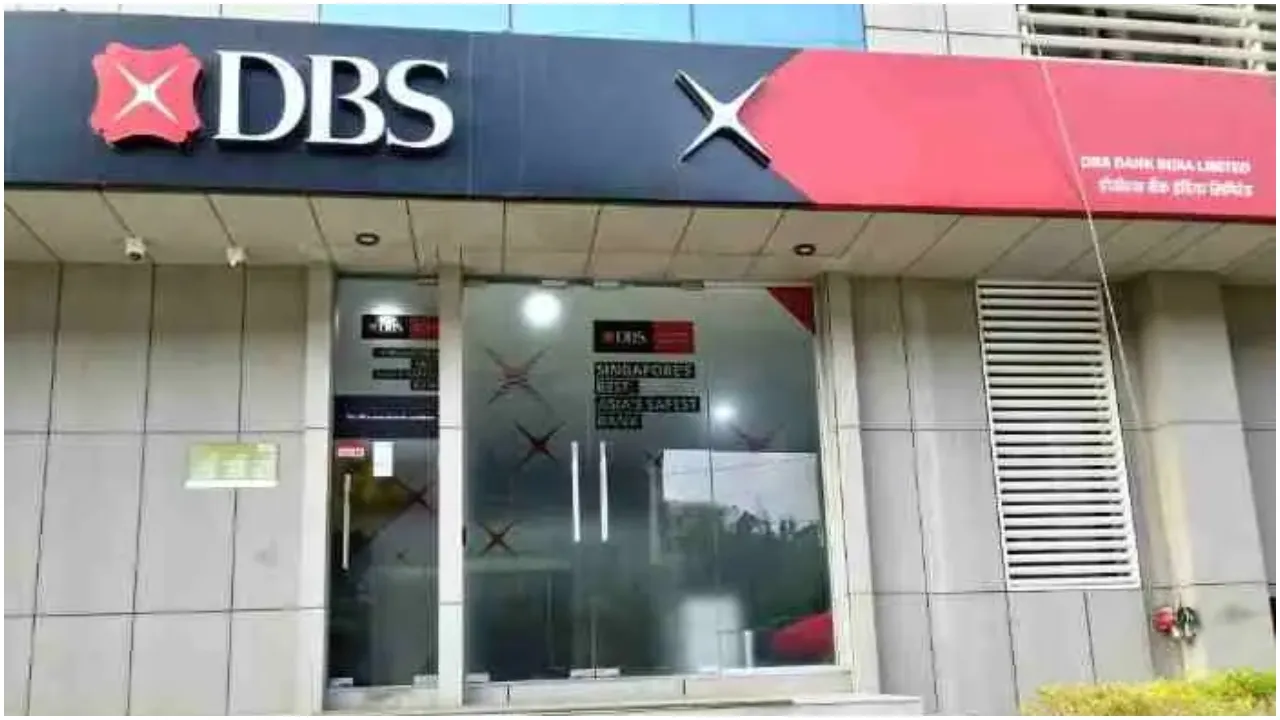
New Delhi: Almost all citizens of India are banked. Some are account holders of the government, and some are with private sector banks. Do you know that banks also have their own rules? If the balance is below the prescribed limit, a penalty is imposed. Many banks across the country charge a penalty on low deposits. There is also a bank that has made a big announcement.
You must be wondering what announcement has been made. If there is less than Rs 10,000 in the account, a penalty of 6% will be charged. This is also a big blow for the account holders. DBS Bank, a private sector institution, has implemented this rule. This is also considered a big blow for the customers. The lesser the amount than the average monthly balance, the greater the penalty will be charged. However, this rule has not yet been implemented.
When will the rules for calculating the average monthly balance be implemented?
DBS Bank India, a subsidiary of Singapore’s DBS, has set a condition that the average monthly balance must be maintained at a minimum level. If a person has Rs 8500 in his account, equivalent to 6 per cent of the account balance, then you will have to pay a penalty of 6 per cent on a shortfall of Rs 1500 (10,000-8500=1500).
DBS Bank has also provided information related to this to all its customers through text messages. DBS Bank announced that the new rule regarding the average monthly balance will take effect from August 1, 2025.
What is the limit for different accounts?
The average monthly balance for DBS Bank’s Savings Account has been fixed at Rs 1000, Rs 5000 for Growth One Savings Account, and Rs 10,000 for DBS Bank’s Savings Account. Additionally, it is necessary to have Rs 100 for the Lakshmi Savings Youth Power Account and Rs 10,000 for the TASC Savings Youth Power Account.
In the event that the average monthly balance for all types of accounts is not maintained, a penalty of up to 6 per cent will be levied on the shortfall. This will be a big blow for DBS Bank account holders. According to media reports, the new rule is set to take effect on August 1, 2025.
Latest News
- PAN Card–From Banking to Property Deals, Major PAN rules changed
- New Triumph Street Triple 765 RX Is Here – Limited Edition Track Monster Unveiled

- Best Budget Tablets for Students 2026 Under 20,000

- Free Bus Travel for Women Starts June 1, Know ID Rules and Many More

- How to Replace Siri with ChatGPT on iPhone: Step-by-Step iOS Setup

- Petrol-Diesel Price Today: 24 मई को कितना बदला पेट्रोल-डीजल का भाव, चेक करें 1 लीटर की कीमत

- White House Firing: व्हाइट हाउस के दरवाजे पर 25 राउंड फायरिंग से मची खलबली, संदिग्ध हमलावर की मौत

- Tata Tiago Facelift Launching Soon – Aggressive Design And High-Tech Cabin Revealed

- LPG Gas Connection Transfer Made Easy, Learn the Complete Process

- New Honda City Facelift 2026 Launched – Sporty Coupe Look And ADAS Safety Revealed