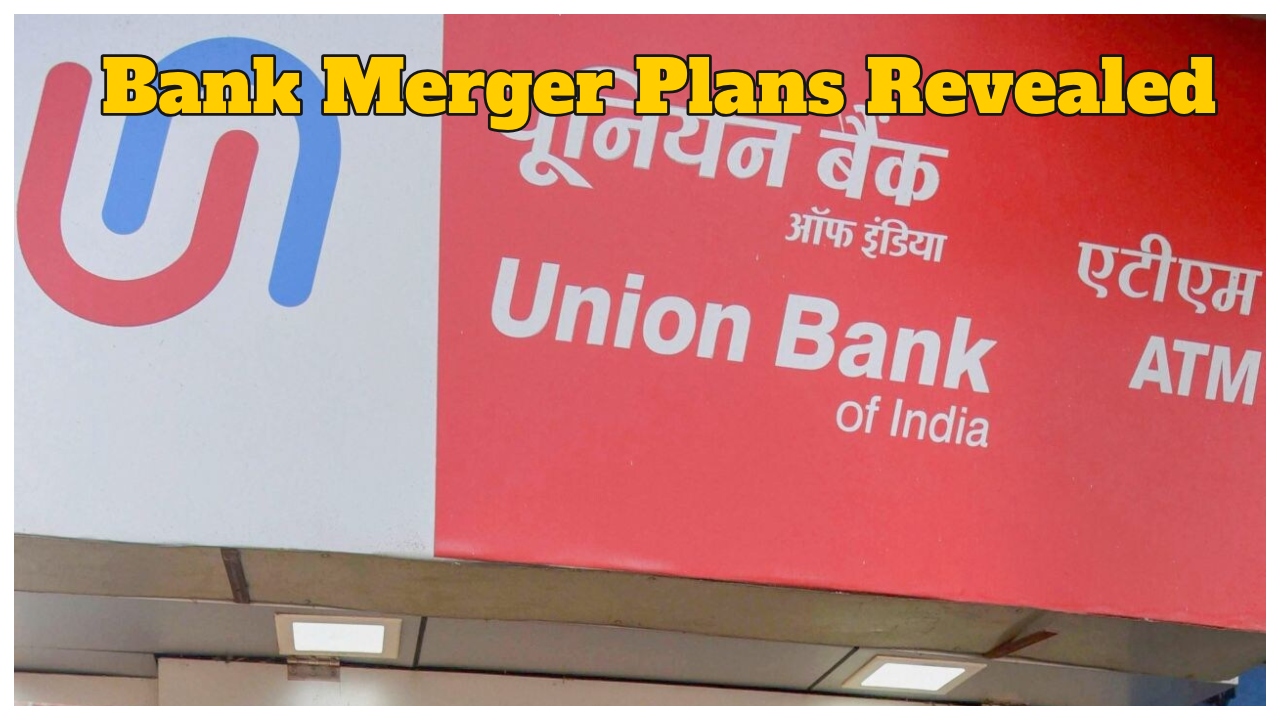
Bank Merger Plans Revealed:- Preparations for a major merger of public sector banks have begun. Finance Minister Nirmala Sitharaman has indicated that the government wants to strengthen the size, technology, operations, and management structures of PSU banks. The next major merger plan for public sector banks has already begun. Finance Minister Nirmala Sitharaman has clearly stated that India needs “large, world-class banks,” and work has already begun. This time, the government does not want to limit itself to bank mergers but is also taking steps to transform the systems, working methods, and controls of PSU banks. But the question now arises: which bank can be merged with which, and what is the one major change that will render the merger ineffective?
Which bank will be merged with which?
The government wants to merge the remaining PSU banks to form larger banks.
The first option is to merge smaller public sector banks (UCO Bank, Central Bank of India, Indian Overseas Bank, Bank of Maharashtra) with Bank of India. Bank of India is the largest in this group (6 lakh crore + book size).
Second Option
Banks could be merged based on technology or region.
-UCO Bank and Central Bank -Punjab National Bank
-Bank of India -Union Bank
-Indian Overseas Bank -Indian Bank
Third Option – If the goal is simply “size,” then the merger of Bank of India and Union Bank is the best option.
Currently, there are 12 public sector banks in the country. The government could reduce the number of these banks to four. Except for State Bank of India, Canara Bank, Punjab National Bank, and Bank of Baroda, all other banks in the country could be merged.
Latest News
- Train Ticket: How to book a confirmed train ticket without an agent? Learn the Easy Steps

- Indian Railways– 155 Trains Express Declared High-Speed, Thousands of Railway Staff to Benefit

- Monsoon Alert – Warning Heavy to Very Heavy Rain alert & thunderstorms in 22 States Over Next 4 Days

- America-Iran War: मिडिल ईस्ट में तनाव होगा खत्म! ईरान ने होर्मुज रास्ते पर कही बड़ी बात

- PM Surya Ghar Yojana 2026: Get Up to Rs 78,000 Subsidy within 6 Easy Steps, Know Here

- Cheapest Available 5G Smartphones in India Under 10000
- UPSC Prelims Answer Key 2026 – How to Download UPSC Prelims Answer Key at upsc.gov.in
- 8th Pay Commission: एनपीएस और पुरानी पेंशन में कौन सी बेहतर, जानिए बड़ा अपडेट

- Xiaomi 17T Launching With Leica 5x Zoom and Huge 6,500mAh Battery Under ₹60,000

- NEET UG 2026 – Haryana & Bihar Announce Free Bus Service for Candidates on June 20-21