


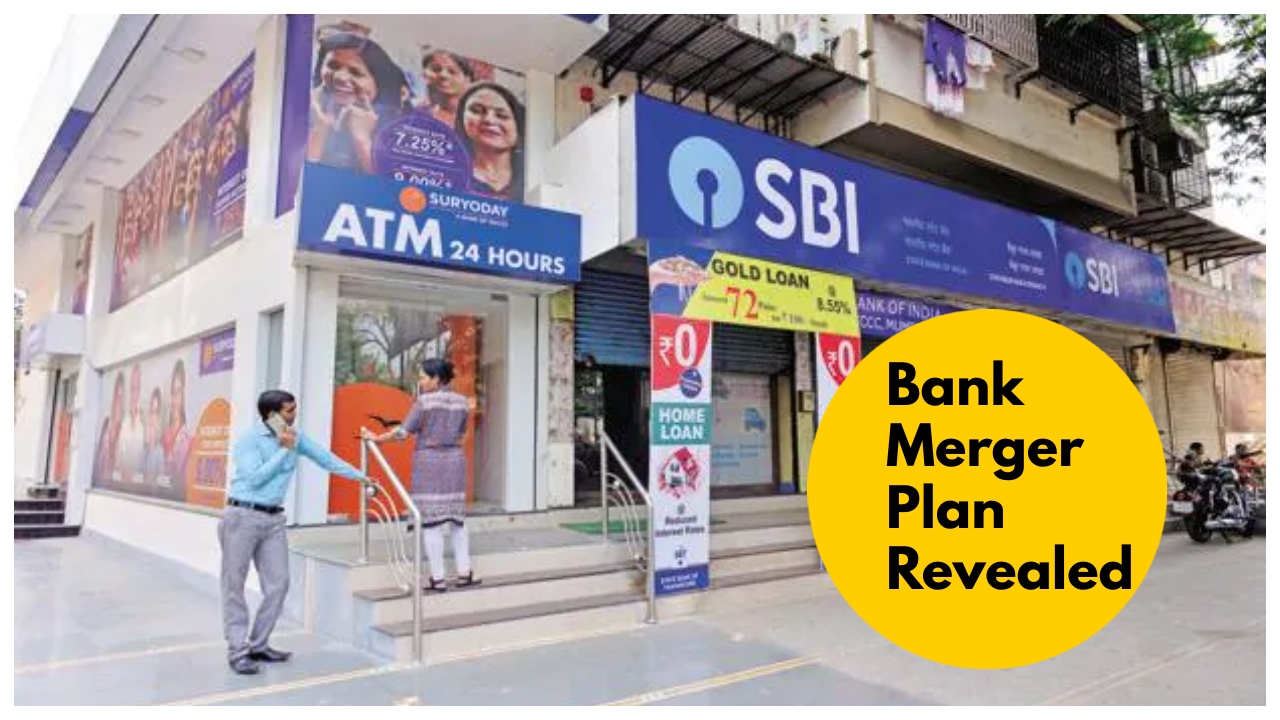
Bank Merger Plan Update:- The government is preparing for a major banking surgery. Plans are underway to merge the existing 12 public sector banks into four large banks. This will transform the banking system and alter the branch structure. Several media reports indicate that the government is considering creating a new megastructure by merging smaller public-sector banks with larger ones. Following NITI Aayog’s recommendation, this proposal is being rapidly implemented.
What will be the impact on account holders?
The merger of banks can directly affect customers. Bank names, IFSC codes, checkbooks, and passbooks may need to be changed after the merger. There is a possibility of temporary service delays during account migration and data transfer. However, digital services may become more robust.
Which banks will be merged?
According to media reports, the government is considering merging the Indian Overseas Bank, the Central Bank of India, the Bank of India, and the Bank of Maharashtra with larger public sector banks. These could be merged with the following large banks: State Bank of India, Punjab National Bank, and Bank of Baroda. Preliminary documents on this proposal have been prepared and will soon be sent to the Cabinet and the Prime Minister’s Office (PMO). If approved, this mega merger could be completed in the 2026-27 financial year.
How many banks have been merged so far?
Between 2017 and 2020, the government carried out a significant round of mergers, reducing the number of public sector banks from 27 to 12. Major mergers during this period included the merger of Oriental Bank of Commerce and United Bank of India with PNB, the merger of Syndicate Bank with Canara Bank, the merger of Andhra Bank and Corporation Bank with Union Bank of India, and the merger of Allahabad Bank with Indian Bank. These were aimed at improving asset quality, strengthening governance, and achieving scale efficiencies.
What will be the impact on account holders?
Bank mergers can directly affect customers. For example, bank names, IFSC codes, chequebooks, and passbooks may need to be changed after the merger. There is a possibility of temporary service delays during account migration and data transfer. Additionally, nearby branches of two banks may be merged, impacting account holders. However, digital services may be strengthened.