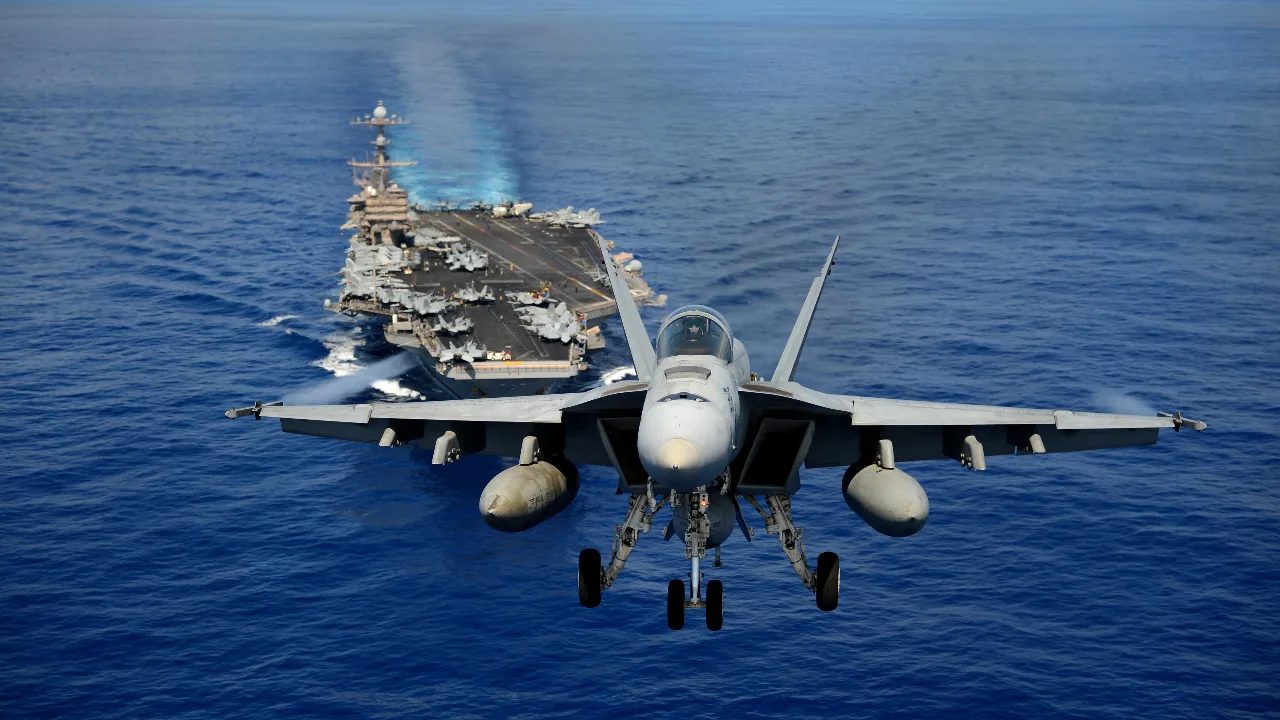
America-Iran Tension: Tensions between the US and Iran seem to be rising once more. In late January, US President Donald Trump announced that powerful warships were en route to Iran, expressing hope that they would not need to be used. Since that time, the US has notably bolstered its military presence in the Middle East.
In response to this military buildup, Iran has declared that it does not comprehend the language of force. Iranian Foreign Minister Abbas Araghchi remarked that while the US is sending ships and aircraft to the region, Iran will not be cowed by such actions. He made it clear that the presence of US troops does not intimidate Iran.
America’s aircraft carrier
As reported by the BBC, in late January, the US dispatched its aircraft carrier USS Abraham Lincoln along with three missile-equipped warships to the Arabian Sea. Additionally, around 5,700 extra troops were sent to the area. The US shared images of these vessels on social media, aiming to project a message of peace through strength. Moreover, several other US warships are stationed around the Persian Gulf, the Strait of Hormuz, and the Red Sea, with specialized ships on standby to clear sea mines if necessary.
Preparations for the United States and Britain
Regarding air power, the US has sent F-15 fighter jets, MQ-9 drones, and A-10 attack aircraft to the Middle East. Britain has also positioned its Typhoon fighter jets in Qatar. Furthermore, the US has enhanced its THAAD and Patriot missile defense systems in the region. Amid rising tensions, the US has cautioned merchant vessels passing through the Strait of Hormuz. American ships have been advised to steer clear of Iranian waters and to decline any inspections.
President Trump’s demands on Iran
President Trump has insisted that Iran cease its uranium program, terminate its ballistic missile initiatives, and stop supporting regional organizations. Nevertheless, Iran has consistently asserted that its nuclear program is intended solely for peaceful purposes.
Latest News
- PM Kisan Samman Nidhi Yojana: नहीं मिल रही 2000 रुपये की किस्त तो किसान तुरंत करवा लें यह काम

- Aadhaar Card Update Rules – How Many Times Can You Change Address, DOB & Number?

- Train Ticket: How to book a confirmed train ticket without an agent? Learn the Easy Steps

- Indian Railways– 155 Trains Express Declared High-Speed, Thousands of Railway Staff to Benefit

- Monsoon Alert – Warning Heavy to Very Heavy Rain alert & thunderstorms in 22 States Over Next 4 Days

- America-Iran War: मिडिल ईस्ट में तनाव होगा खत्म! ईरान ने होर्मुज रास्ते पर कही बड़ी बात
- PM Surya Ghar Yojana 2026: Get Up to Rs 78,000 Subsidy within 6 Easy Steps, Know Here

- Cheapest Available 5G Smartphones in India Under 10000

- UPSC Prelims Answer Key 2026 – How to Download UPSC Prelims Answer Key at upsc.gov.in
- 8th Pay Commission: एनपीएस और पुरानी पेंशन में कौन सी बेहतर, जानिए बड़ा अपडेट