
Hydrogen-Powered Suzuki Swift Debuts: 1.4L Hydrogen ICE Produces 134hp, 220Nm Torque
Suzuki has taken the wraps off a groundbreaking technology demonstrator at the 2026 Vienna Motor Symposium: a Hydrogen-powered Swift. Developed in partnership with the Austrian powertrain specialist AVL, this prototype reimagines the internal combustion engine (ICE) by swapping petrol for hydrogen, offering a glimpse into

 Join Us
 Add as a preferred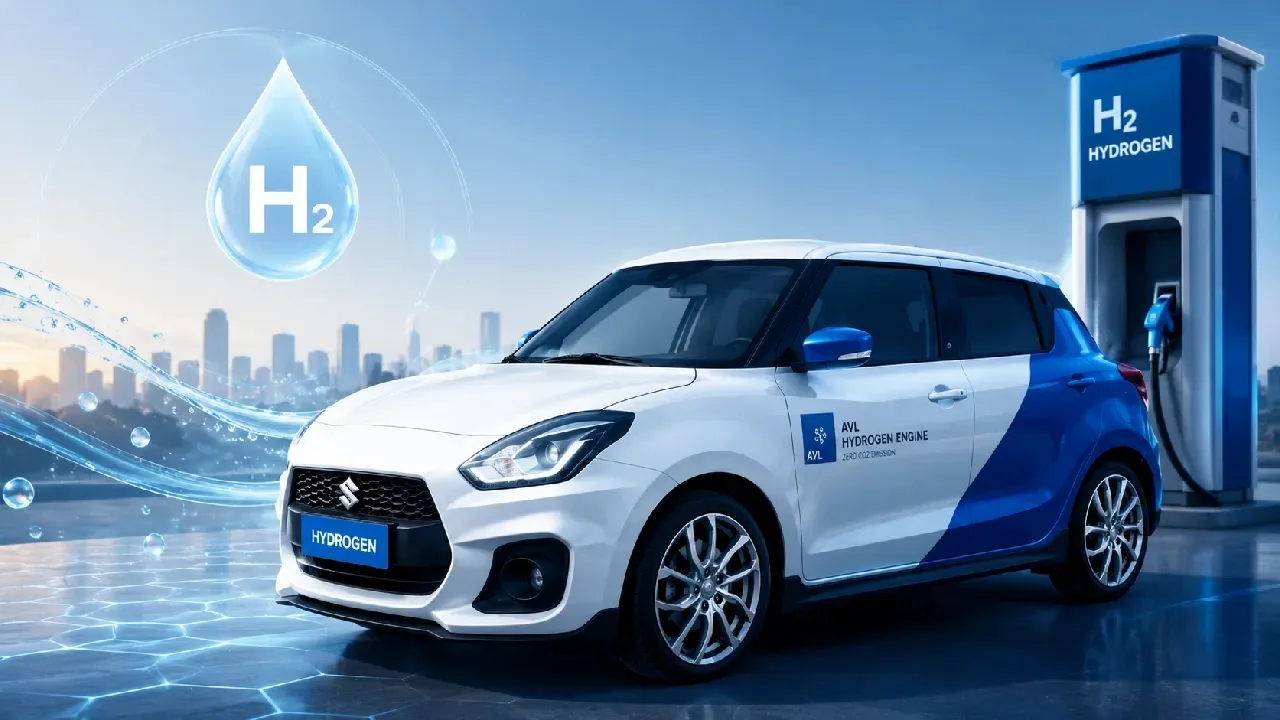
Hydrogen Powered Suzuki Swift (2)
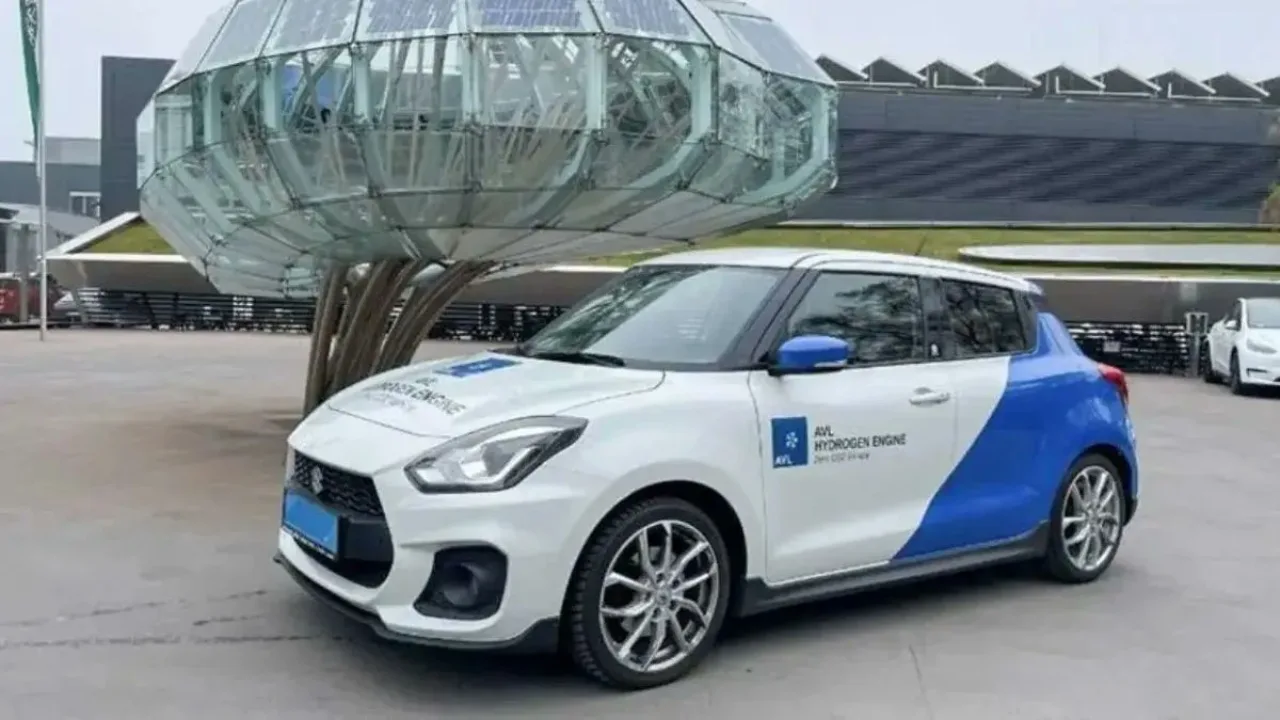
Suzuki has taken the wraps off a groundbreaking technology demonstrator at the 2026 Vienna Motor Symposium: a Hydrogen-powered Swift. Developed in partnership with the Austrian powertrain specialist AVL, this prototype reimagines the internal combustion engine (ICE) by swapping petrol for hydrogen, offering a glimpse into a potential “zero-emission” future that doesn’t rely solely on heavy batteries.
While most hydrogen cars on the market today (like the Toyota Mirai) use fuel cells to generate electricity, the Swift Hydrogen burns the gas directly in its cylinders. This approach preserves the mechanical feel and sound of a traditional car while emitting primarily water vapor. We’ve broken down the Hydrogen DI tech, the performance gains, and the future viability of this “green ICE.”
The Hydrogen ICE Difference
This is not a Fuel Cell Electric Vehicle (FCEV). Instead of using a complex chemical reaction to create electricity, Suzuki and AVL have modified a traditional engine to use hydrogen as a combustible fuel. This makes the system significantly more cost-effective and easier to manufacture by utilizing existing engine production lines.
-
Mechanism: Hydrogen is injected directly into the combustion chamber where it is ignited, much like petrol.
-
Emissions: Carbon emissions are virtually eliminated. The primary byproduct released through the exhaust pipe is water vapor, with trace amounts of $NO_x$ managed by advanced cooling systems.
Performance
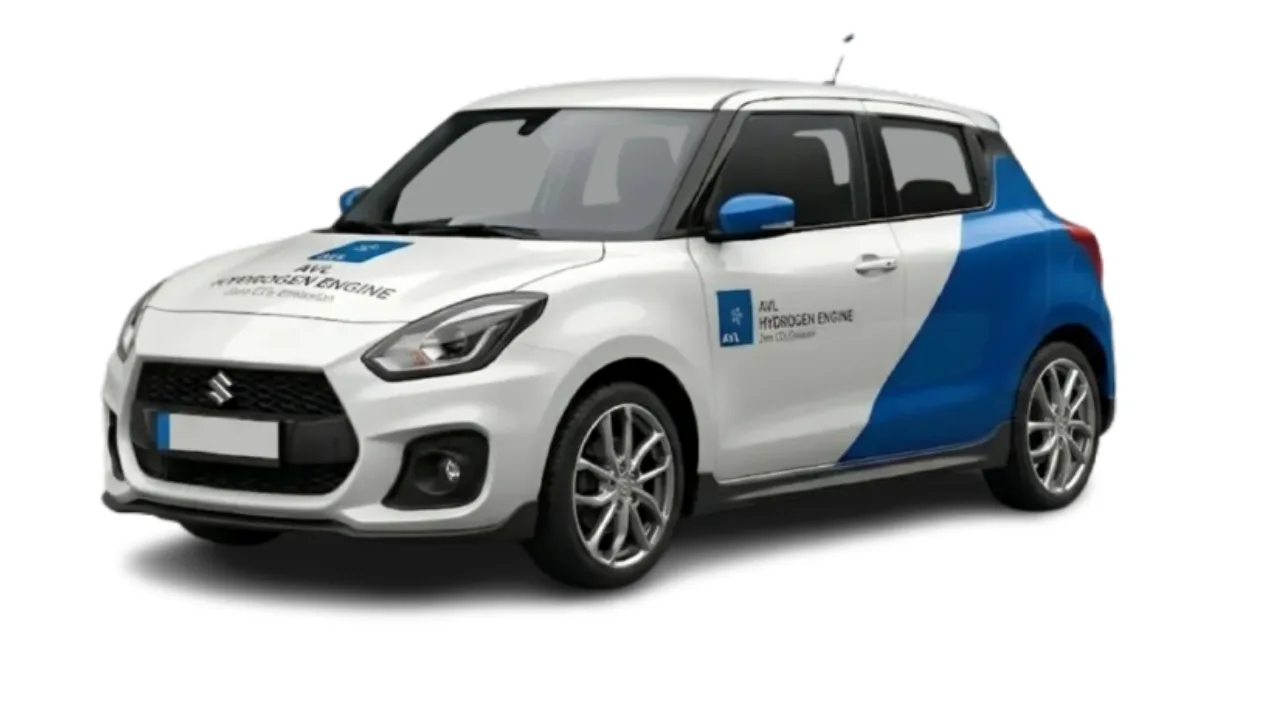
Despite using an alternative fuel, the Hydrogen Swift is actually more powerful than its standard petrol counterpart. The engine used is a heavily modified 1.4-litre 4-cylinder unit equipped with Hydrogen Direct Injection (DI).
-
Combustion Modes: The engine can switch between “Lean” mode (for maximum efficiency) and “Stoichiometric” (Lambda=1) mode for maximum performance.
-
Peak Output: In the high-performance Lambda=1 mode, it produces 100 kW (134 hp) and 220 Nm of torque.
-
The Advantage: This represents a boost of approximately 13 hp and 20 Nm over the conventional petrol setup, proving that green tech doesn’t have to mean a loss in driving fun.
Engineering & Hardware Upgrades
To handle the unique properties of hydrogen—which burns much faster and hotter than petrol—AVL and Suzuki implemented several critical hardware changes:
-
Direct Injection (DI): Precision injectors deliver hydrogen directly into the cylinders to prevent “backfiring” in the intake manifold.
-
Cooled EGR (Exhaust Gas Recirciliation): A specialized cooling system keeps combustion temperatures in check, which is vital for reducing nitrogen oxide emissions.
-
Reinforced Intake: The air-intake and charging systems were strengthened to manage the higher power density and ensure stable operation under heavy load.
Pros & Cons of Hydrogen ICE
| Pros | Cons |
| Environmental: Produces near-zero $CO_2$ emissions. | Infrastructure: Hydrogen refueling stations are extremely rare. |
| Fast Refueling: Fills up in minutes, just like a petrol car. | Efficiency: Less efficient than a pure Battery EV or a Fuel Cell. |
| Lighter Weight: Avoids the 300–500 kg weight penalty of EV batteries. | Storage: High-pressure tanks take up significant boot space. |
| Familiar Drive: Retains the sound and feel of a manual/auto engine. | Cost of Fuel: Green hydrogen production is still expensive. |
Is it coming to India
-
Status: Currently a working prototype and technology demonstrator. There are no immediate plans for a commercial launch in 2026.
-
Future Outlook: In India, Union Minister Nitin Gadkari has been a vocal proponent of hydrogen mobility. If the government succeeds in building a “Hydrogen Corridor,” a production-ready Hydrogen Swift could potentially arrive by late 2028 or 2029.
-
The Immediate Step: For now, the next big update for the Indian Swift will be the Series-Hybrid version (targeting 35 km/l), expected in 2027.
Technical Specifications
| Specification | Details |
| Engine Type | 1.4L 4-Cylinder Hydrogen ICE |
| Power Output | 134 hp (100 kW) |
| Max Torque | 220 Nm |
| Fuel System | Hydrogen Direct Injection (DI) |
| Collaboration | Suzuki x AVL Technologies |
FAQs: People Also Ask
This is not a Fuel Cell Electric Vehicle (FCEV). Instead of using a complex chemical reaction to create electricity, Suzuki and AVL have modified a traditional engine to use hydrogen as a combustible fuel. This makes the system significantly more cost-effective and easier to manufacture…
This is not a Fuel Cell Electric Vehicle (FCEV). Instead of using a complex chemical reaction to create electricity, Suzuki and AVL have modified a traditional engine to use hydrogen as a combustible fuel. This makes the system significantly more cost-effective and easier to manufacture…
To handle the unique properties of hydrogen—which burns much faster and hotter than petrol—AVL and Suzuki implemented several critical hardware changes:
Status: Currently a working prototype and technology demonstrator. There are no immediate plans for a commercial launch in 2026.
Status: Currently a working prototype and technology demonstrator. There are no immediate plans for a commercial launch in 2026.

Vikram Singh
Next Article
HBSE 10th Result 2026 – How to Check the result Via Roll Number, Direct Link bseh.org.in
Haryana Board 10th Result 2026: The Haryana Board is likely to release the Class 10 examination results this week. Students of the Haryana Board will be able to check their results by visiting the Board’s official website, bseh.org.in. To pass the examination, students must secure 33 percent marks.

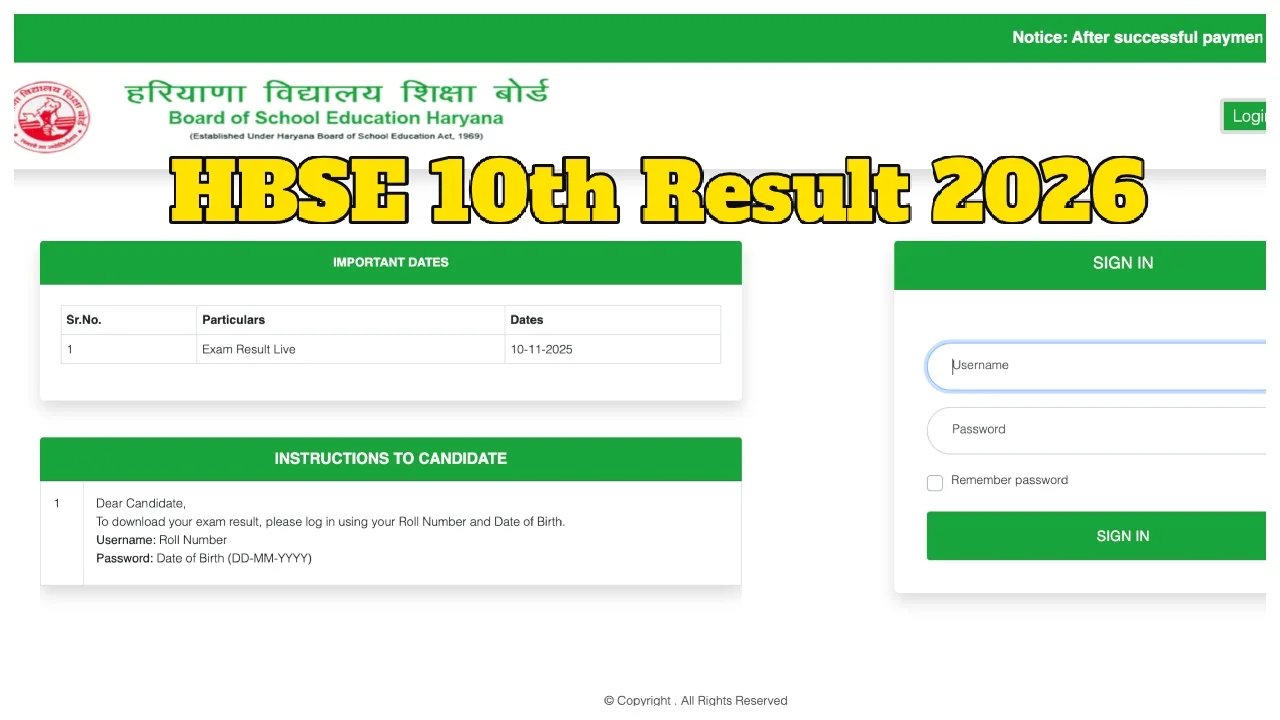
Haryana Board 10th Result 2026: The Board of School Education, Haryana (BSEH) has already released the Class 12 results, and Class 10 students are now eagerly awaiting their own. According to various media reports, the HBSE Class 10 Result 2026 is expected to be released sometime this week. The results will be published on the official Haryana Board website, where students can check their scores by entering their roll numbers. Students who appeared for the examination are advised to keep their roll numbers ready in advance to check their results promptly.
Check Your Result on These Websites:
bseh.org.in
results.bseh.org.in
digilocker.gov.in
Write a Comment