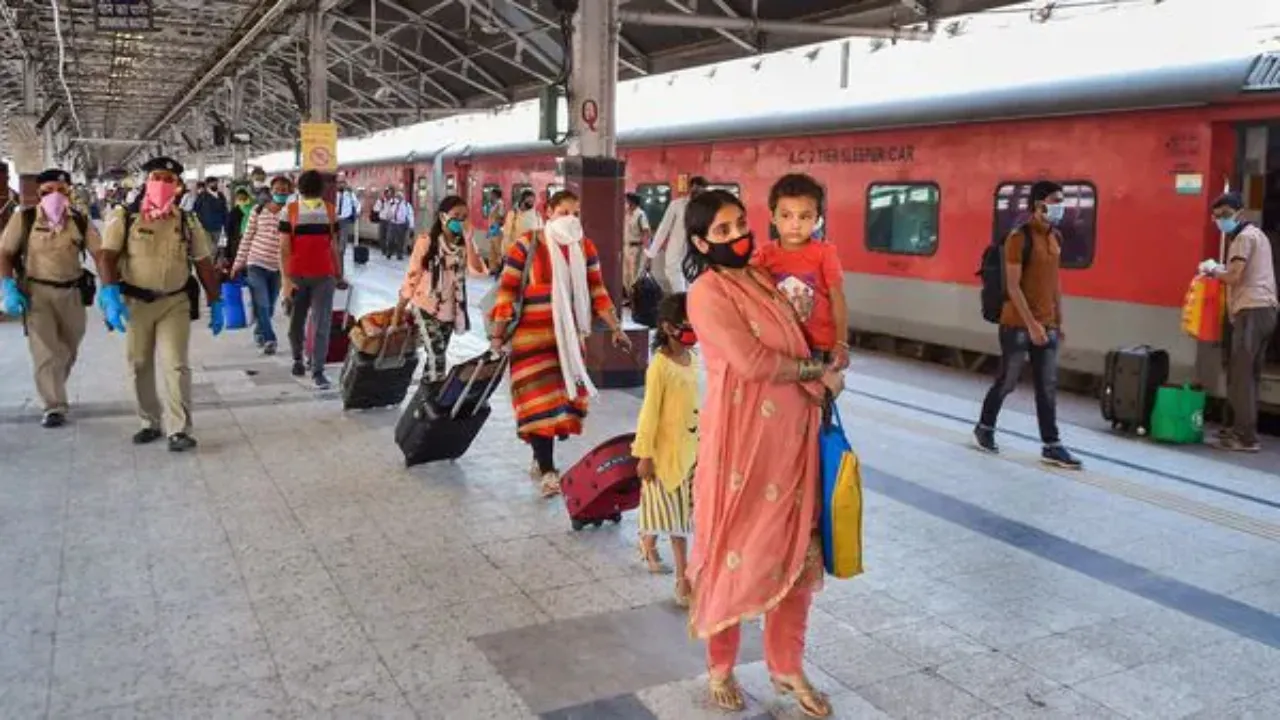
Indian Railway: Railway Minister Ashwini Vaishnav has announced a new system to improve cleanliness on long-distance trains. Now, trains will be cleaned not only at designated stations but also as needed throughout the journey. This will also include general class coaches.
Now cleaning will be done during the journey
Until now, under the Clean Train Station scheme, train cleaning was performed at specific stations. Under the new system, trained professional teams will be stationed on the train itself. These teams will clean coaches every hour or as needed. The frequency of cleaning will be determined based on peak and non-peak hours.
Monitoring will be conducted using technology
The Railway Minister has declared that technology-driven war rooms will be set up to manage this system. From these centers, real-time monitoring, feedback, and performance management will be facilitated. This approach will guarantee accountability and responsibility among service providers. The aim is to enhance and ensure timely service for passengers.
What services will be included?
In the revamped railway system, regular cleaning of coaches, toilets, and basins will be implemented, along with the maintenance of dustbins, minor repairs, and water refills. This will also encompass the inspection and reporting of safety equipment. Thus, maintenance will be prioritized alongside cleanliness.
Railway freight business also improved
Measures have been introduced to bolster not just passenger facilities but also the freight operations of the railway. Infrastructure related to cargo will be developed on unused railway land, which will include warehouses, grinding units, and processing and aggregation units. Underutilized warehouses will be transformed into Gati Shakti Cargo Terminals.
Dispute resolution process will be easier
The procedure for converting sidings and private freight terminals into Gati Shakti Cargo Terminals will be streamlined. A framework for dispute resolution has been put in place, and the Divisional Railway Manager has been given the authority to resolve disputes. The goal of these reforms is straightforward: to enhance passenger services and improve the efficiency of freight transportation.
Initially, 80 trains have been chosen for this enhancement. Based on the experiences with these trains and feedback from passengers, the improvements will be extended throughout the entire network.
Related Stories
 Business
 Auto
Auto Gadgets
 Auto
Auto Education
 Business
 Gadgets
 Auto
Auto Business
 Hindi News