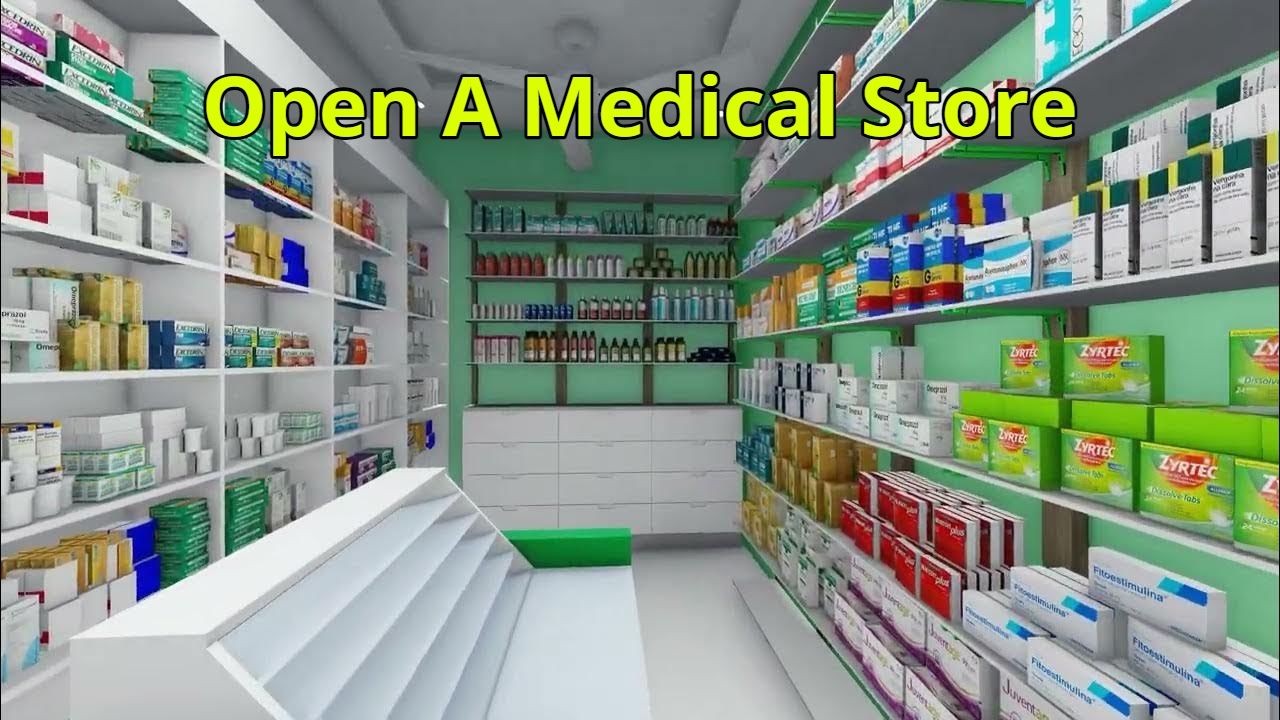
Medical Store: The healthcare sector is considered one of the most stable and reliable businesses today. Whether the market goes up or down, the demand for medicines remains constant. This is why the medical store business is constantly growing. This is especially beneficial for those who want to start their own business with limited space and limited investment.
However, it’s important to keep in mind that medical stores aren’t just a source of profit. Negligence in handling medicines can directly impact people’s health. Therefore, it’s crucial to be aware of regulations, licenses, and proper store management before starting a business.
What Type of Medical Store to Open
Before opening a medical store, it’s important to decide what type of store it will be. Medical stores located within hospitals are meant to meet the immediate needs of patients. Independent medical stores are more common in residential areas.
Read Here: ICSI CSEET Admit Card 2026 – Download Hall Ticket at icsi.edu; Exam on Jan 10
Chain pharmacies and franchise outlets are rapidly expanding in malls and commercial areas. Township medical stores and medical shops located in government premises also fall into a different category. Only after finalising the store model can the investment, licensing, and registration processes be completed properly.
Medical Store Registration Process
Medical stores are registered under the Indian Pharmacy Act, 1948. This requires an application to the relevant state government department. Furthermore, the business form must be determined. Small-scale stores typically open as a proprietorship or partnership.
Large hospitals or chain pharmacies adopt the private limited company model. Recently, LLPs have also gained popularity as they offer legal protection to partners. Additionally, a shop and establishment registration (Gumasta license) is required, which serves as the basis for obtaining several other licenses.
Tax and Drug Licenses
Familiarity with tax and drug licenses is essential for running a medical store. If annual turnover exceeds a certain threshold, GST registration is required. The most important requirement is a drug license, as operating a store without it is impossible.
A retail drug license requires the presence of a registered pharmacist with a B.Pharma or M.Pharma degree. Additionally, the shop must have a minimum area and facilities such as a refrigerator and air conditioner to ensure the medicines are kept at the correct temperature. The rules for a wholesale license are different.
Read Here: EPFO Update: Big PF Update at Start of the Year, Do This Now or Money May Get Stuck
Required Documents for a Drug License
Applying for a drug license requires the correct documentation. This includes an application form in the prescribed format, a cover letter, fee invoice, a plan of the shop, and a certificate of ownership. Business registration documents, affidavits, and a certificate from a registered pharmacist are also required. Having all the documents in place makes the licensing process simpler and faster.
Related Stories
 Business
 Business
 Business
 Business
 Business
 Business
 Business
 Business
 Business
 Business