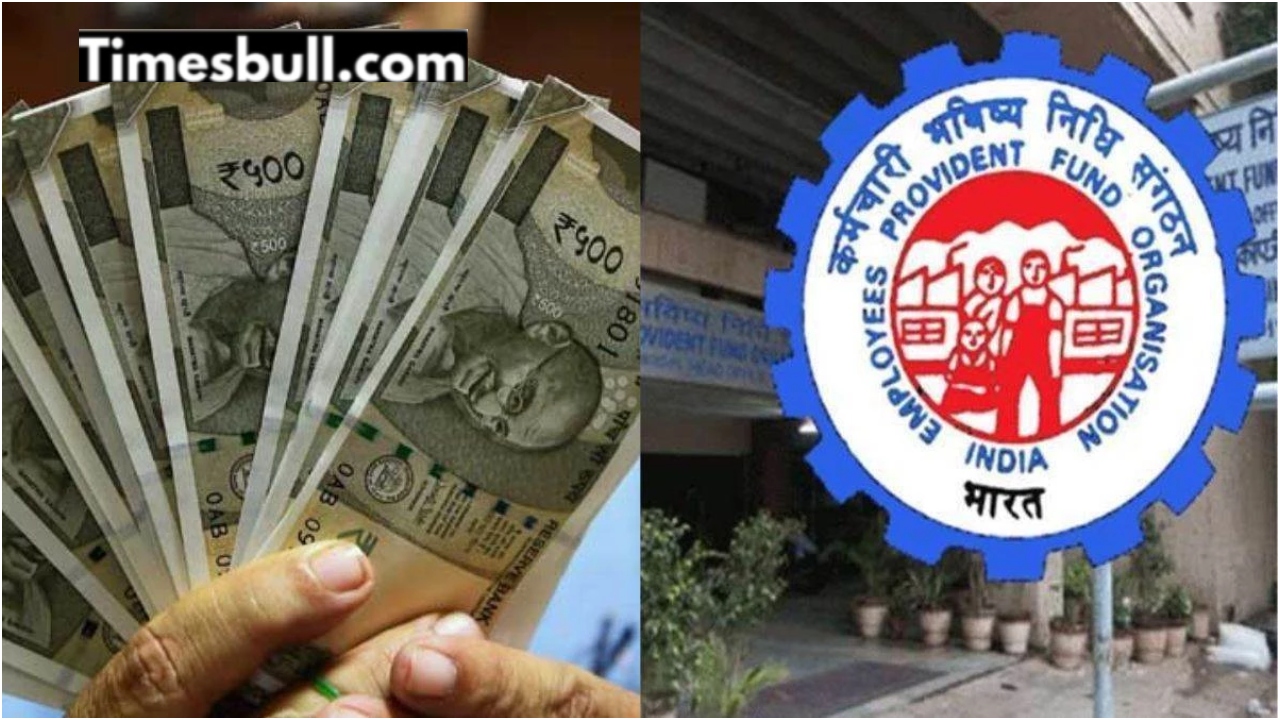
EPFO Update : If you’re employed, a portion of your salary is deducted every month for your Provident Fund (PF) . This money becomes your support after retirement. However, many people don’t know how much interest is earned on PF, how the money grows, and when it can be withdrawn. So let’s understand.
How much interest is received on PF?
According to the EPFO, the government sets the interest rate on PF deposits every year. For the financial year 2024-25, the EPF interest rate has been set at 8.25%. This interest is added monthly to the balance in your PF account, but the total interest is credited to your account at the end of the year.
Understand in calculations
Suppose your basic salary is Rs 30,000.
Every month 12% of the employee’s contribution i.e. Rs 3,600 goes into PF.
The employer also contributes 12%, but not all of it goes into PF.
8.33% i.e. Rs 2,499 will go to the pension fund i.e. EPS and 3.67% i.e. Rs 1,101 will be added to the PF.
This way, a total of ₹4,701 (employee + employer’s share) is deposited into your PF every month. If this continues for an average of 20 years, this amount, including interest, could reach approximately ₹28 to 30 lakh.
How safe is PF?
PF is fully managed by the government-run Employees’ Provident Fund Organization (EPFO). This money is protected by a government guarantee. The interest rate is also determined annually by the government, so there’s no risk of loss.
Why does EPFO not allow withdrawal of the entire amount?
EPFO does not allow withdrawal of 100% of your PF amount because this money is saved for your retirement. According to the law, full withdrawal is prohibited until the age of 58, so that there is no financial problem in old age. You can withdraw only up to 75% if you are unemployed for more than 2 months, or partially for medical needs like buying a house. These rules are for your security. Overall, the government wants the retirement fund to be safe so that poverty does not occur.