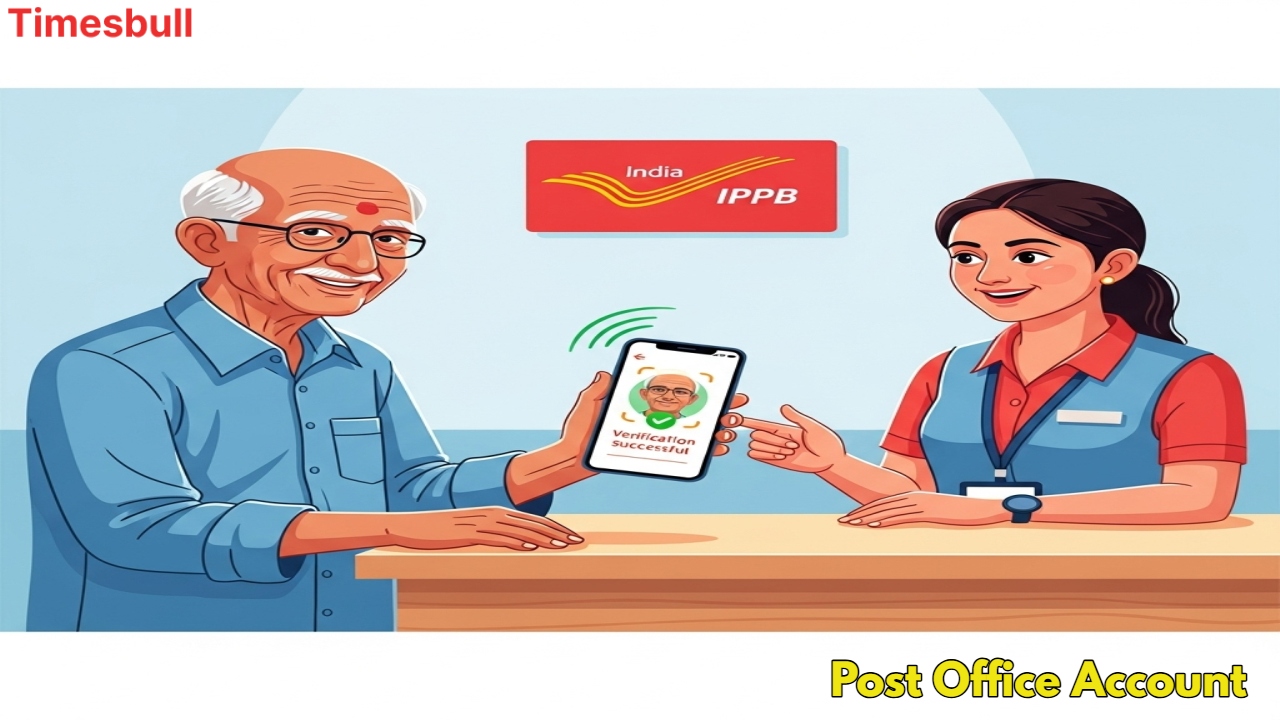
Now you are going to get rid of these problems! India Post Payments Bank (IPPB) has taken a revolutionary step and started an Aadhaar-based Face Authentication Service. This facility is a big step towards Digital India, which means that now you will not have to sign or put your thumb impression again and again for bank work. This new technology will make your bank work faster, easier, and more secure. Let’s know what this facility is and what its benefits are.
IPPB brings Face Authentication
This new service has been started especially for the elderly and Divyangjans, who often face problems related to signature and OTP (One Time Password) in bank work. With face authentication, they can avail banking facilities without any hassle. IPPB says that this process is completely safe and has been designed by understanding the technology of UIDAI (Unique Identification Authority of India).
What is face authentication, and how does it work
Face authentication is a type of digital password that ensures your identity using your face. It is a biometric security technology that uses facial patterns to confirm a person’s identity.
How to do face authentication
This process is as easy as face lock on your phone.
First of all, you have to go to your bank settings and choose the option of face authentication.
After this, you have to get your face scanned in front of the device.
This process is completed in 3-4 steps, after which your face becomes your digital password.
What to do if face authentication fails
If your device is unable to recognize your face, keep these things in mind:
Do it in the right light: Make sure there is enough light, as authentication may fail in too little or too much light.
Keep the device’s camera clean.
Keep the phone at the right distance from your face.
If face authentication is not working for any government work, then get your biometrics updated.
If face authentication is not working, then you can also use fingerprint or OTP authentication.
Vikram Singh

Related Stories
 Business
 Business
 Business
 Business
 Business
 Business
 Business
 Business
 Business
 Business