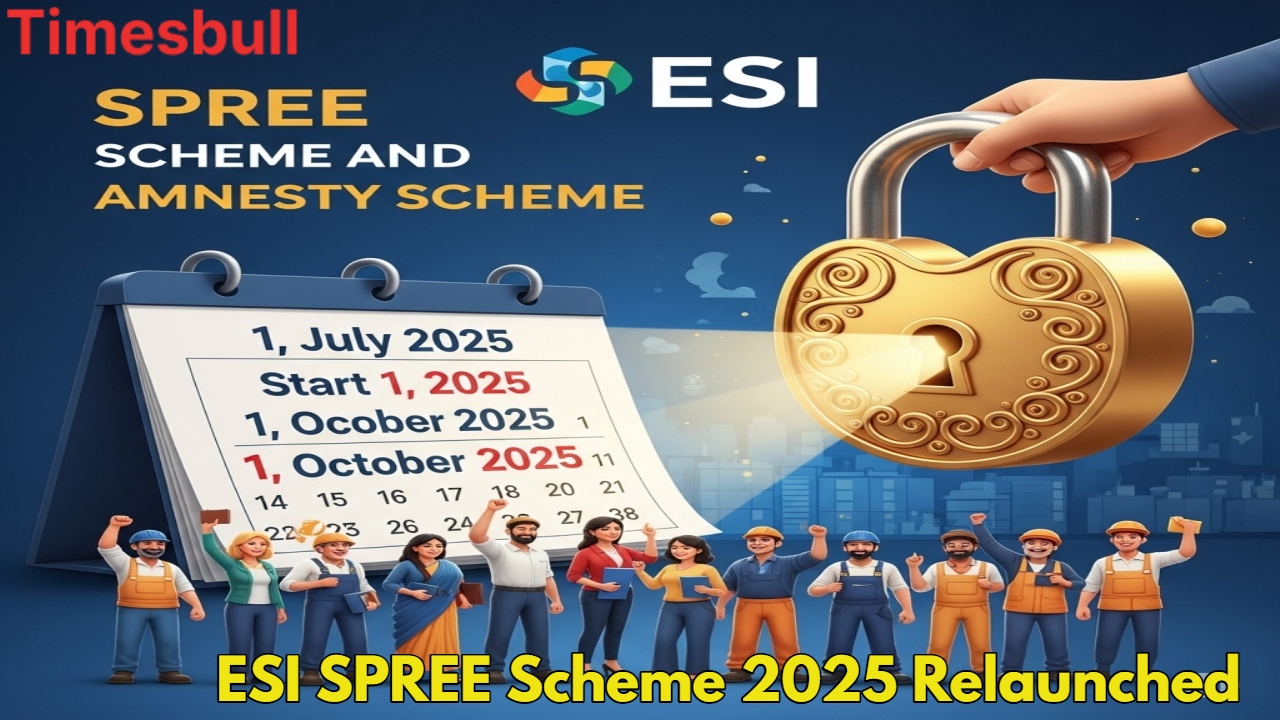
There is great news for the employees working in various companies and institutions across the country! Recently, the Employees’ State Insurance Corporation (ESIC) has implemented the SPREE Scheme 2025 to increase the scope of social security of employees. This scheme will be effective from 1 July 2025 to 31 December 2025.
Under this scheme, applicants can register their industries and employees digitally online through the ESIC Portal, Shram Suvidha Portal, and MCA Portal. Under this, unregistered industries and employees (including contract laborers and temporary laborers) will get a golden opportunity to register without facing the demand for past dues.
What is the main objective of the SPREE Scheme?
The Scheme for Promoting Registration of Employers and Employees (SPREE Scheme) 2025, approved by the Employees’ State Insurance Corporation (ESIC), is a special initiative aimed at expanding the social security coverage under the ESI Act. Now, employees will also be able to get treatment for their parents, wives, and children under ESI.
It provides a one-time opportunity to unregistered employers and employees (including contract and temporary labourers) to register without facing inspection or demand for past dues. Employers who have not yet been able to enroll their employees under the insurance scheme can get registered during this period without any investigation or penalty.
What are the benefits of registration?

The employer will be considered to be enrolled in the scheme from the date he declares registration. No contribution or benefit will have to be paid for the period before registration. This is a big relief for those employers who were not able to register till now for some reason. There will be no inspection or demand for records for the period before registration. This will give employers an opportunity to get registered without any worry.
This scheme is a unique opportunity for all those employers who want to bring their employees under the ambit of social security. It will not only secure the future of the employees but will also strengthen formal employment and social security coverage in the country.
Related Posts

Vikram Singh
Author at TimesBull covering breaking news and current affairs.
Related Stories
 Business
 Business
 Business
 Business
 Business
 Business
 Business
 Business
 Business
 Business