


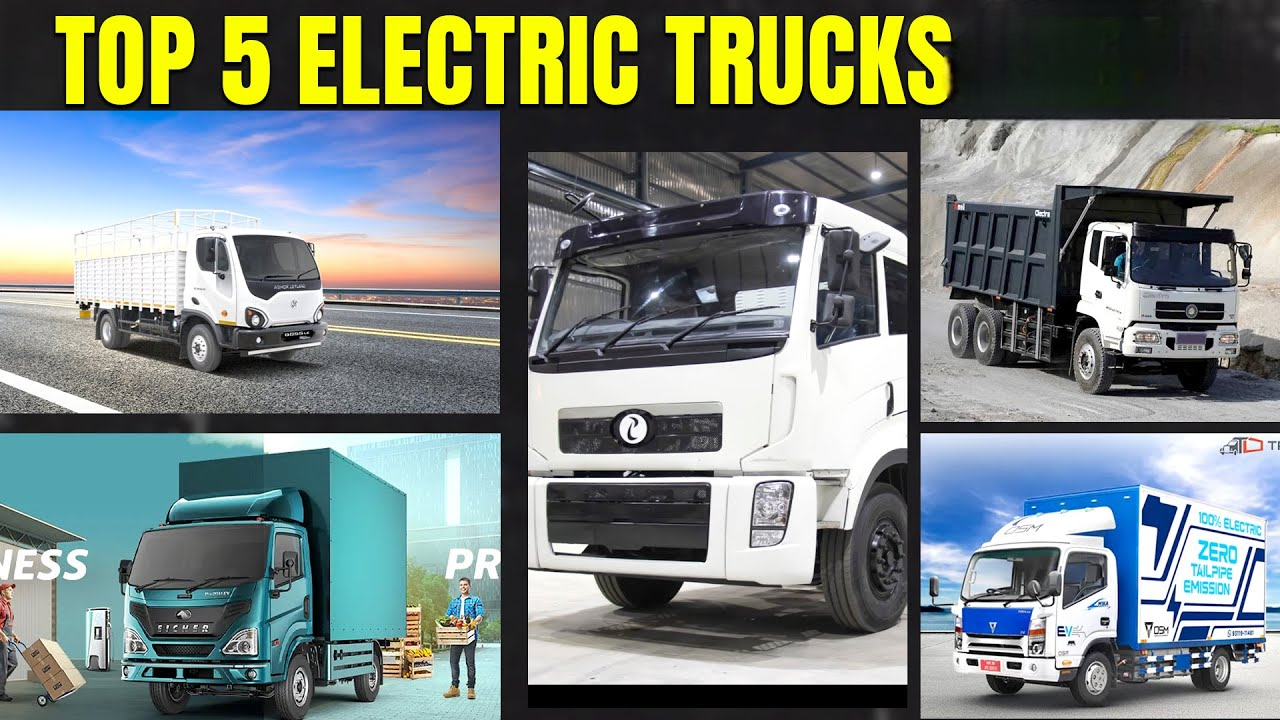
Commercial Electric Trucks in India : Electric trucks will be in India soon by 2025, not only cars and so scooters, but electric vehicles are gradually stepping into the commercial arena. Rising fuel prices and strict pollution norms initiated transport and logistics firms to study alternatives to conventional fossil fuel trucks, ways in which they could become cleaner and sometimes cheaper solutions.
But is it feasible and possible to use it every day? Let’s see the particulars.
Reasons to go for electric trucks right now
Electric trucks give drastic savings in running expenses because they now run on electricity, which has a much lower price compared to diesel. In addition, the moving parts of electric vehicles are lesser in number; so, it would most of the time be low-wear-and-tear maintenance costs for them in a long run. Commercially, especially with a truck covering long distances every day, such savings could accumulate to quite shocking amounts after a year or two. So many state governments in India offer subsidies and tax incentives for public incomes on electric commercial vehicles.
what’s on offer in the market
These are the developments coming by 2025: Tata Motors, Ashok Leyland, and Eicher will introduce electric trucks within the country. Tata’s Ace EV is already on site for long-term fulfilment thanks to Amazon and Flipkart. It offers a more realistic range of 100-150 km between charges, which is well-suited to city deliveries, as will soon be touted by startups like Euler Motors and EVage for putting new spins on models for short-haul urban logistics.
But challenges are yet to be met.
Electric trucking has come a long way but still has some major constraining challenges ahead. First, at the moment, the initial costs remain comparatively high compared to diesel-powered trucks, especially for medium- to heavy-duty models. In addition, there are still some areas where this sort of truck can be charged; charging infrastructure is also insufficient for the most part on highways or in remote areas. There are also still issues regarding long charge times and limits on ranges that are not very good for business continuity that aren’t continuous and fast processes.
The Road Ahead
In fact, India’s government has a very intrinsic interest in promoting electric commercial vehicles under FAME as one of the schemes at the state levelling with regard to electric vehicles. Battery technology is improving, and charging stations are being established with better distribution as time passes; therefore, the utility of electric trucks will widen. This point in time is the high-use scenario for city deliveries, waste collections, and goods transportation in short distances.