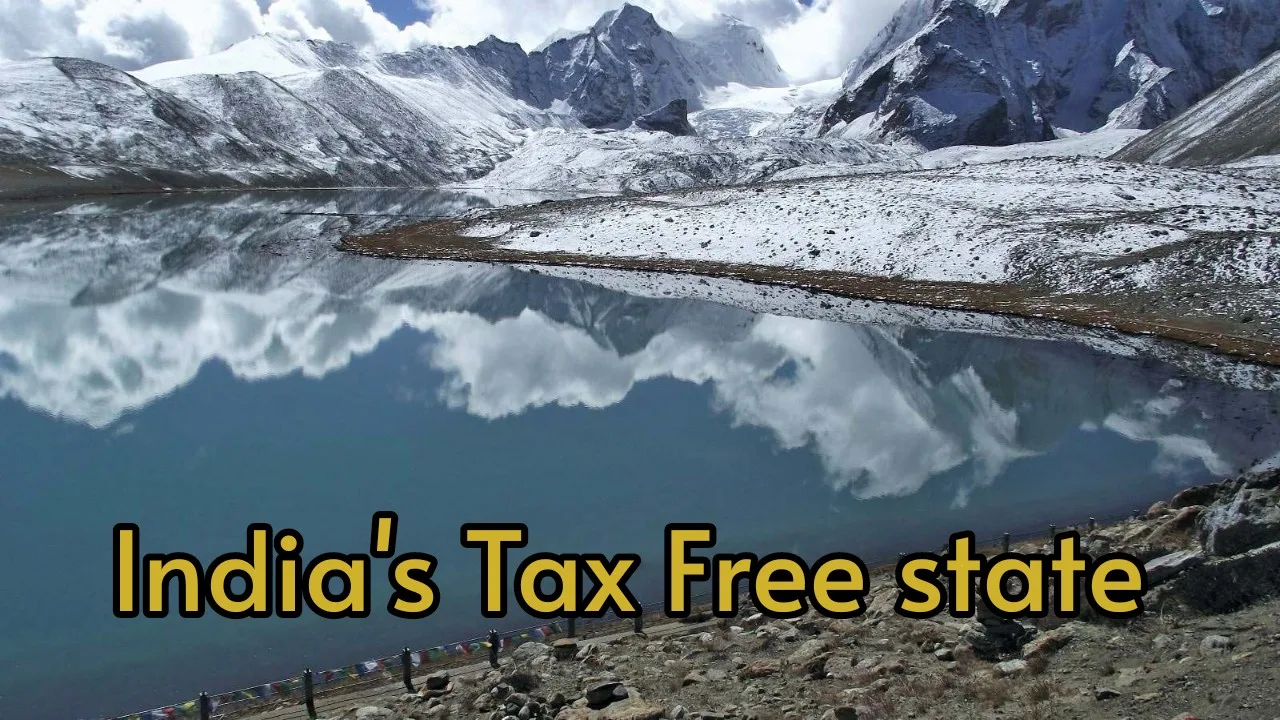
Tax Free State: Everyone in the country is required to pay income tax if their earnings exceed the tax-free threshold. Fortunately, the government has provided significant relief by making income up to Rs 12 lakh tax-free. However, if you earn more than that, you will need to pay taxes. Interestingly, there’s a state in the country where you can earn up to 12 crores and still not pay a single rupee in taxes.
It might sound unbelievable, but it’s true. Sikkim is the only state in India where residents are exempt from paying any income tax. There’s a unique reason for this, and here’s the scoop.
Why Sikkim Has No Income Tax
When Sikkim joined India in 1975, it did so with the understanding that its existing laws and special status would remain unchanged. Since then, the state has adhered to its own Sikkim Income Tax Manual from 1948, which has governed tax regulations since the merger. Because of this, Sikkim residents are not required to pay taxes to the Indian government.
What Law Provides This Tax Exemption?
In 2008, Sikkim’s tax laws were officially repealed, as reported by Mint. That year, Section 10 (26AAA) was added to the Union Budget, which exempted the state’s residents from income tax. This section safeguards the special status of Sikkim and recognizes “Sikkimese” individuals under Article 371 (F).
Thanks to the central government’s decision in 2008, over 94% of Sikkimese people were exempted from income tax. Under Section 10 (26AAA), Sikkimese individuals are also free from taxes on income derived from dividends or returns on shares.
The Supreme Court of India has ruled that the tax exemption under Section 10 (26AAA) applies to all Sikkimese, including those who settled in the state before its merger with India.