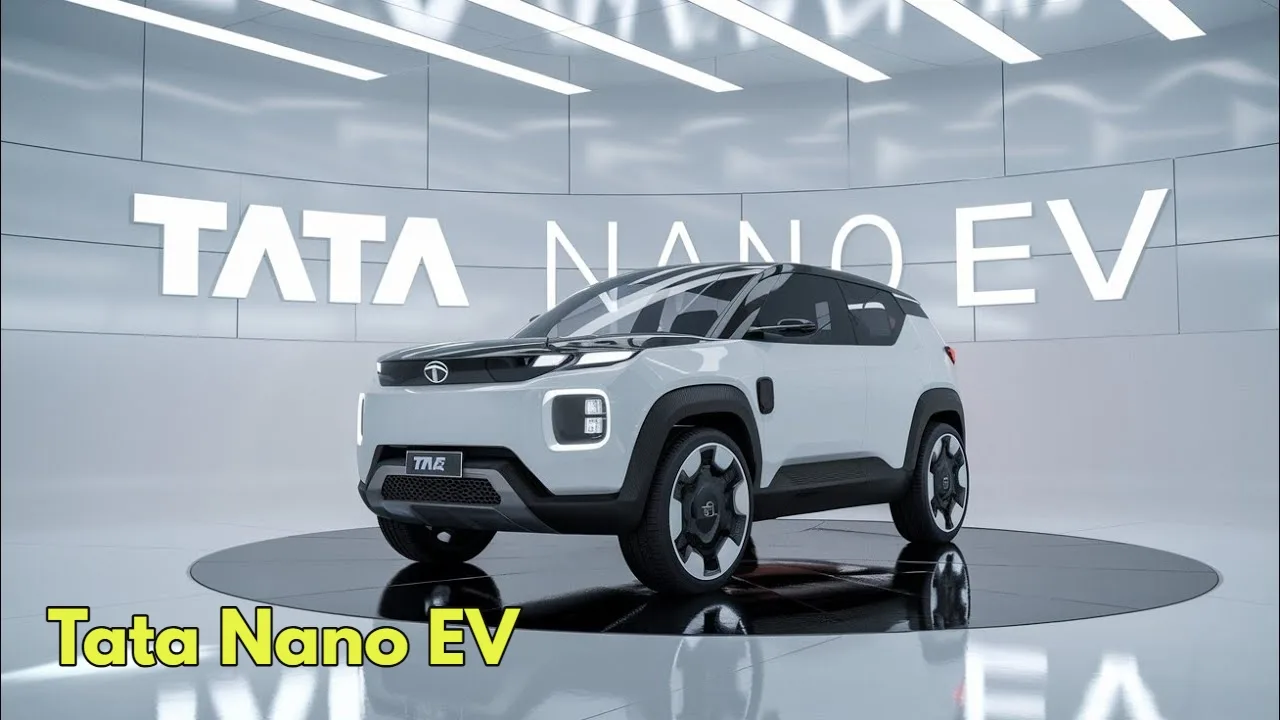
The Tata Nano, whose fate has already been sealed, is still a familiar name in the Indian automotive industry. The very thought of a Nano EV tempts many, considering how Tata is thriving in the electric vehicle segment. The modern electric version of the Nano may indeed be a viable option for the future, with all that technology development in EV.
While Tata Motors has not disclosed any plans for the Nano EV, studies have been conducted on the concept itself. Rumors have it that viability hinges on competitive offering features and performance in the EV evolution.
Battery and Range
A future Tata Nano EV must have a maximum practical range of over 200 km to remain viable. The original showing of the Nano EV prototype in 2010 boasted a range of 160 km, but considerable advancements in batteries have improved power and efficiency since then. The retrofitted Nano EV has been developed by Electra EV, but official performance specifications remain unavailable. Ratan Tata has one of these retrofitted models in his arsenal, certainly generating buzz about its future.
Performance and Features
For its electric version, the Nano would need to come with a well-tailored powertrain to be viewed as credible in today’s EV standards. Features expected would include a touchscreen infotainment system, steering-mounted controls, all four power windows, a semi-digital driver’s display, and a manual AC- all of which would improve the overall appeal and practicality of the Nano EV.
Safety and Other Specifications
Safety would be a major part of the Tata Nano EV. It should come equipped with dual-front airbags, ABS with EBD, rear parking sensors, and other current guidelines. A rear parking camera would further enhance safety and convenience. Other specifications could be small measurements for easier maneuverability in the city, while being light enough to be efficient, and an electric motor target adapted to making city commuting comfortable.
Expected Price and Market Contest
If it gets launched, the Tata Nano EV could be possibly priced between Rs 6 lakh and Rs 9 lakh, offering an entry-level affordable EV option. In terms of competition, it would directly rival the MG Comet EV. Further, a Tata EV could consider alternatives such as the Tiago EV, Tigor EV, Punch EV, and Nexon EV. By that, the Nano EV could find itself an identity in the market for urban electric vehicles with its compact design and affordability.

Nandani Verma
Author at TimesBull covering breaking news and current affairs.
Related Stories
 Auto
Auto Auto
Auto Auto
Auto Auto
Auto Auto
Auto Auto
Auto Auto
Auto Auto
Auto Auto
Auto Auto
Auto