
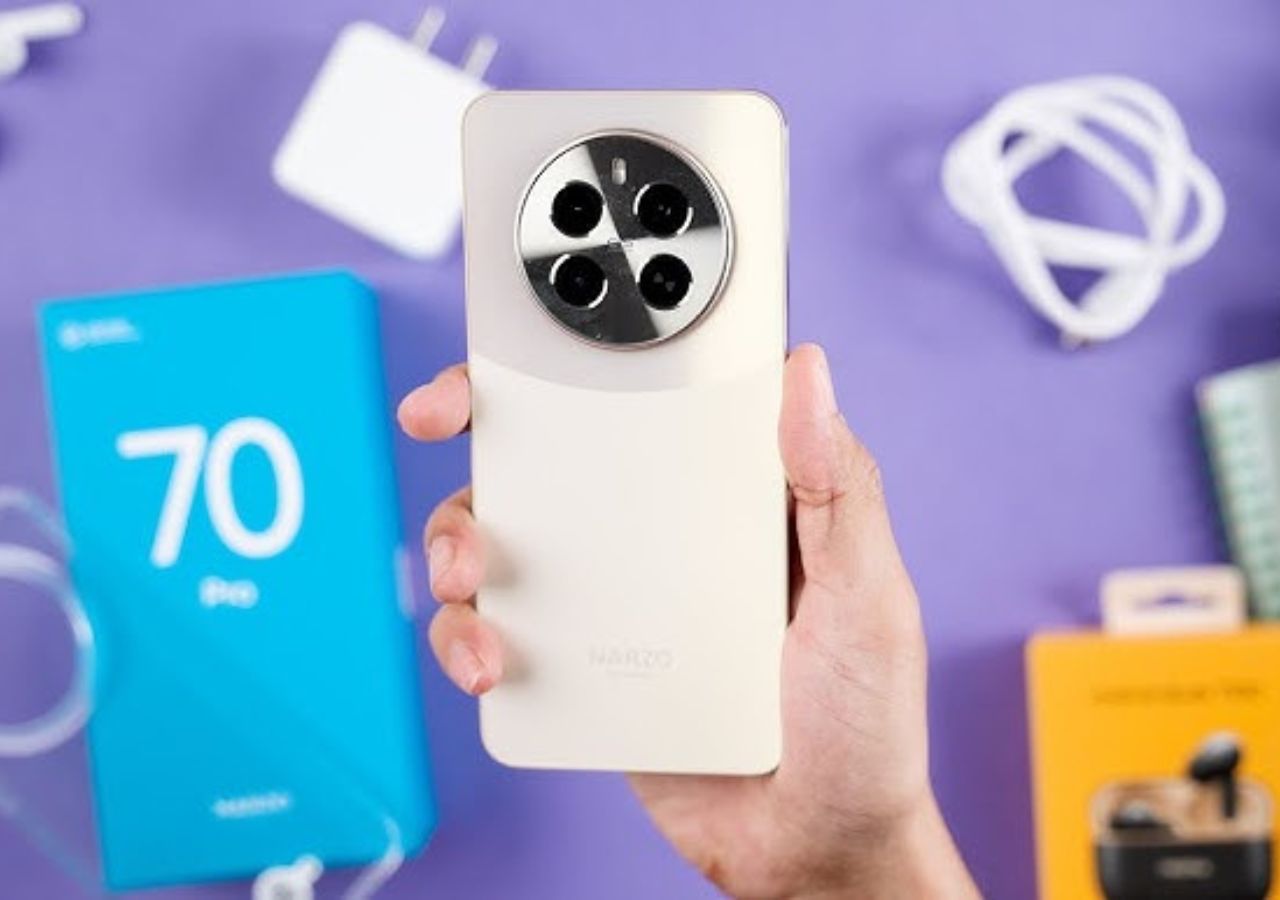
realme Narzo 70 Pro 5G : The realme Narzo 70 Pro 5G has entered the mid-range arena with a bold claim: a flagship-level 50MP Sony sensor that promises to revolutionize mobile photography for the budget-conscious user. But in a market saturated with high-megapixel cameras, does this specific Sony lens truly deliver superior results, or is it just another spec on paper? We took it out for a real-world test to separate the hype from the reality.
The Main Attraction: A Deep Dive into the Sony Sensor
At the core of this camera system is the Sony IMX890 sensor. This isn’t a new or obscure component; it’s the same sensor found in several flagship phones from the previous year, including the acclaimed OnePlus 11. This heritage brings high expectations.
The IMX890 is a capable sensor with a 1/1.56-inch size, which is relatively large for this price segment. A larger sensor allows it to capture more light, which is the fundamental key to better image quality, especially in challenging lighting conditions. This hardware advantage gives the Narzo 70 Pro a solid foundation that many competitors lack.
Fact Check: The Sony IMX890 sensor is indeed a premium-grade sensor that has been trickled down from flagship devices, making it a significant differentiator for the Narzo 70 Pro in the mid-range category.
Daylight Photography: Sharpness and Color Accuracy
In optimal lighting, the Narzo 70 Pro’s camera shines. Photos taken in daylight are consistently detailed, vibrant, and well-exposed. The 50MP mode captures an impressive amount of fine detail, allowing for significant cropping without losing clarity.
The color science tends to lean towards a slightly saturated and contrasty look, which makes photos pop and appear instantly shareable on social media. While purists might prefer a more natural color profile, the average user will likely find the results lively and appealing. The autofocus is quick and accurate, rarely hunting for a subject.
Low-Light and Nightography: Putting the Sensor to the Test
This is where the Sony IMX890 sensor’s larger size truly pays off. In low-light conditions, the Narzo 70 Pro captures noticeably brighter and cleaner images than many of its rivals.
The dedicated Night Mode further enhances this capability. It effectively brightens shadows, controls highlights from light sources, and reduces noise. While the processing can take a few seconds, the results are impressive for the price point. You get usable, detailed night shots without the murky, blurry mess that plagues cheaper sensors.
Pro Tip: For the best low-light results, use a steady hand or prop the phone on a surface when triggering Night Mode.
The Supporting Cast: Ultrawide and Portrait Modes
The phone also features an 8MP ultrawide camera and a 2MP macro sensor.
-
Ultrawide: The 8MP shooter is adequate for capturing expansive landscapes or large groups. However, there’s a noticeable drop in detail and dynamic range compared to the main sensor. Images can look softer, especially at the edges. It’s a useful tool to have, but it’s clearly a step down.
-
Portrait Mode: The portrait mode, powered by the main Sony sensor, is a highlight. Edge detection is generally accurate, effectively blurring the background (creating bokeh) while keeping the subject in sharp focus. The results are professional-looking and reliable for portrait photography.
Videography: Steady and Clear
The realme Narzo 70 Pro 5G can shoot video up to 4K at 30fps using the main sensor. The video quality is good in daylight, with stable electronic image stabilization (EIS) that helps smooth out handshakes. The 1080p@60fps mode is excellent for capturing smoother action.
Final Verdict: Does It Live Up to the Sony Hype?
Absolutely. The realme Narzo 70 Pro 5G isn’t just throwing around the “Sony” name for marketing points. The inclusion of the IMX890 sensor is a genuine strategic advantage.
Latest News
- Weather Warning Delhi-NCR – Rain Alert & Dust Storm in Next 2-3 Hours, IMD Issues Yellow Alert

- PM Kisan Samman Nidhi Yojana: नहीं मिल रही 2000 रुपये की किस्त तो किसान तुरंत करवा लें यह काम

- Aadhaar Card Update Rules – How Many Times Can You Change Address, DOB & Number?

- Train Ticket: How to book a confirmed train ticket without an agent? Learn the Easy Steps

- Indian Railways– 155 Trains Express Declared High-Speed, Thousands of Railway Staff to Benefit

- Monsoon Alert – Warning Heavy to Very Heavy Rain alert & thunderstorms in 22 States Over Next 4 Days

- America-Iran War: मिडिल ईस्ट में तनाव होगा खत्म! ईरान ने होर्मुज रास्ते पर कही बड़ी बात

- PM Surya Ghar Yojana 2026: Get Up to Rs 78,000 Subsidy within 6 Easy Steps, Know Here

- Cheapest Available 5G Smartphones in India Under 10000

- UPSC Prelims Answer Key 2026 – How to Download UPSC Prelims Answer Key at upsc.gov.in