
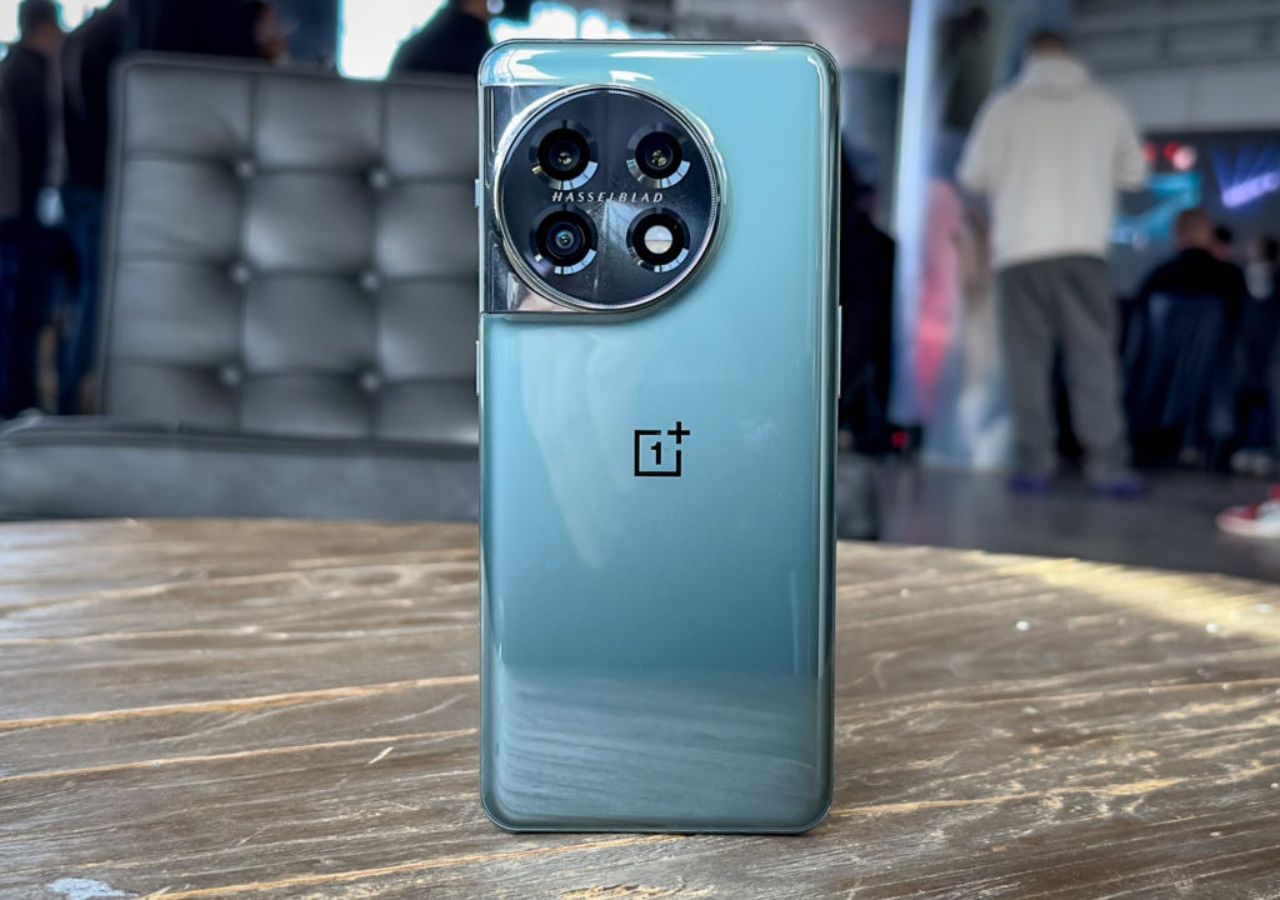
OnePlus 11 5G Review : The OnePlus 11 5G storms into the flagship arena with a promise: top-tier performance and Hasselblad-enhanced cameras at a price that undercuts giants like Samsung and Apple. But does it deliver a premium experience, or do corners cut in key areas hold it back? After diving into real-world testing and expert reviews, here’s our detailed take.
Design & Build: Sleek but Splash-Resistant, Not Submersible
The OnePlus 11 features a premium glass-and-aluminum construction with a curved 6.7-inch display and a distinctive circular camera module on the back. The Titan Black model has a matte-frosted glass finish that resists fingerprints, while the Eternal Green variant boasts a glossy, rainforest-inspired hue 613. Despite its sleek feel, the phone only has an IP64 rating for splash resistance, not the IP68 waterproofing found in many rivals. This means it can handle rain and spills but isn’t designed for submersion 1017. The alert slider—a fan-favorite feature—returns for quick sound profile toggling 7.
Display: A Vibrant, Smooth AMOLED Experience
The 6.7-inch LTPO3 Fluid AMOLED screen is a standout, with a 120Hz refresh rate, QHD+ resolution (3216 x 1440 pixels), and support for Dolby Vision and HDR10+. It delivers vibrant colors, deep blacks, and exceptional smoothness for scrolling and gaming. With a peak brightness of 1,300 nits, it remains visible even in bright sunlight 11017. The curved edges enhance ergonomics but can polarize users who prefer flat displays 7.
Performance: Blazing Speed with Snapdragon 8 Gen 2
Powered by the Qualcomm Snapdragon 8 Gen 2 chipset (4nm process) and up to 16GB of LPDDR5X RAM, the OnePlus 11 is a performance beast. It handles multitasking, gaming, and demanding apps with ease, showing no lag or throttling in daily use 61017. The Adreno 740 GPU supports ray tracing for enhanced graphics in games, and UFS 4.0 storage (on 256GB+ models) ensures fast app launches and file transfers 613. Benchmarks like AnTuTu v9 score over 1.14 million, placing it among the fastest Android phones 10.
Camera: Hasselblad Partnership Shines—With Caveats
The triple-camera system, co-developed with Hasselblad, includes:
-
50MP Sony IMX890 main sensor (OIS, f/1.8) for detailed, natural-colored photos.
-
48MP ultra-wide Sony IMX581 (115° FoV) for expansive shots.
-
32MP telephoto Sony IMX709 (2x optical zoom) for portraits 11316.
Daylight photos from the main camera are excellent, with accurate colors, good dynamic range, and minimal processing. The telephoto delivers sharp 2x zoom, though it struggles with low-light shots and occasionally produces moiré patterns. The ultrawide performs well but shows slight white balance inconsistencies 1617.
Low-light performance is solid, with Night mode activating automatically for balanced exposures. However, the telephoto often switches to a cropped main sensor in dim conditions, reducing detail 16. Portrait mode benefits from Hasselblad’s skin tone tuning, though edge detection can be inconsistent 416.
Video capabilities include 8K@24fps recording (main camera) and 4K@60fps (ultrawide), with solid stabilization. The front 16MP selfie camera captures decent images but lacks the sharpness of higher-resolution sensors 1016.
Battery & Charging: All-Day Life and Blazing Speeds
The 5,000mAh battery easily lasts a full day with moderate to heavy use, often extending to 1.5 days. It supports 80W wired charging in the U.S. (100W internationally), topping up from 0% to 100% in about 25–30 minutes. Notably, the charger is included in the box—a rarity among flagships. However, wireless charging is absent, a omission some users may lament
Latest News
- Electricity Bill Saving– How to Save Power During Summer Heat? Here Are the Few Tips

- Gold-Silver Rate – Gold ₹44,396 per 10 grams & Silver ₹1,85,462 per kg cheaper from the Peak

- US Green Card Rule Change, Know Before Apply

- PM Surya Ghar Scheme: खूब चलाएं एसी और कूलर, नहीं देना होगा बिल, जल्द कराएं यह काम

- ITR Filing Before May 31? You May Get Notice

- Women Free Bus Travel Scheme – How to Get Free Bus Travel From June 1, 2026? How to Apply

- LSG Vs PBKS Video: ऋषभ पंत पर भड़के अर्जुन तेंदुलकर! वीडियो देखकर आप भी रह जाएंगे हैरान

- Apple MacBook Neo Deal Alert: Get It For Under ₹58,000 on Amazon Right Now

- Pakistan Attack: आत्मघाती हमले से दहला पाकिस्तान, 23 लोगों की मौत, 50 से ज्यादा घायल, जानें

- Honor Magic 9 Series Leaks: Flagship Upgrades with Massive 8,000mAh Battery and 200MP Cameras