
CYBER Alert! Fake Traffic Challan of ₹590 can empty your bank account; ICICI Bank issues warning
Fake Traffic Challan: ICICI Bank issues a warning to its customers about a fraudulent traffic challan scheme which targets vehicle drivers through deceptive e-challan SMS messages that contain links to the scam. The following information explains how to recognize fraudulent messages and safeguard your banking information.

 Join Us
 Add as a preferred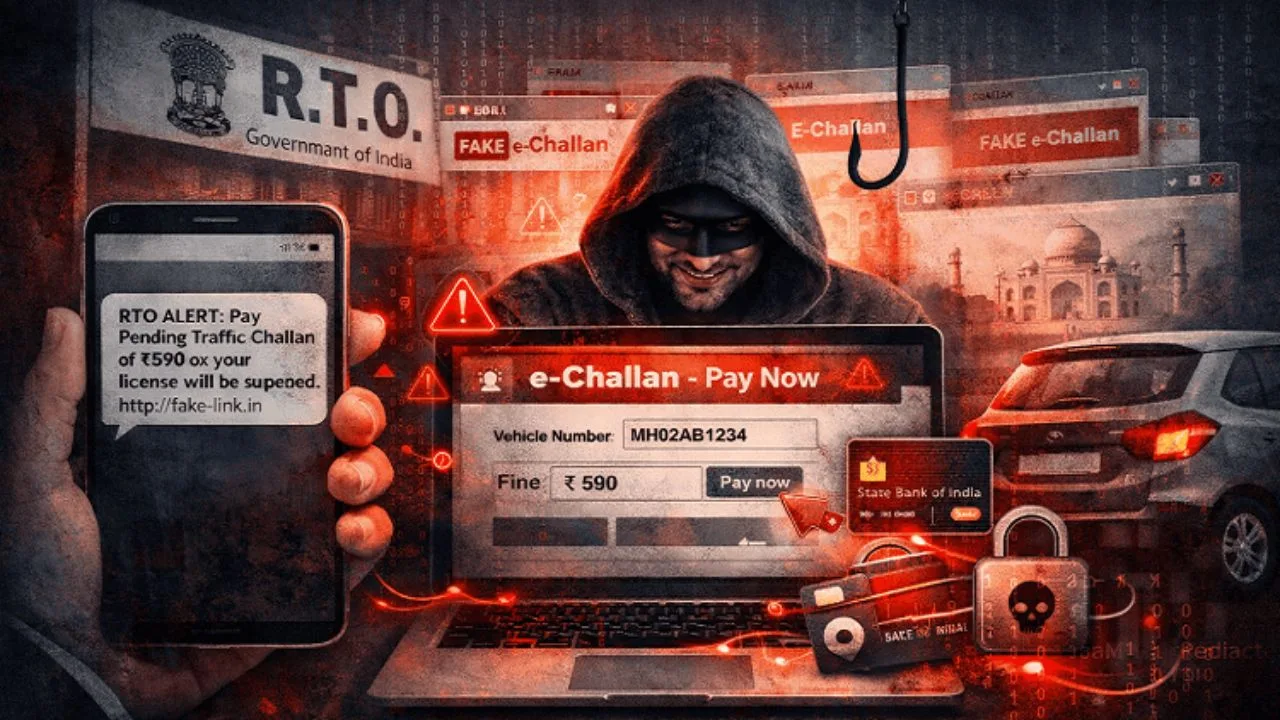
Fake Traffic Challan
These days, cyber fraud is growing fast across India. Now, tricksters aim at car owners using false traffic penalty alerts. A recent ₹590 fine hoax spread widely online. Because of this, ICICI Bank along with digital safety specialists shared urgent advice. Criminals send messages pretending to be real e-challans. Open those links? Your money and private data could be exposed without warning.
How the Fake Traffic Challan Scam Works
Out of nowhere, texts pop up on phones SMS or WhatsApp saying there’s a pending traffic fine, either 590 rupees or 750. Often, they carry a sharp warning: miss the payment, then risk losing your license or registration fast. One moment you’re clear, next you’re told things could be blocked unless money moves now.
A text message carries a false payment link made to mimic the real Parivahan Sewa site. Clicking it leads straight into danger – type in your card data, an OTP, or anything linked to your bank, then thieves are inside your account fast. Money vanishes before you notice something is wrong.
Fake Challan Messages Appear Authentic
What makes this fraud work so well? Fake sites look nearly identical to real government ones. They copy official symbols, car information, even how payment sections are arranged. These copies feel just like actual motor vehicle departments. Seeing familiar designs tricks people into trusting them.
Cybercriminals also use fear tactics such as:
“Your licence will be suspended”
“Immediate payment required”
“Legal action may be taken”
Warnings like these aim to scare people into paying fast, before they can verify if it’s real.
Spotting Fake Traffic Challan Messages
Watch out for odd spelling mistakes they often hide in fake messages. A wrong web address might show up when you least expect it. Think twice if the wording feels too urgent or scary. Strange sender details? That is usually a red flag. Double check where the message really came from, not just how it looks. Spotting these clues early helps avoid trouble later
- Every legitimate site run by a public authority carries “.gov.in” at the end of its web address
- Shortened URLs or random domains are usually fake
- Messages from personal mobile numbers should be ignored
- Fake websites often ask only for card payments and OTP details
The official challan portal of the Government of India is:
How to Verify Your Challan Safely
Should a strange challan pop up, skip tapping the payment link right away. Head straight to the real government site by typing it yourself. There, pull up your challan details with just your vehicle number. The screen will show what’s valid.
From their phones, folks might grab the real mParivahan app to check car papers along with unpaid penalties – done without risk. One tap opens access to clear records instead of guesswork piling up on dusty counters.

Clicked the fake link
Right now, suppose those banking numbers slipped out on a shady site. Get hold of your bank straight away – better yet, sprint toward damage control. They might shut down payments. Cards could get frozen too, just in case.
Anyone affected might tell India’s cybercrime helpline about what happened. A call could go there after something like this shows up
Cybercrime Helpline: 1930
Official Portal: Cyber Crime Portal
One hour after the incident, acting fast might stop cash from disappearing. Sometimes just a small delay changes everything.
Why This Scam Is Dangerous
Surprisingly small sums catch more victims these days. When alerts show just five to ten hundred rupees, hesitation fades fast. Few stop to verify what seems minor. That split second of doubt vanishes before questions form. Less resistance means faster payouts for fraudsters. The mind treats tiny charges as harmless glitches. Payment slips through before alarm bells ring.
Watch out for any message that looks like it’s about money, even if it seems official. Not every alert needs a click – some pretend to be from banks but aren’t. Links in texts might lead nowhere safe, especially those tied to fines or rewards. Fake alerts often arrive pretending something urgent needs fixing right away. Real updates won’t pressure you through random messages out of nowhere. Think twice before opening anything sent without warning. Scam notes copy real ones closely, so check carefully each time. Even small details can show whether a note should be trusted. Stay sharp when deals or fixes pop up by surprise.
FAQs: People Also Ask
When alerts show just five to ten hundred rupees, hesitation fades fast.
Out of nowhere, texts pop up on phones SMS or WhatsApp saying there's a pending traffic fine, either 590 rupees or 750. Often, they carry a sharp warning: miss the payment, then risk losing your license or registration fast. One moment you're clear, next you’re…
A text message carries a false payment link made to mimic the real Parivahan Sewa site. Clicking it leads straight into danger - type in your card data, an OTP, or anything linked to your bank, then thieves are inside your account fast. Money vanishes…
What makes this fraud work so well? Fake sites look nearly identical to real government ones. They copy official symbols, car information, even how payment sections are arranged. These copies feel just like actual motor vehicle departments. Seeing familiar designs tricks people into trusting them.
Watch out for odd spelling mistakes they often hide in fake messages. A wrong web address might show up when you least expect it. Think twice if the wording feels too urgent or scary. Strange sender details? That is usually a red flag. Double check…

Sachin Kumar
Next Article
Vivo X200T Flipkart Price Drop – Get ₹20,000 Discount with Exchange Offers and Bank Benefits
Vivo X200T Flipkart: vivo X200T now offers discounted prices through Flipkart which provides access to ZEISS camera technology and Dimensity 9400+ chipset and flagship specifications at reduced costs.

The ongoing Flipkart sale offers a major discount on the vivo X200T which now becomes more affordable for Indian customers who want to purchase Vivo’s premium flagship smartphone. The smartphone which first debuted at flagship prices this year now offers price reductions that reach ₹20,000 for specific models together with extra exchange discounts and banking promotions.
vivo X200T Price Drops on Flipkart
The vivo X200T launched in India on January 27, 2026, targeting premium smartphone users who wanted flagship cameras and long battery life and extended software support. The 12GB RAM + 256GB storage variant which originally cost ₹79,999 now has a Flipkart price of approximately ₹59,999 after discounts. The 12GB + 512GB variant currently has a price of ₹69,999 which is lower than its original price of ₹87,999.
Write a Comment