
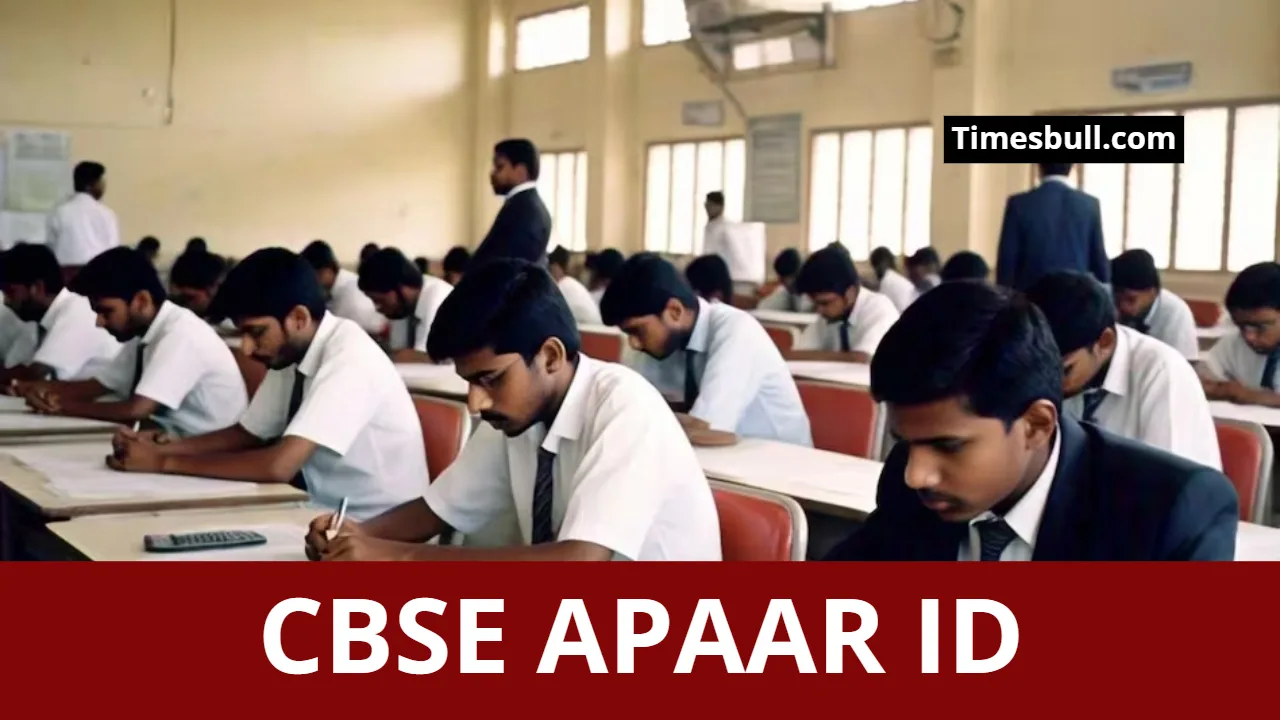
The Central Board of Secondary Education has announced a major change for the 2026-27 academic session. Students in grades 9 to 12 will now be required to link their APAAR ID when filling out the registration and list of candidates forms. This decision was made after a review revealed that by 2025-26, less than half of students in board-affiliated schools had obtained their APAAR ID.
The board believes that if this process is not made mandatory, the purpose of the digital academic record system will be defeated. Therefore, it has been formally incorporated into the board process from 2026-27.
What is an APAAR ID, and why is it important?
APAAR, or Automated Permanent Academic Account Registry, is a digital academic identification system. Through this system, a student’s entire academic record is stored on a single platform. It preserves information ranging from admissions to exam results and other academic achievements.
This system makes document verification faster and more transparent. In the future, students will be less likely to submit physical certificates for college admissions, scholarships, or employment. The availability of digital records will also simplify administrative processes.
Gaps in APAAR ID Coverage
Board data indicated significant differences in APAAR ID coverage between states. In West Bengal, only about 9 percent of students in Grade 9 and about 18 percent of students in Grade 11 had APAAR IDs. In contrast, in Haryana, about 54 percent of students in both grades had obtained these IDs. Coverage was also relatively low in states like Gujarat and Bihar.
Due to these disparities, the Board directed schools in August to ensure that all students had APAAR IDs before filling out registration and LOC forms. Some states had requested relaxation for the 2026 examination, citing technical and administrative challenges. The Board has now clarified that where difficulties have been identified, the process will be streamlined by increasing coordination with schools.
Two Levels for Three Subjects in Class 10 from 2028
Along with the digital identity system, the Board has also confirmed changes to the examination system. From 2028, the Class 10 board exam will have two levels for Mathematics, Science, and Social Science.
This plan was initially approved for Class 9 in 2024. Now, the Standard and Advanced levels will be implemented in Class 9 from 2026-27. Currently, the Board only conducts two levels of examination, Basic and Standard, in Mathematics.
According to the Board, schools will be given adequate time for preparation. During this period, teacher training, curriculum balance, and evaluation systems will be refined. The aim is to provide students with options according to their abilities and interests, and to lay a better foundation for further studies.
Steps towards digital and academic reform
Making APAAR ID mandatory and introducing level-based changes to the examination system are both steps aimed at making the education system more modern and flexible. Digital records will increase transparency, while two-tier examinations will give students the opportunity to choose options that suit their learning pace.
The Board believes that these changes will prove beneficial for students, teachers, and institutions in the years to come.
Latest News
- PM Kisan Samman Nidhi Yojana: नहीं मिल रही 2000 रुपये की किस्त तो किसान तुरंत करवा लें यह काम

- Aadhaar Card Update Rules – How Many Times Can You Change Address, DOB & Number?

- Train Ticket: How to book a confirmed train ticket without an agent? Learn the Easy Steps

- Indian Railways– 155 Trains Express Declared High-Speed, Thousands of Railway Staff to Benefit

- Monsoon Alert – Warning Heavy to Very Heavy Rain alert & thunderstorms in 22 States Over Next 4 Days

- America-Iran War: मिडिल ईस्ट में तनाव होगा खत्म! ईरान ने होर्मुज रास्ते पर कही बड़ी बात

- PM Surya Ghar Yojana 2026: Get Up to Rs 78,000 Subsidy within 6 Easy Steps, Know Here

- Cheapest Available 5G Smartphones in India Under 10000

- UPSC Prelims Answer Key 2026 – How to Download UPSC Prelims Answer Key at upsc.gov.in

- 8th Pay Commission: एनपीएस और पुरानी पेंशन में कौन सी बेहतर, जानिए बड़ा अपडेट